
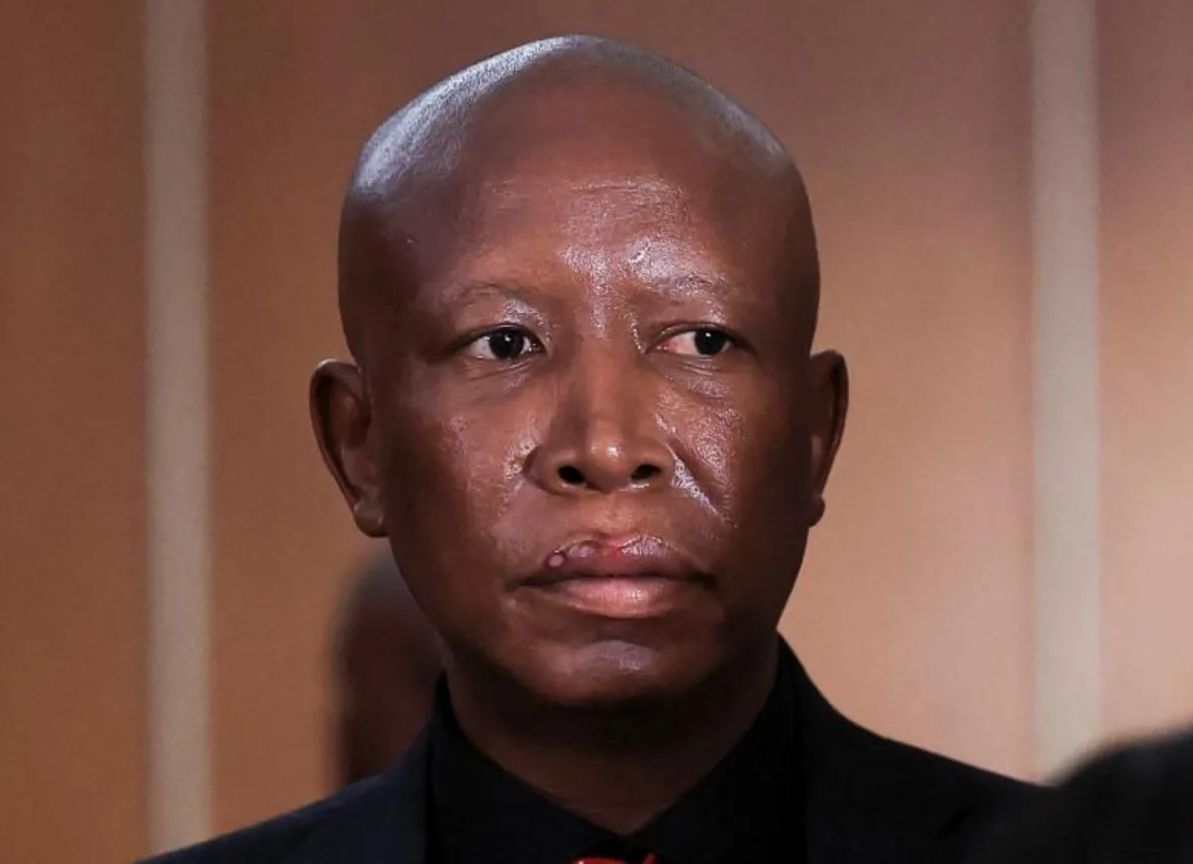
The five-year prison sentence handed down to Julius Malema raises serious questions—not only about proportional justice, but also about the broader political context in which it was delivered. While the legal basis for his conviction may be technically sound, the severity of the punishment, coupled with the symbolic weight of the case, risks reinforcing a troubling perception: that the law is being used not merely to uphold order, but to discipline dissent.
Let’s be clear—discharging a firearm in public is reckless and unlawful. A political leader, especially one with a mass following, should be held to a high standard of conduct. Malema’s actions in 2018 were irresponsible and deserved legal consequences. But a five-year custodial sentence for what was, by all available accounts, a celebratory (if dangerous) act—not one intended to harm—feels excessive when measured against comparable cases. South Africa’s justice system has often shown leniency in far more serious matters, particularly those involving entrenched corruption or large-scale financial misconduct.
This discrepancy invites an uncomfortable question: is Malema being punished solely for what he did, or also for what he represents?
Malema is not an ordinary political figure. He has built his career on confronting the status quo—particularly around land ownership, economic inequality, and the enduring legacy of apartheid. His call for land expropriation without compensation, while controversial, taps into a real and unresolved grievance. Land distribution in South Africa remains starkly unequal, and incremental reform has done little to change that reality. Whether one agrees with his proposed solution or not, it is difficult to dismiss the underlying issue he raises.
Yet his approach is deeply flawed. The push for state custodianship of land introduces uncertainty that could destabilize agriculture and deter investment. It replaces one concentration of power with another, without offering clear safeguards against inefficiency or abuse. In this sense, Malema’s land policy is less a coherent reform strategy and more a politically potent slogan—one that mobilizes anger without fully addressing consequences.
The same pattern emerges across his broader political platform.
On corruption, Malema positions himself as a fierce critic of the political elite, particularly the ruling establishment. This stance resonates in a country fatigued by scandal. But his credibility is weakened by his own controversies. Allegations of financial misconduct—whether proven or not—blur the line between principled opposition and selective outrage. It’s difficult to champion clean governance while carrying unresolved ethical questions.
His stance on immigration reveals another contradiction. While he champions African unity and solidarity, he has also adopted rhetoric that blames undocumented migrants for crime and economic hardship. This tension between pan-African ideals and nationalist instincts is not unique to him, but in his case it is particularly stark. You cannot advocate for continental unity while simultaneously scapegoating fellow Africans.
Similarly, his support for a common African currency and deeper integration reflects an ambitious, forward-looking vision. But these ideas remain abstract, lacking the institutional groundwork or economic alignment needed to make them viable. They function more as ideological markers than actionable policy.
At his core, Malema is a populist—skilled at channeling frustration, adept at simplifying complex issues into emotionally resonant messages. This is both his strength and his limitation. He gives voice to grievances that are often ignored, but he rarely translates them into detailed, sustainable solutions.
Which brings us back to his sentencing.
Punishing Malema harshly may satisfy those who see him as reckless or dangerous. But it also risks elevating him into something more powerful: a political martyr. In a country where distrust in institutions is already high, the optics of a prominent opposition figure receiving a heavy sentence—while others accused of far greater harm avoid accountability—can deepen cynicism rather than restore confidence.
Justice must not only be done; it must be seen to be done fairly. In this case, the balance feels off.
Malema should be held accountable for his actions. But accountability should be consistent, proportionate, and free from political shadow. Otherwise, the system risks undermining itself—and inadvertently strengthening the very figure it seeks to discipline.

more recommended stories
 KENYA TO CLOSE EMBASSY IN SWITZERLAND: WHAT THE DIPLOMATIC RESTRUCTURING MEANS FOR KENYANS
The closure of the Kenyan Embassy.
 TANZANIA: TUNDU LISSU AFUNGWA MIAKA MINNE — SAMIA SULUHU HASSAN NA JARIBIO LA KUZIMA DEMOKRASIA
Hukumu ya Lissu ni pigo kwa.
 FRANCE’S NEW VISA EXEMPTION PROGRAM: WHY WAS KENYA LEFT OUT DESPITE RUTO-MACRON FRIENDSHIP?
France’s recent decision to extend.
 UNDERSTANDING THE AFRICAN NUCLEAR-WEAPON-FREE ZONE TREATY (PELINDABA TREATY)
The African Nuclear-Weapon-Free Zone Treaty, widely.
 KAZI NA UTU? – MASWALI MAZITO BAADA YA KAULI YA RAIS SAMIA KUHUSU VURUGU za OKTOBA 29, 2025
Rais wa Jamhuri ya Muungano wa.
 MILITARY SEIZES POWER IN 2025 GUINEA-BISSAU COUP AMID POST-ELECTION TENSIONS
By Kwaela News Network | Bissau,.
 THE ICC AND AFRICA: IMPUNITY, BROKEN CASES, AND THE HIGH COST OF FAILED INTERNATIONAL JUSTICE
The International Criminal Court (ICC),.
 JUSTICE MUST PREVAIL: A CALL TO ACTION ON TANZANIA’S POST-ELECTION KILLINGS
By Kwaela News Network |.
 TAMKO KUU LA BARAZA LA MAASKOFU KATOLIKI TANZANIA (TEC) JUU YA MAUAJI, MAADHIMISHO NA KIFO KUFUATIA UCHAGUZI WA 29 OKTOBA 2025
Dar es Salaam – 15.
 MUSEVENI’S WAR RHETORIC RAISES TENSION AHEAD OF 2026 ELECTIONS
Uganda’s long-serving president hints at future.
 UJUMBE KWA GEN Z WA TANZANIA 🇹🇿
Ninyi ndio kizazi cha sasa.
 DIPLOMATIC MOVES AMID CONTROVERSY: KENYAN DEPUTY REPRESENTS RUTO AT SAMIA’S SWEARING-IN AS REGIONAL TENSIONS RISE
Nairobi, Kenya – President Samia Suluhu.
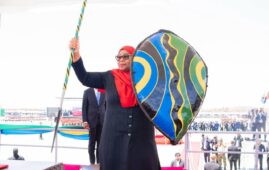 TANZANIA: POST-ELECTION UNREST HIGHLIGHTS TENSIONS BETWEEN POWER AND FREE SPEECH
Following the 29 October 2025 presidential.
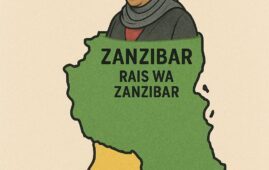 JE, ZANZIBAR INAIKALIA TANGANYIKA KICHWANI?
Wapo Watanzania wanaoanza kuhoji usawa.
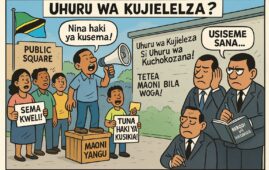 UJUMBE KWA GEN Z WA TANZANIA 🇹🇿
Kama kuna jambo moja la.
 AFRICA’S OPPORTUNITY: STRENGTHENING SEPARATION OF POWERS AND WINNING THE WAR ON CORRUPTION
In recent weeks the conviction.
Leave a Comment