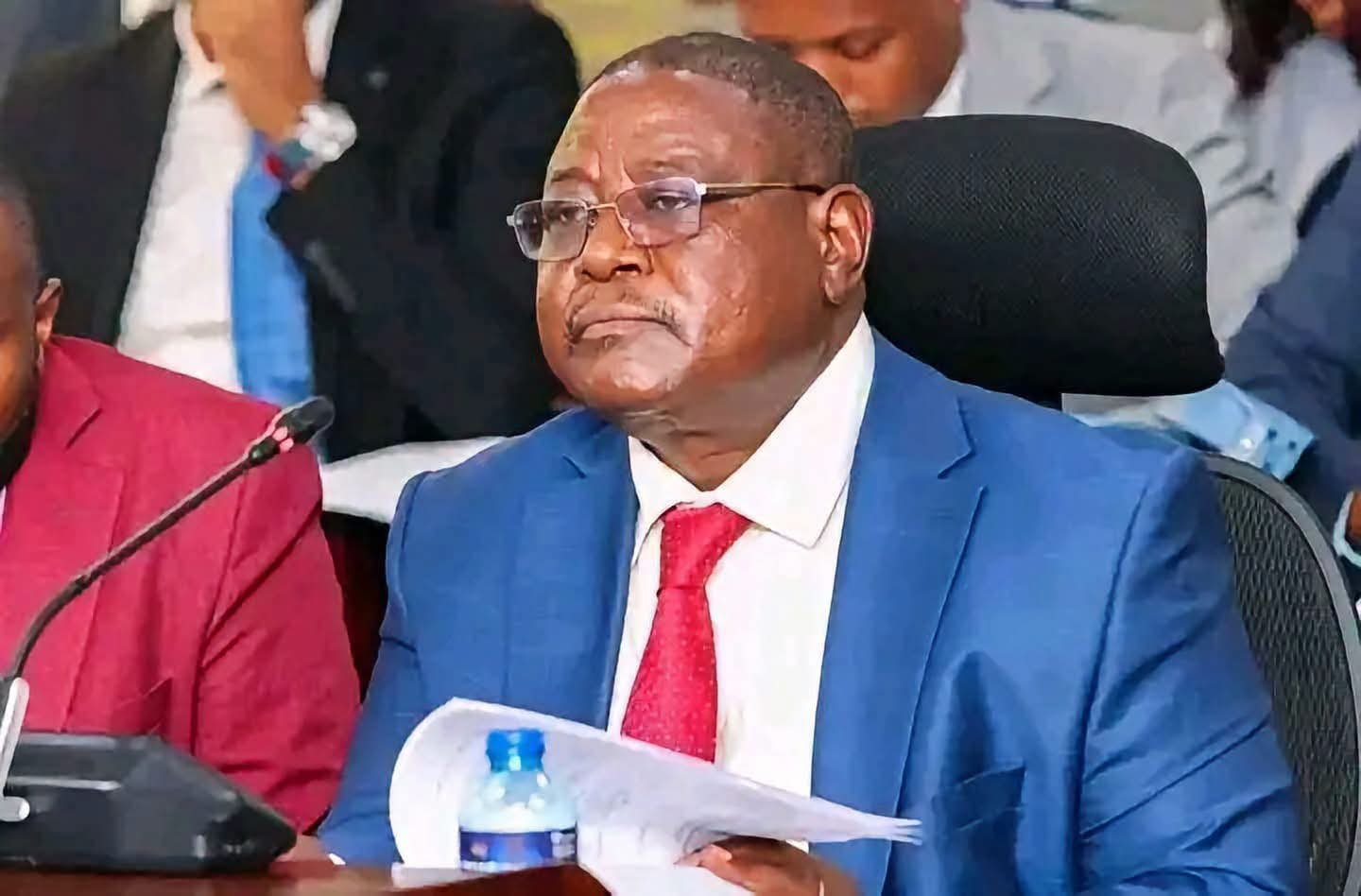
Fredrick Nganga - Taita Taveta County Chief Officer Finance

Kwaela News Network | Editorial
Taita Taveta County is confronting a governance crisis that can no longer be dismissed as ordinary political disagreement or routine administrative challenges. The questions emerging from the recent Senate proceedings touch on the very foundations of public administration: financial integrity, institutional competence, executive accountability and the protection of public servants’ rights.
The growing public concern is understandable. Calls and reactions from residents, professionals, retired public officers and people beyond the County’s borders reflect an uncomfortable reality: Taita Taveta’s governance record is increasingly attracting scrutiny, and the people are demanding answers.
At the centre of this concern is the disturbing question of unremitted employee deductions.
Public servants who faithfully report to work and earn their salaries should never have to wonder whether deductions made from their payslips will actually reach their intended destinations. Yet concerns have emerged over HELB repayments allegedly deducted from employees’ salaries but not remitted, loan repayments that may have left staff exposed to credit blacklisting, and other financial obligations that remain unresolved.
The consequences are not merely administrative.
For young professionals, failure to remit HELB deductions can jeopardise their financial standing and future access to credit facilities. For employees servicing loans, the failure to transfer deducted payments can expose them to penalties, additional interest and adverse credit records. For retired officers, delays in accessing pensions and other entitlements undermine the dignity they deserve after years of public service.
Even more distressing are reports of families of deceased public officers being subjected to prolonged bureaucratic processes as they pursue benefits and entitlements belonging to their departed relatives.
These are human beings, not accounting entries.
WHERE DID THE EMPLOYEES’ MONEY GO?
The recent Senate proceedings brought these concerns into sharper focus.
The inability of the County Chief Officer for Finance, Mr Nganga, to provide satisfactory explanations regarding the status and remittance of employee deductions raised serious questions about the County’s financial management systems.
Of particular concern were allegations and questions raised by Senators regarding the possible diversion or misuse of employees’ money. These are matters that demand documentary evidence, independent scrutiny and appropriate investigations. They cannot be resolved through political explanations or administrative assurances.
The County Government must provide a comprehensive reconciliation showing:
Employees deserve to know where their money went, why it was not remitted and who will take responsibility.
The Governor, Andrew Mwadime, must also answer difficult questions following his reported admission that his own deductions had not been remitted. His public expression of frustration that changes in the County Chief Officer positions have not translated into improved performance raises another fundamental question: who, ultimately, is in control of the County’s financial administration?
The apparent differences between the Governor and his officers during the Senate proceedings, coupled with the failure to provide a coherent account of the financial position, are deeply troubling.
Where questions arise about the accuracy of information presented under oath, the matter assumes even greater seriousness. Any suggestion of misleading a parliamentary committee must be examined through the appropriate legal and constitutional processes.
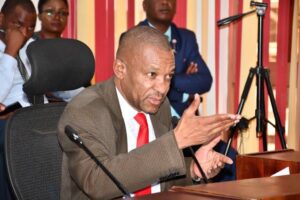
The Governor cannot distance himself from the performance of his administration. Political leadership carries responsibility for institutional performance, the conduct of the Executive and the proper management of public resources.
WHERE WAS THE COUNTY ASSEMBLY?
While the Senate has constitutional oversight responsibilities over county governments, the County Assembly has a particularly important role in scrutinising county expenditure and holding the County Executive accountable.
This brings us to the uncomfortable question of the effectiveness of Taita Taveta’s County Assembly.
How could concerns of this magnitude persist without effective legislative intervention? What has the County Assembly Public Accounts Committee been doing with the financial reports and audit findings presented before it? Have the relevant officers been adequately interrogated? Have recommendations been followed up? And where irregularities were identified, what corrective action was taken?
Oversight cannot be reduced to occasional political theatrics, hostile exchanges or carefully choreographed public confrontations.
It requires competence, independence, courage and a willingness to confront the Executive regardless of political affiliations.
The late Raila Odinga, shortly before his passing, reiterated the importance of Members of County Assemblies holding Governors and their administrations accountable for public expenditure, with Senators exercising their constitutional oversight mandate at the county level.
That principle deserves serious reflection in Taita Taveta.
What calibre of representatives do we elect? Are our MCAs sufficiently equipped to understand budgets, interrogate audit reports, examine expenditure and challenge questionable decisions? Can they independently demand answers without being compromised by political loyalties or executive influence?
The quality of governance is inseparable from the quality of oversight.
A County Assembly that fails to interrogate the Executive effectively becomes part of the problem rather than a solution.
PUBLIC ALLOWANCES, POOR PERFORMANCE AND THE COST OF MEDIOCRITY
Another issue deserving scrutiny is the expenditure reportedly incurred in preparing the County delegation for its appearance before the Senate.
Reports of substantial public allowances, including a minimum of KSh 11,200 per night, raise legitimate questions about the cost of official preparation and the value delivered to taxpayers.
Public officers appearing before parliamentary committees are expected to understand their briefs, carry supporting documentation and provide accurate, coherent answers.
Taxpayers should not be expected to finance expensive official delegations only to witness performances that leave fundamental financial questions unanswered.
If substantial allowances were paid, the County should disclose the relevant expenditure, the applicable rates, the officers who received the payments and the official purpose of the expenditure.
Public money must deliver public value.
This is particularly important when ordinary employees are struggling to access their own deducted earnings, retirees are waiting for their entitlements and essential public services are under pressure.
There is something fundamentally wrong when public institutions appear capable of financing official delegations but struggle to discharge basic financial obligations to their employees.
THE HUMAN COST OF GOVERNANCE FAILURE
Beyond the Senate proceedings and financial statements lies an even more consequential concern: the impact of governance failures on essential public services.
Taita Taveta’s healthcare system is already facing considerable challenges. Financial mismanagement, delayed payments and poor resource allocation can undermine service delivery, affect staff morale and weaken the capacity of health facilities to serve residents.
An employee facing financial distress, uncertainty over salary deductions and mounting loan obligations cannot be expected to operate indefinitely in an environment of institutional indifference.
Likewise, a healthcare system cannot function effectively without motivated personnel, reliable financing and responsible administration.
The ultimate victims of poor governance are often not the people sitting in executive offices. They are patients, ordinary workers, vulnerable families and residents who depend on public institutions.
When financial management fails, essential services suffer. And when essential services deteriorate, human lives may be placed at risk.
THE COUNTY’S GROWING LITIGATION BURDEN
The concerns do not end with employee deductions and financial administration.
Taita Taveta County also faces outstanding legal and financial obligations arising from employment disputes and other administrative decisions.
Among the cases warranting public attention is the reported award of approximately KSh 9.6 million, plus costs and interest, to former County Executive Committee Member for Health, Gifton H. Mkaya, following his successful legal challenge over his dismissal.
There are also reported awards amounting to approximately KSh 3.5 million, plus interest, involving former advisers.
These liabilities should concern every taxpayer.
They raise important questions about the quality of legal advice available to the County Executive, the fairness and legality of administrative decisions, and the financial discipline exercised when appointing, dismissing or managing public officers.
Every questionable administrative decision that ends in litigation potentially diverts resources from development, healthcare, water provision, infrastructure and other essential services.
Even more concerning are instances where failure to comply with court orders attracts further legal consequences and financial liabilities.
Court orders are not optional administrative recommendations. They are binding legal obligations.
The County Government must therefore demonstrate respect for the rule of law, settle legitimate obligations and ensure that public officers exercise their powers within the law.
The people of Taita Taveta should not continue paying for avoidable administrative mistakes, poorly considered decisions and unnecessary litigation.
INSTITUTIONAL EXPERIENCE MUST TRANSLATE INTO ACCOUNTABILITY
The tenure and institutional experience of the County’s finance leadership also deserve examination.
Mr Nganga has reportedly served in the County’s finance department since the inception of devolution. Such experience should ordinarily translate into a thorough understanding of the County’s financial systems, statutory obligations and internal controls.
It is therefore difficult to reconcile that institutional experience with the inability to provide satisfactory explanations on fundamental financial matters.
Experience should strengthen accountability, not become a shield against scrutiny.
The County must establish individual responsibility across the entire financial management chain. It is not enough to blame administrative changes, inherited challenges or subordinate officers.
Every officer entrusted with public funds must account for the decisions made, the transactions authorised and the obligations left outstanding.
TAITA TAVETA MUST DEMAND A DIFFERENT STANDARD OF LEADERSHIP
This is not about political persecution, personal rivalries or positioning for the 2027 General Election.
It is about whether Taita Taveta has institutions capable of functioning in the interests of its people.
The Governor must provide leadership and take responsibility for the performance of his administration. The County Executive must account for public resources. The County Assembly must exercise meaningful oversight. The relevant investigative and oversight institutions must pursue credible allegations through lawful processes.
Most importantly, employees must receive clear answers and the money deducted from their salaries must be accounted for and remitted to the rightful beneficiaries.
We cannot continue normalising failure simply because it has become familiar.
We cannot continue lowering our expectations and benchmarking our standards against mediocrity.
We cannot defend questionable conduct merely because the individuals involved belong to our preferred political camps.
And we cannot allow political convenience to take precedence over the dignity and welfare of the people we elect leaders to serve.
THE TIME TO ACT IS NOW
The County Government should urgently publish a comprehensive account of outstanding employee deductions and provide a time-bound plan for resolving all verified arrears.
It should also disclose the status of pending pension obligations, employee benefits, court awards and other outstanding liabilities. Where evidence points to financial misconduct, the appropriate authorities must investigate and establish individual responsibility.
The County Assembly must demonstrate that oversight is more than a constitutional phrase. Its Public Accounts Committee and other relevant committees must interrogate the outstanding concerns and publicly communicate the action taken.
The Governor must understand that accountability cannot be delegated away. Leadership means accepting responsibility when institutions fail, correcting the failures and ensuring that they do not recur.
And citizens must begin examining not only the promises made by political candidates but also their competence, integrity, independence and capacity to discharge public responsibilities.
We are all potential victims when public institutions fail. Nobody is insulated from the consequences of financial mismanagement, collapsing services and ineffective leadership.
Taita Taveta deserves better.
Our public servants deserve their money. Our retirees deserve dignity. Our families deserve functioning healthcare. Our young professionals deserve a County that does not jeopardise their financial futures. Our taxpayers deserve transparency and value for money.
This is bigger than the Governor, individual officers, political parties or the next election.
It is about the survival and credibility of our institutions and the future of generations who will inherit the County we are building today.
Accountability is not persecution. Oversight is not political hostility. Competence is not optional. Public resources are not personal property.
Taita Taveta must rise above mediocrity.
The future of our County cannot continue to be sacrificed at the altar of political convenience.
Kwaela News Network — Informing, Questioning and Holding Power to Account.

 DOCUMENT REVIEW: TAITA TAVETA COUNTY CIDP III (2023–2027)
A Review of Planned Development Priorities,.
 COVID-19 FUNDS IN TAITA TAVETA: YEARS AFTER THE AUDIT, WHO ANSWERED THE QUESTIONS — AND WHO WAS HELD ACCOUNTABLE?
As High Court reduces Rodger Ngoo’s.
 RUTO’S TAITA TAVETA TOUR: DEVELOPMENT INSPECTION OR PROMISE DELIVERY MISSION?
President William Ruto is expected to.
 VOI THIRSTS AS LEADERS TRADE STATEMENTS, EXCUSES AND BLAME
Years of promises, unpaid.
 MRUGHUA SOCIAL HALL: A DECADE OF WAITING, MILLIONS SPENT, AND STILL NO ANSWERS
Ten Years Later, Why Is.
 SIX-YEAR DEFAMATION CASE ENDS AS COURT AWARDS COSTS TO KWAELA NEWS NETWORK, BUT QUESTIONS OVER COVID-19 FUNDS REMAIN
VOI, TAITA TAVETA — A six-year.
 Family, Power and Public Trust: The Questions Governor Wakujaa Must Answer
The latest appointments in Taita Taveta.
 PETITIONERS FAIL TO PROVE OWNERSHIP OF 1,306 HECTARES AS COURT DISMISSES NDARA B LAND CASE
Case: Gadiel Mnyambo Mwaisama & Others.
 NJORO KUBWA OR MZIMA PHASE II? WEIGHING TAITA TAVETA’S BIG WATER OPTIONS
Water has long been one.
 WHY KENYANS ARE TURNING AGAINST SAFARICOM OVER SURVEILLANCE FEARS
For years, Safaricom has enjoyed enormous.
 FIRES, FEAR AND FAILURE: THE HARD QUESTIONS TAITA TAVETA SCHOOLS MUST ANSWER
A disturbing pattern is emerging in.
 PARIS JUU YA MACHOZI YETU: AIBU YA VIONGOZI WALIOSAHAU WATU WAO
Katika wakati ambapo wananchi wa.
 ISANGAIWISHI DEVELOPMENT COMMUNITY OFFICIAL STATEMENT ON LAND OWNERSHIP, HISTORICAL RECORD, AND DEVELOPMENT
1. Introduction The Isangaiwishi Development Community.
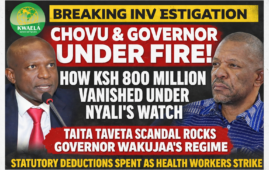 AUDIT SHOCKER: HUNDREDS OF MILLIONS IN WORKERS’ DEDUCTIONS UNACCOUNTED FOR AS FINANCE SHAKE UP ROCKS TAITA TAVETA
By Kwaela News Network Investigations Desk.
 COURT EXPOSES ILLEGAL IMPEACHMENT: TAITA TAVETA COUNTY ASSEMBLY FAULTED FOR RUSHED, UNCONSTITUTIONAL REMOVAL OF SPEAKER MWAMBURI
Mombasa, Kenya — In a damning.
 WHY RENAMING TAITA TAVETA COUNTY TO TSAVO COUNTY IS A STRATEGIC MOVE FOR THE FUTURE
Names are more than symbols; they.
Leave a Comment