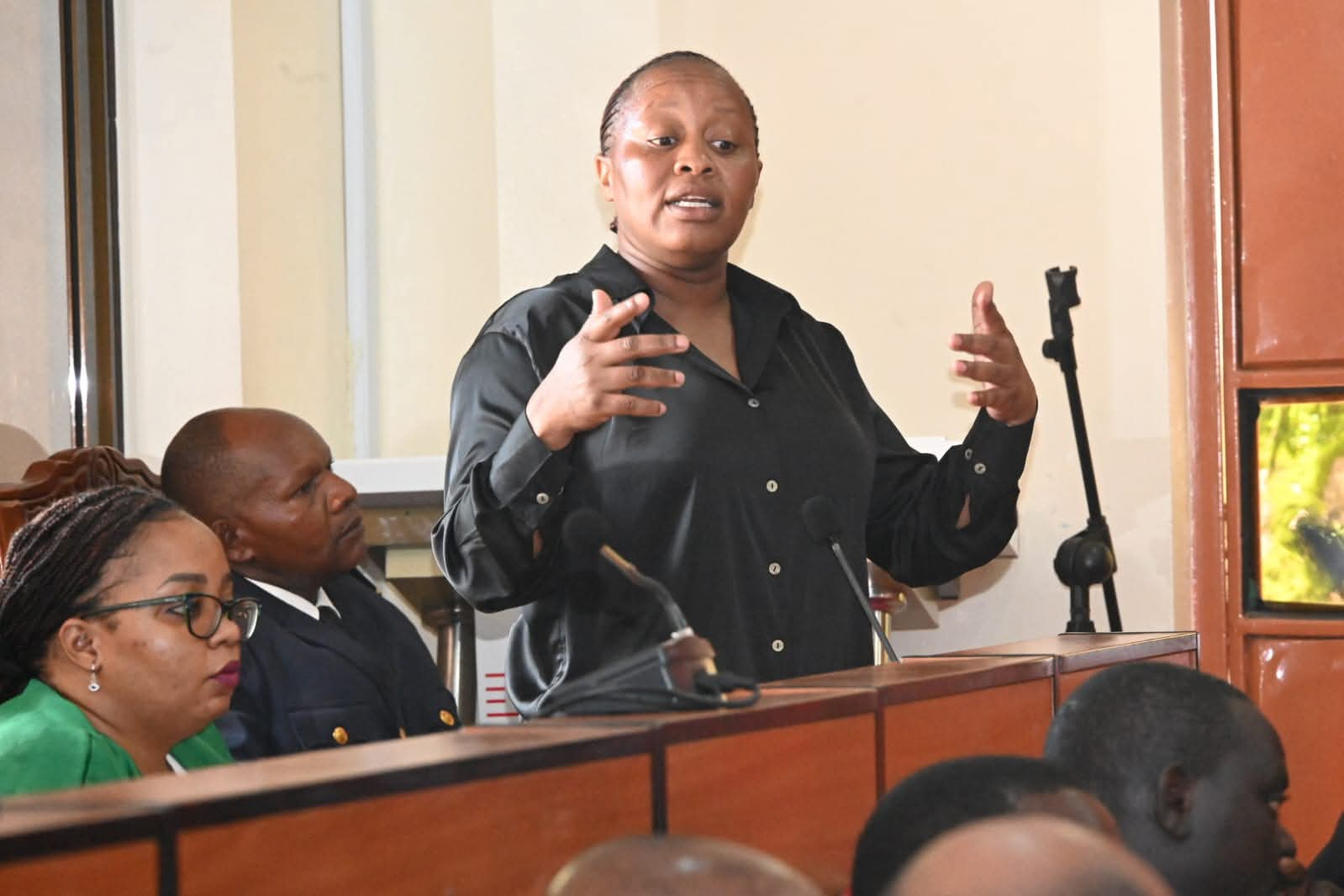
Hon Dorcus Mlughu - MCA Rong:e Ward - New Deputy Leader of Majority

The growing controversy surrounding the financial management of Taita Taveta County has taken another interesting turn, with Rong’e Ward MCA Hon. Dorcas Mlughu publicly expressing frustration over what she describes as the continued failure by the county administration to disclose its own-source revenue figures.
Her latest statements, coming in the wake of a Senate Public Accounts Committee (PAC) engagement with Governor Andrew Mwadime, popularly known as Wakujaa, have added fresh political pressure to an already sensitive accountability debate.
What makes the development particularly significant is that the criticism is coming from a serving member of the County Assembly, an institution constitutionally mandated to exercise oversight over the county executive.
Six days ago, following the Senate proceedings chaired by Senator Moses Kajwang, Hon. Mlughu posted:
“What transpired in the Senate yesterday through the public accounts committee chaired by Senator Moses Kajwang is a very sad state of affairs. Taita Taveta county is dead completely. Sasa wale wakuniita mwenda wazimu sijui wataniambia nini 😲.”
Today, she followed up with an even more provocative statement:
“Our own source revenue has never been revealed even after asking for it for four good years. MWIZI NI MWIZI.”
She accompanied the post with a photograph of Kiambu Governor Kimani Wamatangi, whose administration has publicly discussed its own-source revenue collection and revenue-enhancement targets.
These are serious public statements. They should not be treated as proof of theft, but they raise legitimate questions that deserve clear answers from the county administration.
The official County Assembly website identifies Dorcas Mlughu as the MCA for Rong’e Ward and Deputy Majority Leader. County Assembly of Taita Taveta +1
The photograph of Kiambu Governor Kimani Wamatangi accompanying Mlughu’s latest post is significant.
Kiambu County has publicly discussed its own-source revenue performance. For example, its June 2024 county publication reported KSh3.34 billion collected during the first nine months of FY2023/24, compared with KSh2.44 billion over the corresponding period in the previous financial year. THE KIAMBU REPORT # Kiambu’
Its subsequent revenue-enhancement programme also set ambitious collection targets and discussed automation, cashless payments and measures to address revenue leakages. Kiambu County Government
The comparison raises an important question for Taita Taveta:
If Kiambu can publish its revenue performance, why should Taita Taveta residents struggle to obtain a clear, consolidated account of their county’s own-source revenue?
Residents deserve to know:
Most importantly, where are the discrepancies, if any, between revenue collected, revenue declared and revenue banked?
This is not simply a political argument. It is a matter of public finance management.
The Directorate of Criminal Investigations is not necessarily excluded from investigating economic crimes simply because the allegations involve county government finances.
According to its official mandate, the DCI investigates serious criminal cases, including economic crimes and money laundering. Its mandate derives from Article 247 of the Constitution and the National Police Service Act, 2011. Directorate of Criminal Investigations
There is also judicial authority recognising the DCI’s mandate to investigate economic crimes alongside the EACC.
In a 2019 High Court decision, the court observed that the DCI and EACC have coordinate mandates in investigating economic crimes and that investigations conducted by the DCI are not invalid merely because they were not conducted by EACC.
Therefore, a properly documented complaint concerning suspected diversion, fraudulent accounting, money laundering or misappropriation of county revenue can warrant DCI investigation.
But there is an important distinction.
An allegation of missing revenue is not, by itself, proof that money was stolen. Investigators must establish what was collected, what should have been banked, what was actually received and whether any criminal conduct occurred.
The concerns about EACC’s effectiveness and allegations of compromised investigations deserve attention. However, it would be irresponsible to conclude that the entire institution is incapable of investigating corruption without evidence.
EACC has a statutory mandate to investigate corruption and economic crimes, trace assets and work with other law-enforcement agencies. It also has mechanisms for investigating allegations of misconduct involving its own officers.
If there is credible evidence that investigators have been bribed or investigations deliberately frustrated, those allegations should themselves be investigated.
The answer should be independent scrutiny, not institutional impunity.
A joint or parallel investigation involving the DCI, EACC and other relevant financial investigative agencies may be appropriate, depending on the evidence and the nature of the suspected offences.
This is where the County Assembly of Taita Taveta must demonstrate its seriousness.
Article 185(3) of the Constitution gives County Assemblies the power to exercise oversight over county executives. Article 226(2) further provides that accounting officers of county public entities are accountable to the County Assembly for financial management.
The Assembly should consider the following immediate measures:
The Public Finance Management Act requires county financial records and reporting systems to account for public funds. Section 109 specifically provides for the County Revenue Fund and the responsibilities of the County Treasury in administering it.
A proper forensic financial investigation should not begin by assuming that a particular individual is guilty.
It should follow the money.
Investigators should examine:
Revenue collection platforms and their transaction histories.
Official county receipts against actual bank deposits.
Governor Andrew Mwadime cannot allow this controversy to be reduced to political exchanges between his administration and individual MCAs.
The public deserves a comprehensive explanation.
The Governor should personally ensure that his administration publishes a consolidated account of its own-source revenue collections over the last four years.
He should also explain what measures have been taken to address any weaknesses identified by the Senate, the Auditor-General or other oversight institutions.
The question is not whether the Governor is politically popular or unpopular.
The question is whether public money is being properly collected, safeguarded and spent.
Hon. Dorcas Mlughu’s statements have generated considerable public discussion. But public frustration must now translate into institutional action.
If an MCA can publicly raise questions about revenue transparency after four years of seeking answers, what has the County Assembly as an institution been doing?
Are oversight committees obtaining the information they require?
Have previous audit queries been resolved?
Have accounting officers been held accountable?
And if serious concerns have emerged from the Senate proceedings, what concrete action will follow?
The County Assembly cannot simply wait for residents to make noise on Facebook before exercising its constitutional responsibilities.
KNN EDITORIAL POSITION: CAN THE DCI CRACK THE NUT?

 NDARA B LAND DISPUTE: 63 RESIDENTS SERVED WITH THREE-MONTH EVICTION NOTICE FOLLOWING COURT RULING
Affected families in Mlambenyi, Golani and.
 TAITA TAVETA: WILL DEBORAH WAKESHO SUCCEED THE LATE MARGARET KAWUKI, OR WILL POLITICAL CARTELS INTERFERE?
Questions emerge over Jubilee Party’s.
 CHRISTOPHER MWAMBINGU: EACC INVESTIGATES ALLEGED FORGED DEGREE USED TO SECURE DIRECTOR OF ADMINISTRATION POSITION
A third case raises further.
 MWATATE MP RACE: RICHARD LUKINDO’S AMBITIONS AND THE UNANSWERED DEGREE QUESTION
The political stakes surrounding former.
 TAITA TAVETA: PRISONS OFFICER, NINE OTHERS ARRESTED IN MOTORCYCLE THEFT SYNDICATE PROBE
Serious questions emerge over alleged security.
 ALLEGATIONS OF HARASSMENT RETURN ALONG VOI-CALTEX ROAD CORRIDOR
Residents, motorists, and public transport operators.
 CHURU CHURU PROJECTS HAZIJENGI TAIFA
Kuna tofauti kubwa kati ya.
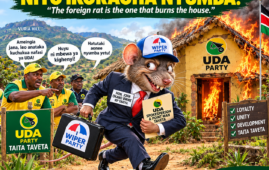 BWIRE: ACCESS TO POWER IS NOT A POLITICAL MANDATE
Hon. John Bwire’s declaration that.
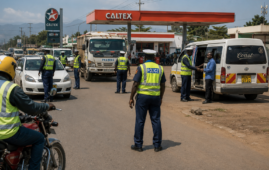 RESIDENTS RAISE CONCERNS OVER ALLEGED MOTORIST HARASSMENT ALONG VOI-MOMBASA ROAD
Residents and motorists in Voi.
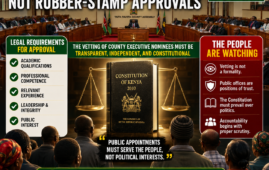 THE TAITA TAVETA COUNTY ASSEMBLY’S VETTING PROCESS MUST UPHOLD THE CONSTITUTION AND PUBLIC TRUST
We, the concerned citizens of Taita.
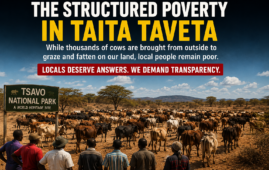 THE STRUCTURED POVERTY IN TAITA TAVETA
Residents demand answers after thousands.
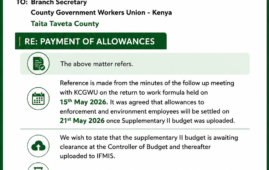 Taita Taveta Workers Demand Immediate Payment of Salaries and Allowances
Frustration is mounting among employees in.
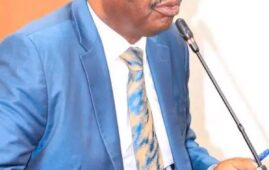 Nepotism Concerns Intensify as Family Links Dominate Senior Appointments in Taita Taveta County
Calls for transparency and fairness in.
 UNGA, POLITICS AND 2027: PS MWAMODO’S JORA VISIT SPARKS DEBATE
A food distribution exercise led by.
 Taita Taveta Residents Increasingly Question Leaders’ Priorities Amid Unresolved Challenges
What was billed as a development.
 Questions Emerge Over Dr. Panuel Mwaeke’s Suspension as Concerns of Corruption, Forgery and Political Retaliation Rock Taita Taveta
The suspension and show-cause notice issued.
1 Comment on this post
Leave a Comment