
The International Criminal Court (ICC), founded in 2002, was envisioned as a beacon of justice for victims of the world’s most serious crimes — genocide, crimes against humanity, war crimes, and aggression. For many African societies, plagued by cycles of political violence and state-backed brutality, the ICC represented hope. When domestic courts were captured, compromised, or simply powerless, the ICC offered an avenue for justice that transcended national politics.
But two decades later, African perceptions of the ICC are sharply divided. On one hand, several successful prosecutions have removed dangerous warlords from the battlefield. On the other hand, some of the ICC’s most important political cases — especially those involving powerful elites — collapsed under the weight of weak evidence, witness interference, and state obstruction.
This essay investigates both sides of this record: the ICC’s landmark victories, its most painful failures, and the profound consequences for victims across the continent. It then examines why ongoing and emerging crises — including those in East Africa — demand stronger, more credible, and more independent international accountability.
I. The ICC’s Landmark Successes: When Justice Overcame Power
Despite criticism, the ICC has produced meaningful convictions that protected vulnerable communities and signaled that perpetrators of mass violence can indeed be held accountable.
1. Thomas Lubanga Dyilo — The Child Soldiers Case That Defined the Court
In 2012, the first conviction in ICC history came against Congolese militia leader Thomas Lubanga. He was found guilty of recruiting and using children under 15 in armed conflict — a practice widespread across the eastern Democratic Republic of Congo (DRC).
Lubanga’s conviction:
- established a new global precedent on child soldier recruitment
- demonstrated the ICC’s ability to prosecute even without state cooperation
- delivered a symbolic victory for thousands of war-affected children
It marked a turning point — proof that the Court could transform evidence from a war zone into a coherent legal victory.
2. Germain Katanga — Accountability for Atrocities Against Civilians
In 2014, Katanga was convicted for war crimes and crimes against humanity stemming from an ethnically motivated 2003 attack in the Ituri region of the DRC. These crimes included murder, sexual violence, and pillaging.
The ruling proved that the ICC could handle complex cases involving multiple armed actors and widespread civilian harm.
3. Ahmad Al-Faqi Al-Mahdi — Cultural Heritage as a Victim of War
The 2016 conviction of Al-Mahdi, a member of an extremist group in Mali, was unique: it focused entirely on the destruction of UNESCO-protected cultural sites in Timbuktu.
The case:
- underscored that cultural identity is protected under international law
- was the first ICC trial to end with a full guilty plea
- expanded global understanding of what constitutes “harm” under the ICC statute
4. Bosco Ntaganda — The Court’s Heaviest Sentence
Perhaps the ICC’s most robust case, Ntaganda’s 2019 conviction included 18 counts of war crimes and crimes against humanity — from murder and rape to sexual slavery and child soldier recruitment.
His 30-year sentence remains the longest in ICC history.
For victims in eastern DRC, it signified long-awaited accountability for a man whose militias terrorized civilians for years.
5. Dominic Ongwen — A Perpetrator Who Was Also a Victim
Ongwen’s 2021 conviction was among the ICC’s most complex. Abducted as a child by Uganda’s Lord’s Resistance Army (LRA), he later rose to become one of its commanders. He was found guilty of rape, forced marriage, murder, enslavement, and attacks on civilian populations.
The case broke new legal ground by confronting the blurred line between victim-hood and perpetration in protracted conflicts.
II. Where the ICC Failed: Kenya’s Collapsed Cases and the Crisis of Political Interference
 If the ICC’s DRC and Uganda prosecutions revealed its strengths, the Kenya cases exposed its deepest vulnerabilities.
1. Background: A Nation in Flames
Kenya’s 2007–08 post-election crisis killed over 1,100 people and displaced more than 600,000. Communities were attacked based on political and ethnic identity. Domestic mechanisms failed, and Parliament blocked the creation of a special tribunal. Victims turned to the ICC for justice.
The ICC responded by charging six prominent Kenyans — politicians, officials, and media figures — believed to have played roles in orchestrating or responding to the violence.
Among those charged were:
- Uhuru Kenyatta
- William Ruto
- Francis Muthaura
- Joshua Arap Sang
The cases would become the ICC’s most politically sensitive prosecutions to date.
2. Why the Cases Disintegrated
A. Massive Witness Interference
From early stages, witnesses began recanting, disappearing, or refusing to testify. ICC investigators reported:
- intimidation
- threats
- bribery
- coercion
- unexplained disappearances
Judges described the interference as unprecedented in scale.
B. Systemic Lack of State Cooperation
The Kenyan government was accused of withholding key evidence, including:
- phone data
- financial records
- internal security logs
- access to critical witnesses
Without state support, the prosecution struggled to build a coherent case.
C. Evidence Deterioration and Political Pressure
The longer the cases dragged on, the weaker they became. Witness protection systems proved inadequate.
Political rhetoric in Kenya framed the ICC as politically biased, contributing to a hostile environment for cooperation.
- By 2016, the judges terminated the Ruto/Sang case.
- By 2015–16, the Kenyatta case had collapsed.
The Court emphasized that these were not acquittals — simply cases that could no longer meet the burden of proof due to external interference.
3. The Consequences of Collapse
- For victims, the outcome was devastating.
- Justice was denied.
- Perpetrators, if any, were not held accountable.
- Communities affected by the violence were left with unresolved trauma.
- Political alliances strengthened instead of facing scrutiny.
Most importantly, the collapse signaled a dangerous lesson:
Powerful political actors can outmaneuver the ICC if they control state machinery and can shape the domestic environment.
III. The ICC’s Structural Weaknesses: Why African Victims Often Go Unprotected
1. Reliance on State Cooperation
The ICC has no police force. It depends on:
- national governments to arrest suspects
- security agencies to provide evidence
- witness protection offices to offer safety
When a state obstructs justice, cases crumble.
2. Vulnerability to Witness Intimidation
Without strong witness protection, investigations fall apart. The Kenya cases showed how a hostile environment can destroy the credibility of evidence.
3. Political Manipulation and Narrative Control
Powerful leaders can frame the ICC as foreign interference, influencing public opinion and discouraging cooperation.
4. Limited Resources and Political Pressure
The ICC faces budget constraints and geopolitical pushback, particularly when cases involve sitting heads of state.
IV. Looking Forward: Accountability for All Future Crises — Including Tanzania
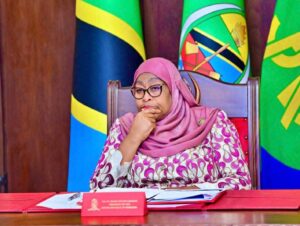
In several African countries, citizens continue to call for independent investigations into violence linked to elections, protests, or state actions. Tanzania is one such example, where human rights groups, civil society organizations, and parts of the international community have raised concerns and urged transparent, impartial inquiries.
The ICC has not opened a case against Tanzania.
But if any future situation — in Tanzania or elsewhere — reveals:
- widespread or systematic attacks on civilians
- state unwillingness to prosecute
- obstruction of justice
…then the ICC has both the mandate and the responsibility to examine the facts impartially, determine whether crimes under its jurisdiction occurred, and pursue accountability where evidence supports it.
The lesson from Kenya is clear:
future investigations must be stronger, more protected, and free from political interference, or victims will suffer the same fate.
Conclusion: The ICC Must Evolve or Lose the Trust of African Victims
The ICC’s African legacy is a complex mix of groundbreaking justice and painful failure.
Successful prosecutions have removed dangerous warlords and protected vulnerable communities.
But collapsed political cases — especially in Kenya — have shown that the ICC can be rendered ineffective when confronted by coordinated obstruction and intimidation.
For the ICC to regain credibility in Africa, it must:
- strengthen witness protection programs
- insist on genuine cooperation from states
- invest in early, thorough, and independent investigations
- avoid political entanglement
- center its mission on victims, not geopolitics
African citizens deserve justice — credible, consistent, and fearless.
Whether in the DRC, Uganda, Kenya, Mali, or Tanzania, the ICC’s duty is to follow the evidence, protect victims, and ensure accountability wherever serious crimes occur.
If international justice is to mean anything, it must protect the powerless, challenge the powerful, and uphold truth even in the face of political resistance.

more recommended stories
 KENYA TO CLOSE EMBASSY IN SWITZERLAND: WHAT THE DIPLOMATIC RESTRUCTURING MEANS FOR KENYANS
The closure of the Kenyan Embassy.
 TANZANIA: TUNDU LISSU AFUNGWA MIAKA MINNE — SAMIA SULUHU HASSAN NA JARIBIO LA KUZIMA DEMOKRASIA
Hukumu ya Lissu ni pigo kwa.
 FRANCE’S NEW VISA EXEMPTION PROGRAM: WHY WAS KENYA LEFT OUT DESPITE RUTO-MACRON FRIENDSHIP?
France’s recent decision to extend.
 JUSTICE OR POLITICS? THE CASE AGAINST MALEMA’S SENTENCE — AND THE CONTRADICTIONS IN HIS VISION
The five-year prison sentence handed down.
 UNDERSTANDING THE AFRICAN NUCLEAR-WEAPON-FREE ZONE TREATY (PELINDABA TREATY)
The African Nuclear-Weapon-Free Zone Treaty, widely.
 KAZI NA UTU? – MASWALI MAZITO BAADA YA KAULI YA RAIS SAMIA KUHUSU VURUGU za OKTOBA 29, 2025
Rais wa Jamhuri ya Muungano wa.
 MILITARY SEIZES POWER IN 2025 GUINEA-BISSAU COUP AMID POST-ELECTION TENSIONS
By Kwaela News Network | Bissau,.
 JUSTICE MUST PREVAIL: A CALL TO ACTION ON TANZANIA’S POST-ELECTION KILLINGS
By Kwaela News Network |.
 TAMKO KUU LA BARAZA LA MAASKOFU KATOLIKI TANZANIA (TEC) JUU YA MAUAJI, MAADHIMISHO NA KIFO KUFUATIA UCHAGUZI WA 29 OKTOBA 2025
Dar es Salaam – 15.
 MUSEVENI’S WAR RHETORIC RAISES TENSION AHEAD OF 2026 ELECTIONS
Uganda’s long-serving president hints at future.
 UJUMBE KWA GEN Z WA TANZANIA 🇹🇿
Ninyi ndio kizazi cha sasa.
 DIPLOMATIC MOVES AMID CONTROVERSY: KENYAN DEPUTY REPRESENTS RUTO AT SAMIA’S SWEARING-IN AS REGIONAL TENSIONS RISE
Nairobi, Kenya – President Samia Suluhu.
 TANZANIA: POST-ELECTION UNREST HIGHLIGHTS TENSIONS BETWEEN POWER AND FREE SPEECH
Following the 29 October 2025 presidential.
 JE, ZANZIBAR INAIKALIA TANGANYIKA KICHWANI?
Wapo Watanzania wanaoanza kuhoji usawa.
 UJUMBE KWA GEN Z WA TANZANIA 🇹🇿
Kama kuna jambo moja la.
 AFRICA’S OPPORTUNITY: STRENGTHENING SEPARATION OF POWERS AND WINNING THE WAR ON CORRUPTION
In recent weeks the conviction.
Leave a Comment