
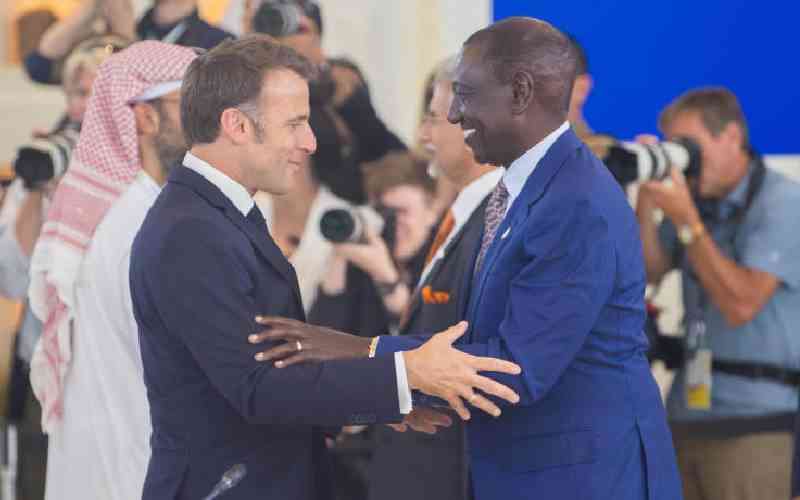
France’s recent decision to extend a special visa exemption arrangement to citizens of 13 countries has reignited debate about the practical value of Kenya’s increasingly close diplomatic relationship with Paris.
The new French regulation allows citizens from 13 selected countries to access certain French overseas territories without obtaining an additional territorial visa, provided they already hold a valid multiple-entry French visa. Among the beneficiaries are China, India, Saudi Arabia, the United Arab Emirates, Qatar, Thailand, Indonesia and South Africa—the only African country on the list.
Kenya, however, was not included.
The decision has raised an uncomfortable but legitimate question: What tangible benefits has Kenya gained from the highly publicized relationship between President William Ruto and French President Emmanuel Macron?
Over the past few years, Kenyans have witnessed frequent meetings, joint press conferences, diplomatic visits and public displays of friendship between the two leaders. France has often been presented as one of Kenya’s closest strategic partners in Europe. Yet when an opportunity arose for France to extend even a limited travel facilitation measure, Kenya found itself watching from the sidelines.
This is not merely about visas.
It is about the effectiveness of diplomacy.
Diplomatic relations are not measured by handshakes, photographs, state dinners or glowing speeches. They are ultimately judged by outcomes that benefit ordinary citizens. When citizens are unable to point to clear advantages arising from high-level international engagements, questions naturally emerge about whether the country’s diplomatic priorities are producing meaningful results.
South Africa’s inclusion is particularly noteworthy. If France deemed it appropriate to include one African nation in the arrangement, many Kenyans are asking why Kenya was not considered despite the apparent warmth between Nairobi and Paris.
The issue becomes even more significant given the extensive engagement between the Ruto administration and the French government on matters ranging from infrastructure and climate financing to trade and investment. Kenyans may reasonably wonder whether their country’s interests are being advanced with sufficient effectiveness on the international stage.
No serious observer expects visa policies to be determined solely by personal friendships between heads of state. Governments consider security, migration trends, reciprocity arrangements and broader foreign policy objectives when making such decisions. Nevertheless, political leaders frequently highlight their international relationships as evidence of diplomatic success. When expected benefits fail to materialize, public scrutiny is inevitable.
President Ruto’s administration therefore faces a challenge of perception as much as policy.
If Kenya’s relationship with France is indeed stronger than ever, citizens are entitled to ask what concrete gains have resulted from that partnership. Has it translated into easier travel opportunities? Increased educational exchanges? Expanded employment pathways? Preferential trade access? Greater investment? Or are Kenyans simply being asked to celebrate diplomatic symbolism without seeing practical outcomes?
The exclusion from France’s latest visa exemption arrangement may appear minor in isolation. However, it has become a powerful symbol of a broader concern among many citizens: that Kenya’s foreign policy achievements are often announced with great fanfare but deliver limited direct benefits to ordinary people.
As public debate continues, the government would do well to provide a clear account of the measurable gains Kenya has secured through its close relationship with France. Diplomacy should not be judged by proximity to powerful leaders but by the opportunities it creates for the people it is meant to serve.
The question many Kenyans are now asking is straightforward: If Kenya enjoys such a close relationship with France, why was it left out when France opened this door to others?

more recommended stories
 KENYA TO CLOSE EMBASSY IN SWITZERLAND: WHAT THE DIPLOMATIC RESTRUCTURING MEANS FOR KENYANS
The closure of the Kenyan Embassy.
 TANZANIA: TUNDU LISSU AFUNGWA MIAKA MINNE — SAMIA SULUHU HASSAN NA JARIBIO LA KUZIMA DEMOKRASIA
Hukumu ya Lissu ni pigo kwa.
 JUSTICE OR POLITICS? THE CASE AGAINST MALEMA’S SENTENCE — AND THE CONTRADICTIONS IN HIS VISION
The five-year prison sentence handed down.
 UNDERSTANDING THE AFRICAN NUCLEAR-WEAPON-FREE ZONE TREATY (PELINDABA TREATY)
The African Nuclear-Weapon-Free Zone Treaty, widely.
 KAZI NA UTU? – MASWALI MAZITO BAADA YA KAULI YA RAIS SAMIA KUHUSU VURUGU za OKTOBA 29, 2025
Rais wa Jamhuri ya Muungano wa.
 MILITARY SEIZES POWER IN 2025 GUINEA-BISSAU COUP AMID POST-ELECTION TENSIONS
By Kwaela News Network | Bissau,.
 THE ICC AND AFRICA: IMPUNITY, BROKEN CASES, AND THE HIGH COST OF FAILED INTERNATIONAL JUSTICE
The International Criminal Court (ICC),.
 JUSTICE MUST PREVAIL: A CALL TO ACTION ON TANZANIA’S POST-ELECTION KILLINGS
By Kwaela News Network |.
 TAMKO KUU LA BARAZA LA MAASKOFU KATOLIKI TANZANIA (TEC) JUU YA MAUAJI, MAADHIMISHO NA KIFO KUFUATIA UCHAGUZI WA 29 OKTOBA 2025
Dar es Salaam – 15.
 MUSEVENI’S WAR RHETORIC RAISES TENSION AHEAD OF 2026 ELECTIONS
Uganda’s long-serving president hints at future.
 UJUMBE KWA GEN Z WA TANZANIA 🇹🇿
Ninyi ndio kizazi cha sasa.
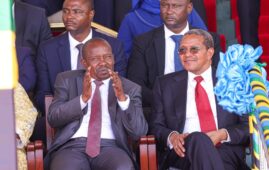 DIPLOMATIC MOVES AMID CONTROVERSY: KENYAN DEPUTY REPRESENTS RUTO AT SAMIA’S SWEARING-IN AS REGIONAL TENSIONS RISE
Nairobi, Kenya – President Samia Suluhu.
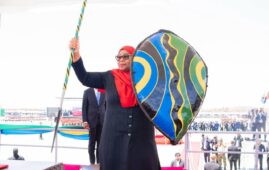 TANZANIA: POST-ELECTION UNREST HIGHLIGHTS TENSIONS BETWEEN POWER AND FREE SPEECH
Following the 29 October 2025 presidential.
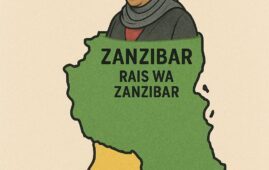 JE, ZANZIBAR INAIKALIA TANGANYIKA KICHWANI?
Wapo Watanzania wanaoanza kuhoji usawa.
 UJUMBE KWA GEN Z WA TANZANIA 🇹🇿
Kama kuna jambo moja la.
 AFRICA’S OPPORTUNITY: STRENGTHENING SEPARATION OF POWERS AND WINNING THE WAR ON CORRUPTION
In recent weeks the conviction.
Leave a Comment