
PelindabaTreaty

The African Nuclear-Weapon-Free Zone Treaty, widely known as the Pelindaba Treaty, is a landmark legal instrument that reinforces Africa’s longstanding commitment to peace, security, and responsible scientific development. Adopted in 1996 and entering into force on 15 July 2009, the treaty establishes Africa as a zone free of nuclear explosive devices and safeguards the continent against nuclear-related environmental harm.
The treaty was adopted on 11 April 1996 in Cairo after years of continental diplomacy coordinated under the auspices of the Organization of African Unity, now succeeded by the African Union.
Its name derives from Pelindaba, the site of South Africa’s former nuclear weapons program. Notably, South Africa remains the only state in the world to have voluntarily developed nuclear weapons and subsequently dismantled them completely, setting a powerful precedent for disarmament.
The treaty legally binds African states to:
Prohibit the research, development, manufacture, acquisition, testing, possession, or control of nuclear explosive devices
Prevent the stationing of nuclear weapons on their territory
Ban the dumping of radioactive waste within the African zone
Refrain from assisting any state in acquiring nuclear weapons
The geographic scope covers the entire African continent, associated islands, territorial waters, and airspace.
While prohibiting nuclear weapons, the treaty promotes the peaceful application of nuclear science in sectors such as medicine, agriculture, energy, and research. Member states are required to maintain safeguards agreements with the International Atomic Energy Agency to ensure nuclear materials are not diverted to military purposes.
This dual approach ensures security without obstructing technological and socio-economic development.
The treaty established the African Commission on Nuclear Energy (AFCONE), headquartered in Pretoria. AFCONE is responsible for:
Monitoring compliance among state parties
Promoting cooperation in peaceful nuclear science
Addressing violations and ensuring transparency
Coordinating with international oversight bodies
The treaty includes three additional protocols inviting the five recognized nuclear-weapon states under the Treaty on the Non-Proliferation of Nuclear Weapons to provide legally binding assurances.
These states are:
China
France
Russia
United Kingdom
United States
Under the protocols, they agree not to use or threaten to use nuclear weapons against African states and not to conduct nuclear tests within the African zone.
The Pelindaba Treaty forms a critical pillar of the global non-proliferation architecture. By legally consolidating Africa’s nuclear-weapon-free status, it:
Strengthens continental security
Protects the environment from radioactive contamination
Enhances Africa’s diplomatic leverage in global disarmament forums
Reinforces international norms against nuclear proliferation
Africa joins other regions, including Latin America, Southeast Asia, and Central Asia, in establishing legally binding nuclear-weapon-free zones.
The Pelindaba Treaty represents more than a legal framework; it embodies Africa’s collective vision for a peaceful and secure future. By prohibiting nuclear weapons while encouraging responsible scientific advancement, the treaty balances security, environmental protection, and development. In an era of renewed geopolitical tensions, its continued implementation remains vital for regional stability and global disarmament efforts.

 KENYA TO CLOSE EMBASSY IN SWITZERLAND: WHAT THE DIPLOMATIC RESTRUCTURING MEANS FOR KENYANS
The closure of the Kenyan Embassy.
 TANZANIA: TUNDU LISSU AFUNGWA MIAKA MINNE — SAMIA SULUHU HASSAN NA JARIBIO LA KUZIMA DEMOKRASIA
Hukumu ya Lissu ni pigo kwa.
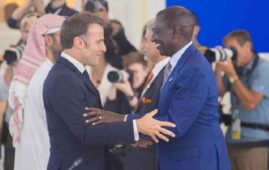 FRANCE’S NEW VISA EXEMPTION PROGRAM: WHY WAS KENYA LEFT OUT DESPITE RUTO-MACRON FRIENDSHIP?
France’s recent decision to extend.
 JUSTICE OR POLITICS? THE CASE AGAINST MALEMA’S SENTENCE — AND THE CONTRADICTIONS IN HIS VISION
The five-year prison sentence handed down.
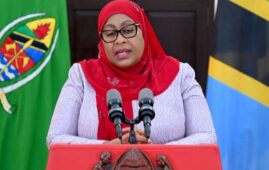 KAZI NA UTU? – MASWALI MAZITO BAADA YA KAULI YA RAIS SAMIA KUHUSU VURUGU za OKTOBA 29, 2025
Rais wa Jamhuri ya Muungano wa.
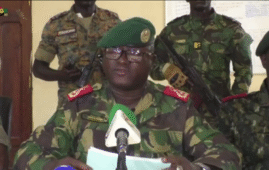 MILITARY SEIZES POWER IN 2025 GUINEA-BISSAU COUP AMID POST-ELECTION TENSIONS
By Kwaela News Network | Bissau,.
 THE ICC AND AFRICA: IMPUNITY, BROKEN CASES, AND THE HIGH COST OF FAILED INTERNATIONAL JUSTICE
The International Criminal Court (ICC),.
 JUSTICE MUST PREVAIL: A CALL TO ACTION ON TANZANIA’S POST-ELECTION KILLINGS
By Kwaela News Network |.
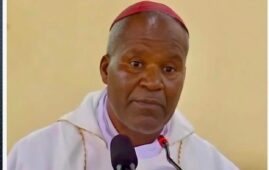 TAMKO KUU LA BARAZA LA MAASKOFU KATOLIKI TANZANIA (TEC) JUU YA MAUAJI, MAADHIMISHO NA KIFO KUFUATIA UCHAGUZI WA 29 OKTOBA 2025
Dar es Salaam – 15.
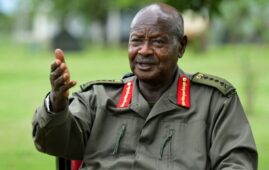 MUSEVENI’S WAR RHETORIC RAISES TENSION AHEAD OF 2026 ELECTIONS
Uganda’s long-serving president hints at future.
 UJUMBE KWA GEN Z WA TANZANIA 🇹🇿
Ninyi ndio kizazi cha sasa.
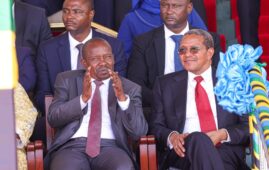 DIPLOMATIC MOVES AMID CONTROVERSY: KENYAN DEPUTY REPRESENTS RUTO AT SAMIA’S SWEARING-IN AS REGIONAL TENSIONS RISE
Nairobi, Kenya – President Samia Suluhu.
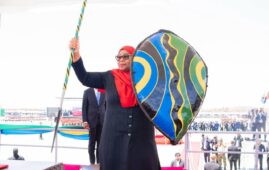 TANZANIA: POST-ELECTION UNREST HIGHLIGHTS TENSIONS BETWEEN POWER AND FREE SPEECH
Following the 29 October 2025 presidential.
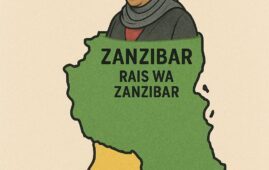 JE, ZANZIBAR INAIKALIA TANGANYIKA KICHWANI?
Wapo Watanzania wanaoanza kuhoji usawa.
 UJUMBE KWA GEN Z WA TANZANIA 🇹🇿
Kama kuna jambo moja la.
 AFRICA’S OPPORTUNITY: STRENGTHENING SEPARATION OF POWERS AND WINNING THE WAR ON CORRUPTION
In recent weeks the conviction.
Leave a Comment