
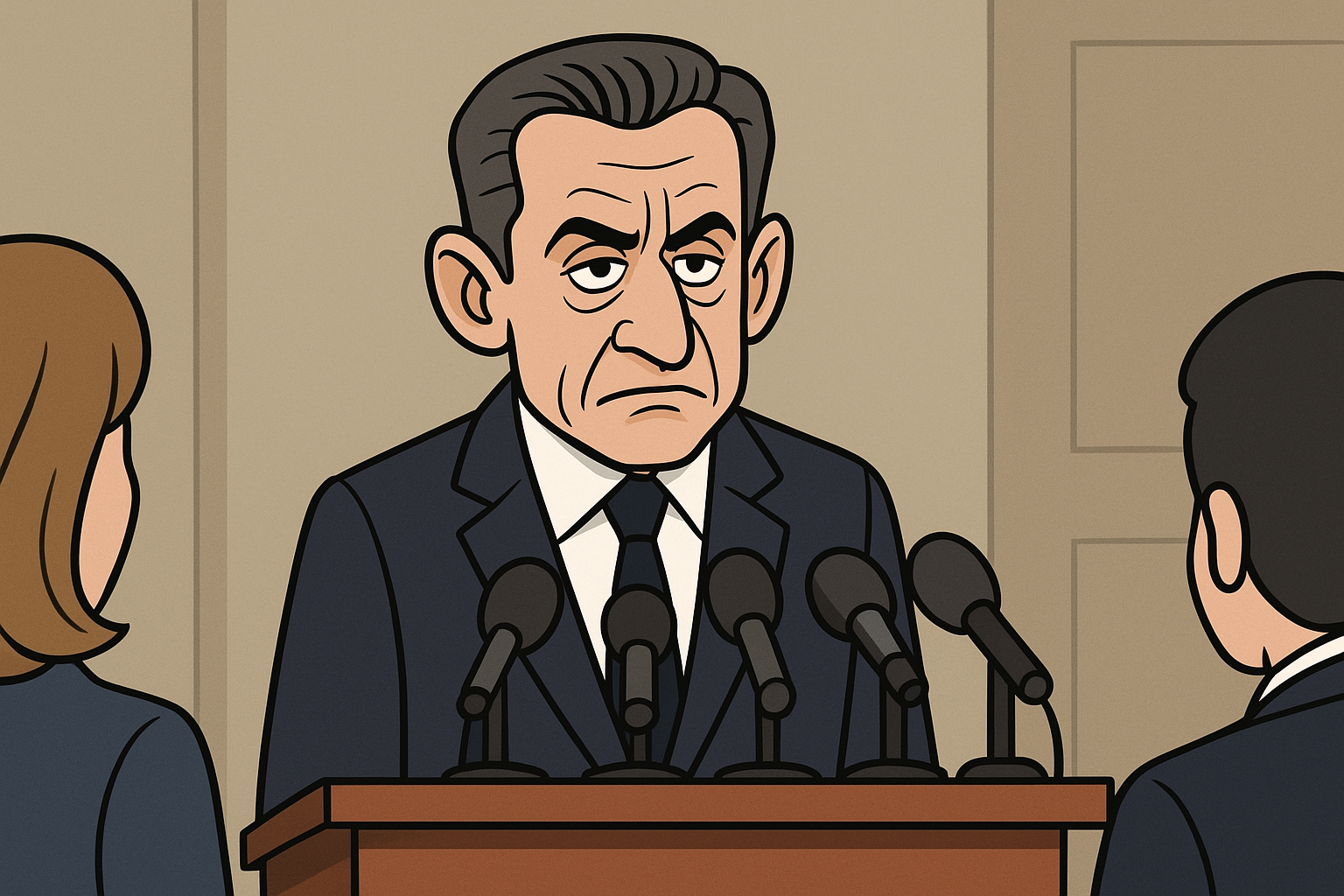
In recent weeks the conviction of former French President Nicolas Sarkozy, sentenced to five years in prison for campaign-finance offences including illicit Libya-linked funds, has reminded the world that even top-level leaders can be held to account. This precedent ought to inspire African nations: the war on grand corruption can be won — but only if states bolster the separation of powers, reinforce institutional checks, and pursue genuine accountability.
Why the Sarkozy case matters for Africa
Sarkozy’s downfall reflects a system in which investigative bodies, courts and legislature acted independently enough to challenge the executive. His case shows:
- Leaders are not immune.
- Legal and procedural structures matter.
- International money flows, campaign fraud and hidden financing can be traced and prosecuted.
For African states contemplating tackling former-leaders or entrenched patronage networks, the message is clear: accountability at the highest level is possible.
African examples of accountability
Here are some concrete cases from the continent that show how the balance of powers and political risk play out:
Ibrahima Kassory Fofana (Guinea) – The former Prime Minister was sentenced to five years in prison for embezzlement of public funds (ca. 15 billion Guinean francs ≈ US$1.7 million) and fined 2 billion francs.
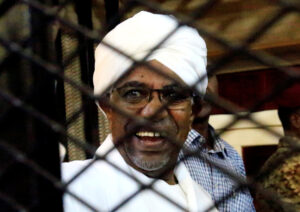
Omar Al-Bashir, former leader of Sudan from 1989 to 2019, was deposed and later convicted of corruption, money-laundering and illicit enrichment. He was convicted in December 2019 of money-laundering and corruption and sentenced to two years in prison (plus other trials pending).
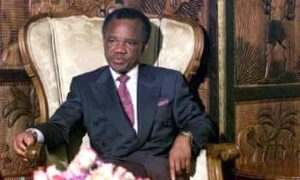
Former Zambian President Frederick Chiluba was reported to have faced charges of theft and misuse of public funds after leaving office. In 2007, a UK civil court reportedly found him guilty in a civil case involving the theft of US $46 million. However, it was also reported that many of the criminal charges brought against him in Zambia were either dropped or delayed, raising concerns about the country’s commitment to fully pursuing accountability.
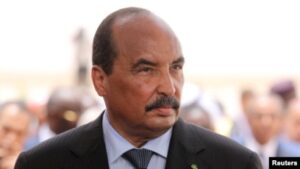
Mohamed Ould Abdel Aziz (Mauritania) – The former President was sentenced on appeal to 15 years in prison for money-laundering and illicit enrichment while in office.
These cases show that where the judicial process holds up, politics can yield accountability.
Where Africa must focus now
Despite such examples, many African countries continue to suffer from weak checks, undue executive dominance, and corruption that stifles development. Below are key reforms and contexts:
1. Reinforce separation of powers
Strengthen independent judiciaries, ensure prosecutorial autonomy and guard oversight institutions from political capture.
Guarantee meaningful legislative oversight of the executive and public procurement.
Protect media freedom and civil society so transparency isn’t optional.
2. Combat corruption with force and fairness
Prosecute major corruption cases impartially, including former leaders and senior officials—this helps break impunity.
Recover mis-appropriated assets and apply real penalties (fines, jail terms, restitution).
Prioritise campaign-financing transparency, procurement reform and open data.
Deploy cross-border cooperation: many illicit flows leave the country and re-enter via offshore jurisdictions.
3. Ensure the system works for development
Corruption is not just moral; it drains resources needed for schools, health, infrastructure and job creation. For example:
William Ruto (Kenya) faces significant public anger over corruption perceptions and tax protests. While he has not been convicted, Kenya ranked 121st of 180 in the 2024 Corruption Perceptions Index and top officials linked to major scandals continue to surface.
Multi-billion-dollar procurement scandals (e.g., dam projects in Kenya) show how weak systems allow huge losses.
Countries like Kenya must use these signals to fundamentally reform governance, not merely tweak it.
A call to action
African nations must ask themselves: if a leader like Sarkozy can face justice in a major democracy, why can’t we hold our former presidents and senior officials to account? What’s needed is not vengeance, but structural reform:
Enact laws removing or limiting immunity for former leaders, where appropriate and consistent with the constitution.
Fund and staff anti-corruption institutions with real independence and investigations power.
Ensure prosecutorial decisions follow evidence and due process, not politics.
Encourage regional and international regimes to assist with asset-recovery and money-laundering cases.
Educate citizens: transparency, media freedom and civic oversight boost legitimate demands for accountability.
Conclusion
The war on corruption is not a fanciful ideal—it is winnable. The Sarkozy example gives hope. The African examples of Fofana and Aziz show there is precedent on the continent. But hope is not enough. It must be underpinned by real reform of separation of powers, justice systems, transparency regimes and public-sector integrity. If Africa takes up this challenge, the dividends are enormous: stronger institutions, more efficient public services, better investment climates and ultimately improved livelihoods for millions.
Published on KWAELA NEWS NETWORK | Date: October 26, 2025

more recommended stories
 KENYA TO CLOSE EMBASSY IN SWITZERLAND: WHAT THE DIPLOMATIC RESTRUCTURING MEANS FOR KENYANS
The closure of the Kenyan Embassy.
 TANZANIA: TUNDU LISSU AFUNGWA MIAKA MINNE — SAMIA SULUHU HASSAN NA JARIBIO LA KUZIMA DEMOKRASIA
Hukumu ya Lissu ni pigo kwa.
 FRANCE’S NEW VISA EXEMPTION PROGRAM: WHY WAS KENYA LEFT OUT DESPITE RUTO-MACRON FRIENDSHIP?
France’s recent decision to extend.
 JUSTICE OR POLITICS? THE CASE AGAINST MALEMA’S SENTENCE — AND THE CONTRADICTIONS IN HIS VISION
The five-year prison sentence handed down.
 UNDERSTANDING THE AFRICAN NUCLEAR-WEAPON-FREE ZONE TREATY (PELINDABA TREATY)
The African Nuclear-Weapon-Free Zone Treaty, widely.
 KAZI NA UTU? – MASWALI MAZITO BAADA YA KAULI YA RAIS SAMIA KUHUSU VURUGU za OKTOBA 29, 2025
Rais wa Jamhuri ya Muungano wa.
 MILITARY SEIZES POWER IN 2025 GUINEA-BISSAU COUP AMID POST-ELECTION TENSIONS
By Kwaela News Network | Bissau,.
 THE ICC AND AFRICA: IMPUNITY, BROKEN CASES, AND THE HIGH COST OF FAILED INTERNATIONAL JUSTICE
The International Criminal Court (ICC),.
 JUSTICE MUST PREVAIL: A CALL TO ACTION ON TANZANIA’S POST-ELECTION KILLINGS
By Kwaela News Network |.
 TAMKO KUU LA BARAZA LA MAASKOFU KATOLIKI TANZANIA (TEC) JUU YA MAUAJI, MAADHIMISHO NA KIFO KUFUATIA UCHAGUZI WA 29 OKTOBA 2025
Dar es Salaam – 15.
 MUSEVENI’S WAR RHETORIC RAISES TENSION AHEAD OF 2026 ELECTIONS
Uganda’s long-serving president hints at future.
 UJUMBE KWA GEN Z WA TANZANIA 🇹🇿
Ninyi ndio kizazi cha sasa.
 DIPLOMATIC MOVES AMID CONTROVERSY: KENYAN DEPUTY REPRESENTS RUTO AT SAMIA’S SWEARING-IN AS REGIONAL TENSIONS RISE
Nairobi, Kenya – President Samia Suluhu.
 TANZANIA: POST-ELECTION UNREST HIGHLIGHTS TENSIONS BETWEEN POWER AND FREE SPEECH
Following the 29 October 2025 presidential.
 JE, ZANZIBAR INAIKALIA TANGANYIKA KICHWANI?
Wapo Watanzania wanaoanza kuhoji usawa.
 UJUMBE KWA GEN Z WA TANZANIA 🇹🇿
Kama kuna jambo moja la.
Leave a Comment