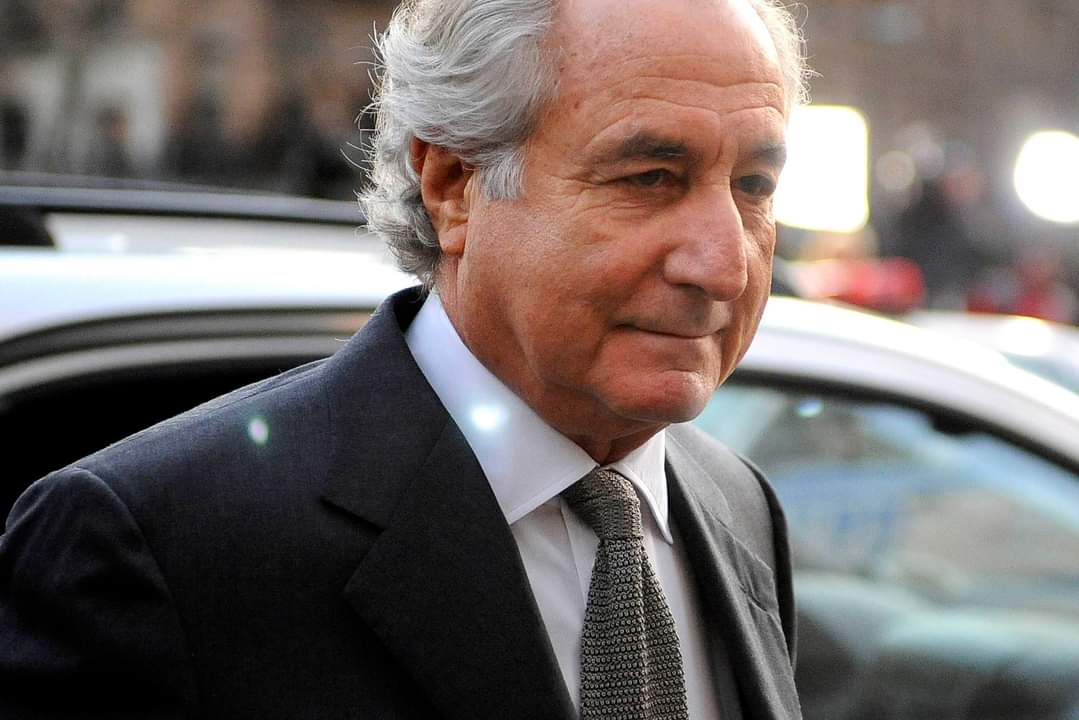
Bernie Madoff

Madoff founded Bernard L. Madoff Madoff investment scandal.
Investment Securities LLC in 1960, and was its chairman until his arrest.
The firm employed Madoff’s brother Peter as senior managing director and chief compliance officer, Peter’s daughter Shana Madoff as rules and compliance officer and attorney, and Madoff’s sons Mark and Andrew. Peter was sentenced to 10 years in prison, and Mark committed suicide exactly two years after his father’s arrest.
Alerted by his sons, federal authorities arrested Madoff on December 11, 2008. On March 12, 2009, Madoff pleaded guilty to 11 federal crimes and admitted to operating the largest private Ponzi scheme in history.
On June 29, 2009, he was sentenced to 150 years in prison with restitution of $170 billion. According to the original federal charges, Madoff said that his firm had “liabilities of approximately US$50 billion”.
Prosecutors estimated the size of the fraud to be $64.8 billion, based on the amounts in the accounts of Madoff’s 4,800 clients as of November 30, 2008.[8][9] Ignoring opportunity costs and taxes paid on fictitious profits, half of Madoff’s direct investors lost no money,[10] with Madoff’s repeated (and repeatedly ignored) whistleblower, Harry Markopolos, estimating that at least $35 billion of the money Madoff claimed to have stolen never really existed, but was simply fictional profits he reported to his clients.
Investigators determined that others were involved in the scheme.
The U.S. Securities and Exchange Commission (SEC) was criticized for not investigating Madoff more thoroughly. Questions about his firm were raised as early as 1999. The legitimate trading arm of Madoff’s business that was run by his two sons was one of the top market makers on Wall Street, and in 2008 was the sixth-largest.
Madoff’s personal and business asset freeze created a chain reaction throughout the world’s business and philanthropic community, forcing many organizations to at least temporarily close, including the Robert I. Lappin Charitable Foundation, the Picower Foundation, and the JEHT Foundation.
Madoff started his firm in 1960 as a penny stock trader with $5,000, earned from working as a lifeguard and sprinkler installer.[17] His fledgling business began to grow with the assistance of his father-in-law, accountant Saul Alpern, who referred a circle of friends and their families.[18] Initially, the firm made markets (quoted bid and ask prices) via the National Quotation Bureau’s Pink Sheets. To compete with firms that were members of the New York Stock Exchange trading on the stock exchange’s floor, his firm began using innovative computer information technology to disseminate quotes.[19] After a trial run, the technology that the firm helped develop became the NASDAQ.[20] At one point, Madoff Securities was the largest buying-and-selling “market maker” at the NASDAQ.[19]
He was active in the National Association of Securities Dealers (NASD), a self-regulatory securities industry organization, serving as the chairman of the board of directors and on the board of governors.
In 1992, The Wall Street Journal described him:
… one of the masters of the off-exchange “third market” and the bane of the New York Stock Exchange. He has built a highly profitable securities firm, Bernard L. Madoff Investment Securities, which siphons a huge volume of stock trades away from the Big Board. The $740 million average daily volume of trades executed electronically by the Madoff firm off the exchange equals 9% of the New York exchange’s. Mr. Madoff’s firm can execute trades so quickly and cheaply that it actually pays other brokerage firms a penny a share to execute their customers’ orders, profiting from the spread between bid and asked prices that most stocks trade for.
— Randall Smith, Wall Street Journal
Several family members worked for him. His younger brother, Peter, was senior managing director and chief compliance officer, and Peter’s daughter, Shana Madoff, was the compliance attorney. Madoff’s sons, Mark and Andrew, worked in the trading section, along with Charles Weiner, Madoff’s nephew.
Andrew Madoff invested his own money in his father’s fund, but Mark stopped in about 2001.
Federal investigators believe the fraud in the investment management division and advisory division may have begun in the 1970s.[25] However, Madoff himself stated his fraudulent activities began in the 1990s.
In the 1980s, Madoff’s market-maker division traded up to 5% of the total volume made on the New York Stock Exchange.[19] Madoff was “the first prominent practitioner” of payment for order flow, paying brokers to execute their clients’ orders through his brokerage, a practice some have called a “legal kickback”.
This practice gave Madoff the distinction of being the largest dealer in NYSE-listed stocks in the U.S., trading about 15% of transaction volume.
Academics have questioned the ethics of these payments.
Madoff has argued that these payments did not alter the price that the customer received.
He viewed payments for order flow as a normal business practice: “If your girlfriend goes to buy stockings at a supermarket, the racks that display those stockings are usually paid for by the company that manufactured the stockings. Order flow is an issue that attracted a lot of attention but is grossly overrated.”
By 2000, Madoff Securities, one of the top traders of US securities, held approximately $300 million in assets.[19] The business occupied three floors of the Lipstick Building in Manhattan, with the investment management division, referred to as the “hedge fund”, employing a staff of approximately 24.
Madoff also ran a branch office in London that employed 28 people, separate from Madoff Securities. The company handled investments for his family of approximately £80 million.
Two remote cameras installed in the London office permitted Madoff to monitor events from New York.
After 41 years as a sole proprietorship, Madoff converted his firm into a limited liability company in 2001, with himself as the sole shareholder.

 KENYA TO CLOSE EMBASSY IN SWITZERLAND: WHAT THE DIPLOMATIC RESTRUCTURING MEANS FOR KENYANS
The closure of the Kenyan Embassy.
 TANZANIA: TUNDU LISSU AFUNGWA MIAKA MINNE — SAMIA SULUHU HASSAN NA JARIBIO LA KUZIMA DEMOKRASIA
Hukumu ya Lissu ni pigo kwa.
 FRANCE’S NEW VISA EXEMPTION PROGRAM: WHY WAS KENYA LEFT OUT DESPITE RUTO-MACRON FRIENDSHIP?
France’s recent decision to extend.
 JUSTICE OR POLITICS? THE CASE AGAINST MALEMA’S SENTENCE — AND THE CONTRADICTIONS IN HIS VISION
The five-year prison sentence handed down.
 UNDERSTANDING THE AFRICAN NUCLEAR-WEAPON-FREE ZONE TREATY (PELINDABA TREATY)
The African Nuclear-Weapon-Free Zone Treaty, widely.
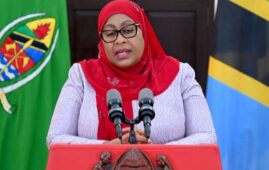 KAZI NA UTU? – MASWALI MAZITO BAADA YA KAULI YA RAIS SAMIA KUHUSU VURUGU za OKTOBA 29, 2025
Rais wa Jamhuri ya Muungano wa.
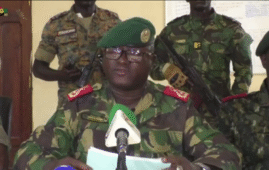 MILITARY SEIZES POWER IN 2025 GUINEA-BISSAU COUP AMID POST-ELECTION TENSIONS
By Kwaela News Network | Bissau,.
 THE ICC AND AFRICA: IMPUNITY, BROKEN CASES, AND THE HIGH COST OF FAILED INTERNATIONAL JUSTICE
The International Criminal Court (ICC),.
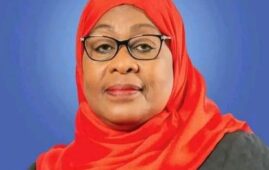 JUSTICE MUST PREVAIL: A CALL TO ACTION ON TANZANIA’S POST-ELECTION KILLINGS
By Kwaela News Network |.
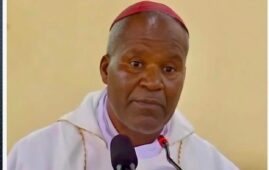 TAMKO KUU LA BARAZA LA MAASKOFU KATOLIKI TANZANIA (TEC) JUU YA MAUAJI, MAADHIMISHO NA KIFO KUFUATIA UCHAGUZI WA 29 OKTOBA 2025
Dar es Salaam – 15.
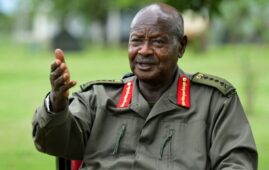 MUSEVENI’S WAR RHETORIC RAISES TENSION AHEAD OF 2026 ELECTIONS
Uganda’s long-serving president hints at future.
 UJUMBE KWA GEN Z WA TANZANIA 🇹🇿
Ninyi ndio kizazi cha sasa.
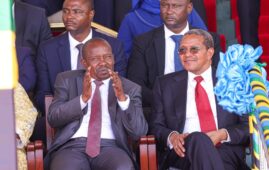 DIPLOMATIC MOVES AMID CONTROVERSY: KENYAN DEPUTY REPRESENTS RUTO AT SAMIA’S SWEARING-IN AS REGIONAL TENSIONS RISE
Nairobi, Kenya – President Samia Suluhu.
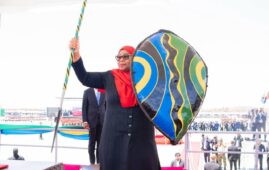 TANZANIA: POST-ELECTION UNREST HIGHLIGHTS TENSIONS BETWEEN POWER AND FREE SPEECH
Following the 29 October 2025 presidential.
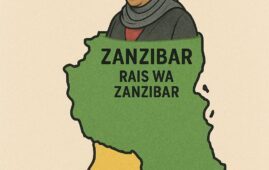 JE, ZANZIBAR INAIKALIA TANGANYIKA KICHWANI?
Wapo Watanzania wanaoanza kuhoji usawa.
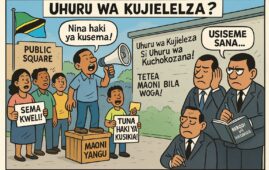 UJUMBE KWA GEN Z WA TANZANIA 🇹🇿
Kama kuna jambo moja la.
Leave a Comment