
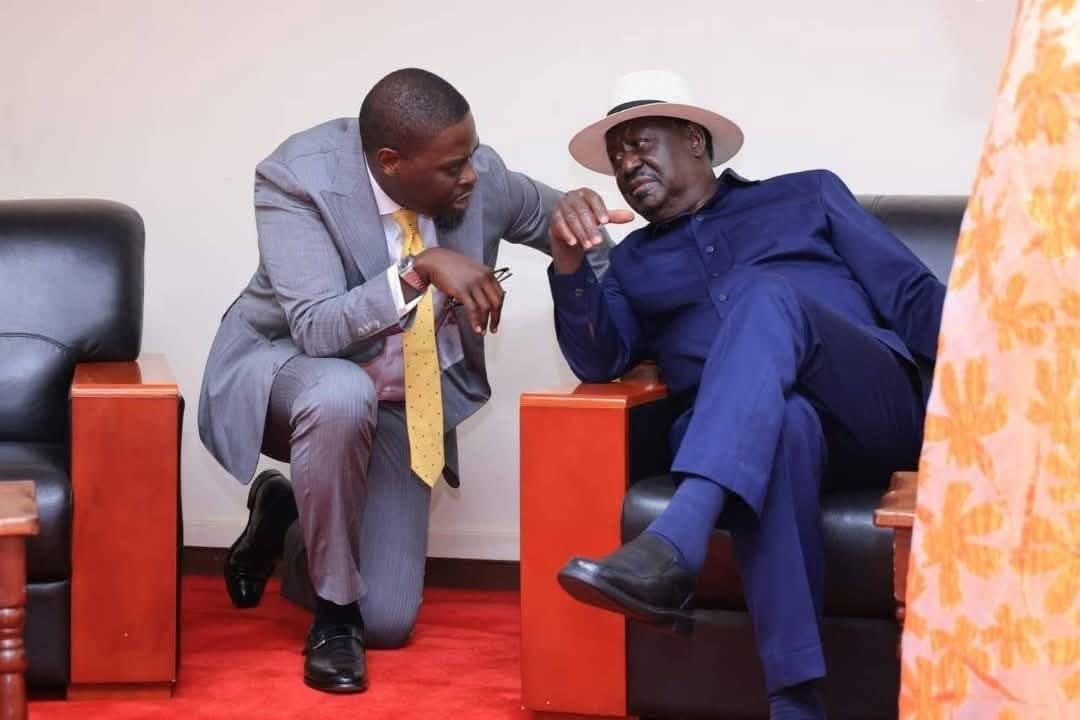
Governor’s absence during attempted arrest raises questions over accountability and institutional independence
Nairobi, March 31, 2026 — Johnson Sakaja is at the centre of a deepening political and legal storm following reports that he was unavailable when police officers arrived at City Hall to execute an arrest order linked to a Senate probe.
The attempted arrest stems from a directive by the Senate County Public Accounts Committee after the governor allegedly failed to honour multiple summonses to respond to audit queries for the 2024/2025 financial year. The committee is investigating significant financial irregularities within the Nairobi City County administration.
Billions in Question
According to documents before the Senate, the audit raises concerns over expenditures running into billions of shillings. Key issues under scrutiny include:
- KSh 1.9 billion in irregular salary payments
- KSh 840 million in undocumented personnel-related costs
- KSh 544 million in fuel expenditures lacking sufficient accountability
In addition, the committee questioned the engagement of seven consultants reportedly earning a combined KSh 10 million per month, raising concerns over procurement practices and fiscal discipline.
Despite the seriousness of these allegations, the governor has previously dismissed the enforcement action as “unnecessary drama,” criticising the deployment of heavily armed police officers.
Arrest Attempt Raises New Questions
The situation escalated when police officers, reportedly led by regional commander Issa Mohamud, visited City Hall to carry out the arrest. However, the governor was not present at the time, fuelling speculation over whether he is deliberately evading enforcement or whether the incident reflects procedural and coordination gaps.
While there has been no official confirmation that the governor is in hiding, his absence at a critical moment has intensified public scrutiny and political debate.
Legal and Political Implications
Failure to comply with Senate summons may constitute contempt of Parliament, an offence that carries potential penalties, including fines and further legal action. Continued non-compliance could also trigger broader constitutional consequences, including questions over suitability to hold public office.
The unfolding developments place renewed focus on the role of oversight institutions and their ability to enforce accountability at the county level.
A Test for Institutions
The case is increasingly being viewed as a test of Kenya’s institutional strength, particularly in the post-Raila Odinga political landscape, where the balance between executive influence and independent oversight is under close watch.
Attention is also turning to the national executive under William Ruto, although there is no indication of direct involvement. Analysts note that while the presidency does not formally control Senate processes, the broader political environment can influence how such confrontations unfold.
What Comes Next
As pressure mounts, the key question is whether the governor will present himself before the Senate committee and address the audit concerns, or whether the standoff will escalate into a prolonged legal and political confrontation.
For now, the situation remains fluid. What is clear, however, is that the outcome will carry implications not only for Nairobi County’s leadership, but also for public confidence in accountability mechanisms across government.

more recommended stories
 MZIMA II WATER PROJECT: KSh 50.6 BILLION COASTAL PIPELINE MOVES CLOSER TO IMPLEMENTATION
Chinese firm identified as proposed developer.
 Nairobi in Darkness as Government Billing Dispute Leaves Residents Paying the Price
NAIROBI — As darkness descends on.
 RUTO CONTRADICTS HIMSELF ON FOREIGNERS: FROM “VISA-FREE AFRICA” TO A CRACKDOWN ON SMALL TRADERS
President William Ruto’s latest crackdown.
 NEW UNIFORMS, SAME OLD PROBLEMS: YOU CAN’T TAILOR INTEGRITY
President William Ruto has proudly unveiled.
 SHARON’S JUSTICE CANNOT BE BOUGHT
The latest developments in the.
 HOMA BAY VIOLENCE RAISES TROUBLING QUESTIONS ABOUT KENYA’S DEMOCRACY
The shocking violence that engulfed the.
 JUSTICE AT LAST: WHAT THE SHARON OTIENO MURDER CONVICTION MEANS FOR KENYA
After nearly eight years of.
 ALBERT OJWANG CASE: THE QUESTIONS KENYA REFUSES TO LET DIE
The death of Albert Ojwang in.
 RELIEF FOOD SCANDAL RAISES SERIOUS QUESTIONS AS INVESTIGATIONS CONTINUE
The reported recovery of hundreds.
 THE HALIMA NGACHE CASE: A COSTLY ASSAULT ON DIGITAL FREEDOM THAT DEMANDS ACCOUNTABILITY
The collapse of the case against.
 WHY FIKIRINI JACOBS MUST STEP ASIDE AS THE CECIL OUMA PROBE CONTINUES
The tragic death of 28-year-old youth.
 STOP THE KILLING, NOT MERELY COMPENSATE THE DEAD
As Kenya approaches the second.
 PRESIDENT RUTO’S FREQUENT FLYER PRESIDENCY: ARE KENYANS GETTING VALUE FOR MONEY?
President William Ruto has returned to.
 THE SINGAPORE ILLUSION: A REALITY CHECK ON THE STATE OF OUR NATION
There is an increasingly persistent.
 Could the Proposed Ebola Quarantine Facility Cost Kenya More Than It Gains?
The proposed establishment of a United.
-
RUTO’S HAMMER POLITICS: WHY KENYA CANNOT BE GOVERNED THROUGH ENDLESS PUBLICITY TOURS
“If your only tool is.
Leave a Comment