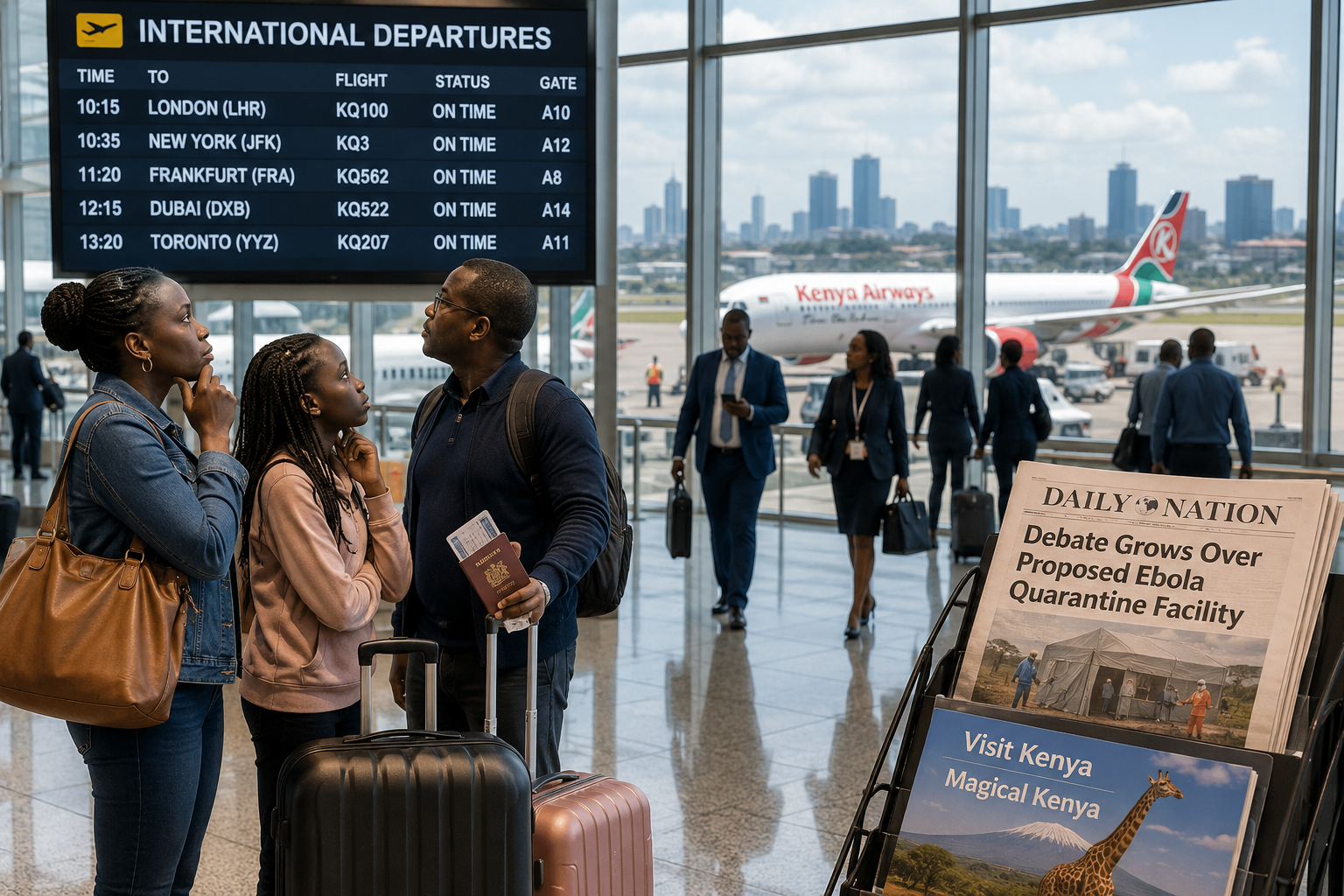
Ebola Quarintine facilty in Kenya cause Uncertainty

The proposed establishment of a United States-backed Ebola quarantine facility in Kenya has triggered widespread debate, concern, and legal challenges across the country. While supporters of the initiative argue that it would strengthen international cooperation and enhance emergency health preparedness, critics warn that the economic and reputational risks to Kenya could far outweigh any potential benefits.
At the heart of the controversy is a simple but important reality: perception matters.
Even if the facility were to operate under the highest international health and safety standards, the association of Kenya with Ebola quarantine operations could create negative perceptions among tourists, investors, conference organizers, and members of the Kenyan diaspora. In today’s interconnected world, public perception often influences travel and investment decisions more than technical explanations from health authorities.
Tourism remains one of Kenya’s most important economic pillars, generating billions of shillings annually and supporting hundreds of thousands of jobs directly and indirectly. The country’s global brand has been carefully built around its wildlife, beaches, cultural heritage, and reputation as a premier African destination.
Any development that creates uncertainty about health risks could undermine these efforts. International travelers often make decisions based on headlines and social media narratives rather than detailed policy documents. The mere suggestion that Kenya could host individuals exposed to Ebola may be enough to cause some visitors to reconsider their travel plans, regardless of the actual level of risk.
Hotels, tour operators, transport providers, and local businesses that depend on visitor spending could all feel the impact if tourist arrivals decline.
The Kenyan diaspora contributes billions of shillings to the national economy through remittances and regular travel back home. Summer is traditionally one of the busiest travel periods, with thousands of Kenyans living abroad returning to visit family, invest, and support local businesses.
Reports of the proposed quarantine facility have generated concern among some diaspora communities, particularly in countries where Ebola – related fears remain strong. While there is currently no verified evidence of widespread flight cancellations, growing uncertainty could influence travel decisions if concerns are not adequately addressed.
A reduction in diaspora travel would not only affect airlines but also hotels, restaurants, transport services, retail businesses, and countless households that benefit from spending by returning relatives.
Kenya has spent years positioning itself as East Africa’s leading destination for international conferences, diplomatic meetings, and business events. Nairobi regularly hosts regional and global gatherings that bring substantial economic benefits.
Conference organizers are highly sensitive to issues relating to health security and destination image. Even unfounded fears can influence venue selection. If event planners perceive reputational risks associated with hosting meetings in Kenya, some may opt for alternative destinations, resulting in lost revenue for hotels, convention facilities, airlines, and service providers.
The debate ultimately comes down to a cost-benefit analysis.
Proponents argue that the facility could strengthen Kenya’s strategic relationship with the United States and potentially attract investment in public health infrastructure and disease preparedness. These are legitimate considerations in an increasingly interconnected world where infectious disease threats require international cooperation.
However, critics question whether those benefits justify the potential economic risks. If the proposal contributes to reduced tourist arrivals, fewer conference bookings, diminished diaspora travel, or negative international publicity, the resulting losses could exceed any diplomatic or financial gains associated with hosting the facility.
The issue is no longer solely about public health. It has become a question of national image, economic priorities, and public confidence in decision-making.
No country can afford to ignore global health challenges. However, governments must also carefully consider the broader economic and reputational consequences of policies that affect key sectors of the economy.
For many Kenyans, the central concern is not whether Ebola can be safely managed by health professionals. The concern is whether Kenya should assume a role that could inadvertently damage its standing as a safe, attractive, and competitive destination for tourism, investment, and international events.
As the legal and political debate continues, policymakers will need to demonstrate that any decision serves Kenya’s long-term national interests, protects public confidence, and safeguards the economic sectors upon which millions of livelihoods depend.

 MZIMA II WATER PROJECT: KSh 50.6 BILLION COASTAL PIPELINE MOVES CLOSER TO IMPLEMENTATION
Chinese firm identified as proposed developer.
 Nairobi in Darkness as Government Billing Dispute Leaves Residents Paying the Price
NAIROBI — As darkness descends on.
 RUTO CONTRADICTS HIMSELF ON FOREIGNERS: FROM “VISA-FREE AFRICA” TO A CRACKDOWN ON SMALL TRADERS
President William Ruto’s latest crackdown.
 NEW UNIFORMS, SAME OLD PROBLEMS: YOU CAN’T TAILOR INTEGRITY
President William Ruto has proudly unveiled.
 SHARON’S JUSTICE CANNOT BE BOUGHT
The latest developments in the.
 HOMA BAY VIOLENCE RAISES TROUBLING QUESTIONS ABOUT KENYA’S DEMOCRACY
The shocking violence that engulfed the.
 JUSTICE AT LAST: WHAT THE SHARON OTIENO MURDER CONVICTION MEANS FOR KENYA
After nearly eight years of.
 ALBERT OJWANG CASE: THE QUESTIONS KENYA REFUSES TO LET DIE
The death of Albert Ojwang in.
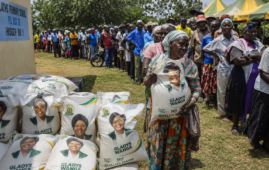 RELIEF FOOD SCANDAL RAISES SERIOUS QUESTIONS AS INVESTIGATIONS CONTINUE
The reported recovery of hundreds.
 THE HALIMA NGACHE CASE: A COSTLY ASSAULT ON DIGITAL FREEDOM THAT DEMANDS ACCOUNTABILITY
The collapse of the case against.
 WHY FIKIRINI JACOBS MUST STEP ASIDE AS THE CECIL OUMA PROBE CONTINUES
The tragic death of 28-year-old youth.
 STOP THE KILLING, NOT MERELY COMPENSATE THE DEAD
As Kenya approaches the second.
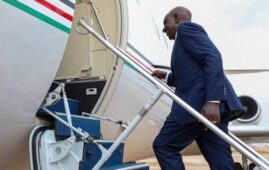 PRESIDENT RUTO’S FREQUENT FLYER PRESIDENCY: ARE KENYANS GETTING VALUE FOR MONEY?
President William Ruto has returned to.
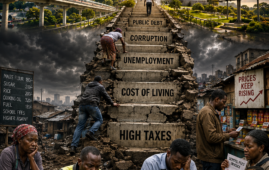 THE SINGAPORE ILLUSION: A REALITY CHECK ON THE STATE OF OUR NATION
There is an increasingly persistent.
RUTO’S HAMMER POLITICS: WHY KENYA CANNOT BE GOVERNED THROUGH ENDLESS PUBLICITY TOURS“If your only tool is.
 LAUNCHES WITHOUT LEGACY: THE GROWING GAP BETWEEN PROMISE AND DELIVERY
In recent years, President William.
Leave a Comment