
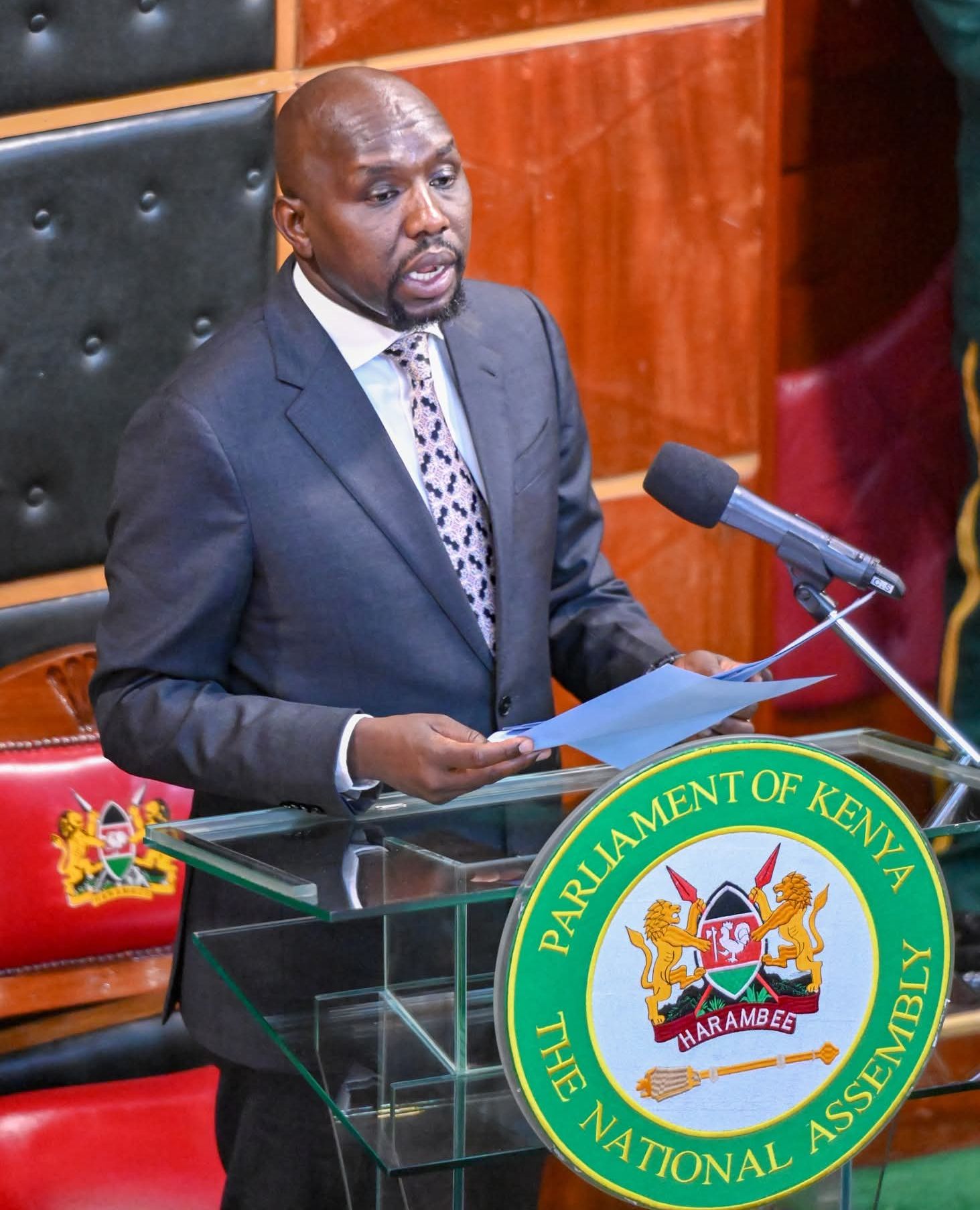
When a country is on edge, the last thing it needs is careless rhetoric from the Cabinet Secretary in charge of internal security.
Recent remarks by Onesimus Kipchumba Murkomen suggesting that politicians may have tear-gassed themselves are not only implausible — they are an affront to public intelligence.
Kenyans are asking a simple, legitimate question: how are controlled riot-control weapons ending up in the hands of civilians or suspected goons?
Instead of answers, the nation was offered ridicule.
A Dangerous Deflection
Tear gas canisters are not street merchandise. They are controlled security equipment procured and managed by the National Police Service and other authorized state organs.
If such equipment is being deployed outside official channels, that signals one of the following:
- Diversion from government stockpiles
- Theft or leakage within the system
- Corruption in procurement chains
- Gross regulatory failure
Each of these possibilities is serious. Each demands investigation. Each falls squarely under the oversight of the Interior Ministry.
To casually suggest that politicians orchestrated their own tear-gassing is not analysis — it is evasion.
The Weight of the Interior Docket
The Interior Ministry is not a political talk show. It is the backbone of national security.
The holder of that office must speak with discipline, precision, and respect for the gravity of the role. Words from that desk influence police conduct, shape public trust, and signal institutional seriousness.
When the Cabinet Secretary appears to trivialize security concerns, it sends a dangerous message: that accountability is optional.
Public Confidence Is Not a Game
At a time when citizens are already anxious about safety, inflammatory statements deepen suspicion.
Kenyans do not need speculation. They need:
- A formal, independent investigation
- A public accounting of tear gas inventories
- Clear assurance that state-controlled weapons are secure
- Disciplinary action if diversion occurred
Anything less looks like institutional shielding.
A Pattern of Reckless Speech?
Leadership demands restraint. Security leadership demands even more.
When public officials make statements that appear to normalize extreme responses or dismiss legitimate grievances, they weaken the moral authority of the very institutions they lead.
The Interior docket is too sensitive for mixed messaging. It requires steady hands, not political theatrics.
Apologize — Or Resign
This moment calls for clarity.
If the remarks were careless, then a public apology is owed to Kenyans.
If the statements reflect a deeper unwillingness to confront security failures honestly, then the Cabinet Secretary must ask himself whether he can still command public trust.
National security cannot be anchored on sarcasm, deflection, or blame-shifting.
Kenyans deserve seriousness. Kenyans deserve transparency. Kenyans deserve accountability.
And if that standard cannot be met, then stepping aside is not weakness — it is responsibility.

more recommended stories
 MZIMA II WATER PROJECT: KSh 50.6 BILLION COASTAL PIPELINE MOVES CLOSER TO IMPLEMENTATION
Chinese firm identified as proposed developer.
 Nairobi in Darkness as Government Billing Dispute Leaves Residents Paying the Price
NAIROBI — As darkness descends on.
 RUTO CONTRADICTS HIMSELF ON FOREIGNERS: FROM “VISA-FREE AFRICA” TO A CRACKDOWN ON SMALL TRADERS
President William Ruto’s latest crackdown.
 NEW UNIFORMS, SAME OLD PROBLEMS: YOU CAN’T TAILOR INTEGRITY
President William Ruto has proudly unveiled.
 SHARON’S JUSTICE CANNOT BE BOUGHT
The latest developments in the.
 HOMA BAY VIOLENCE RAISES TROUBLING QUESTIONS ABOUT KENYA’S DEMOCRACY
The shocking violence that engulfed the.
 JUSTICE AT LAST: WHAT THE SHARON OTIENO MURDER CONVICTION MEANS FOR KENYA
After nearly eight years of.
 ALBERT OJWANG CASE: THE QUESTIONS KENYA REFUSES TO LET DIE
The death of Albert Ojwang in.
 RELIEF FOOD SCANDAL RAISES SERIOUS QUESTIONS AS INVESTIGATIONS CONTINUE
The reported recovery of hundreds.
 THE HALIMA NGACHE CASE: A COSTLY ASSAULT ON DIGITAL FREEDOM THAT DEMANDS ACCOUNTABILITY
The collapse of the case against.
 WHY FIKIRINI JACOBS MUST STEP ASIDE AS THE CECIL OUMA PROBE CONTINUES
The tragic death of 28-year-old youth.
 STOP THE KILLING, NOT MERELY COMPENSATE THE DEAD
As Kenya approaches the second.
 PRESIDENT RUTO’S FREQUENT FLYER PRESIDENCY: ARE KENYANS GETTING VALUE FOR MONEY?
President William Ruto has returned to.
 THE SINGAPORE ILLUSION: A REALITY CHECK ON THE STATE OF OUR NATION
There is an increasingly persistent.
 Could the Proposed Ebola Quarantine Facility Cost Kenya More Than It Gains?
The proposed establishment of a United.
-
RUTO’S HAMMER POLITICS: WHY KENYA CANNOT BE GOVERNED THROUGH ENDLESS PUBLICITY TOURS
“If your only tool is.
Leave a Comment