
Kwaela Mews Network – Special Report
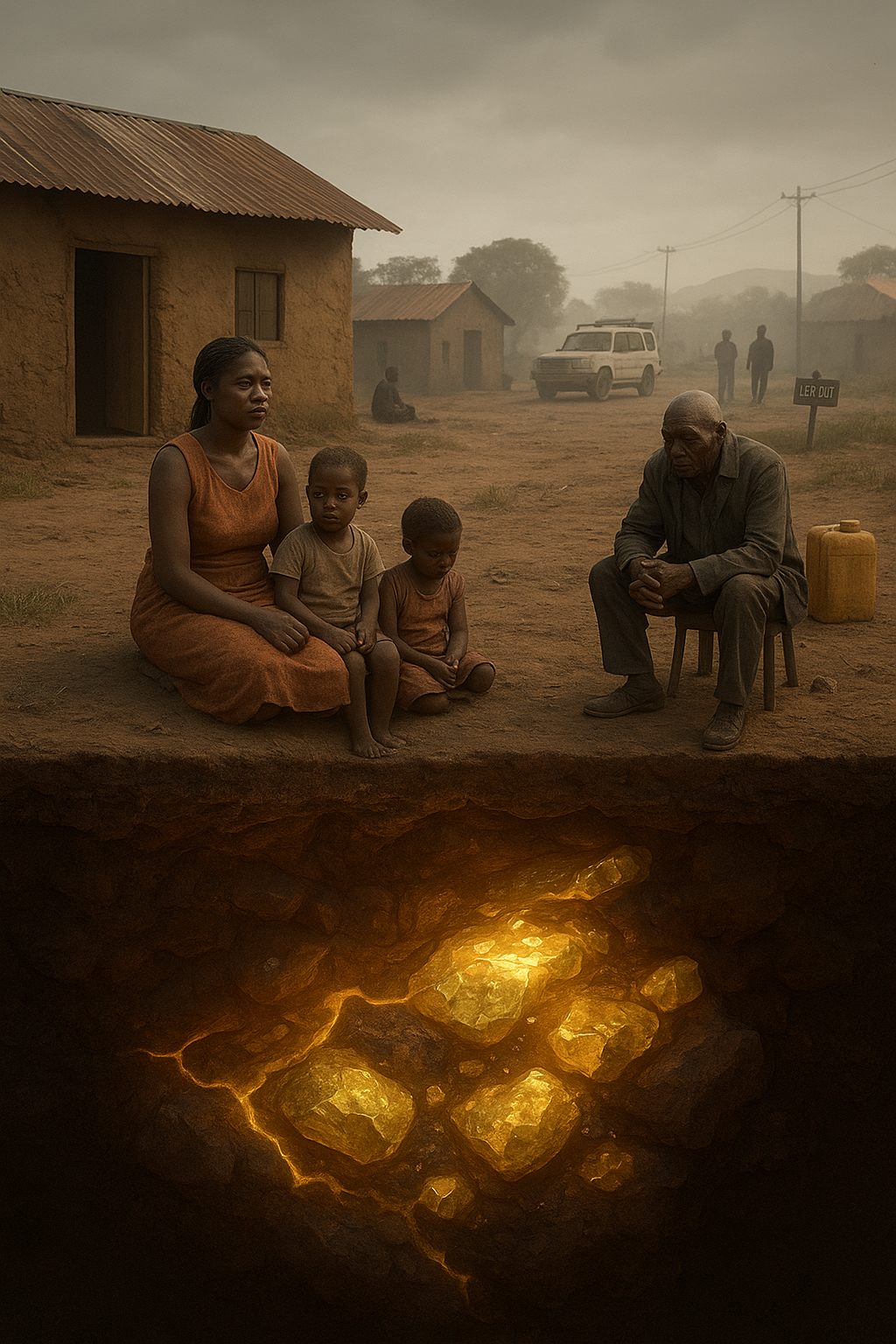
The recent discovery of gold worth billions in Ikolomani, Kakamega County has ignited shockwaves across the nation. What should have marked a moment of hope and economic opportunity has instead plunged the region into tension, fear and tragedy. Three people have already lost their lives, and residents—fiercely protective of their ancestral land—are refusing to vacate the area despite government directives.
Their defiant words echo across the valley: “If we must die, we will die here.”
This is no longer just a mining discovery. It is a human crisis in the making.
Lessons Kenya Cannot Afford to Ignore
Across Africa, the story is familiar and often tragic. Gold and mineral discoveries have ignited unrest, displacement, and even war when governments mishandled the delicate balance between economic extraction and community rights.
In the Democratic Republic of Congo, mineral wealth fueled decades of militia warfare. In Nigeria’s Zamfara State, local gold rushes triggered mass killings and the rise of heavily armed criminal groups. In Tanzania and Ghana, clashes between mining companies, illegal miners, and security forces have claimed many lives.
These examples reveal a clear truth:
Mineral wealth becomes a curse when people feel ignored, dispossessed or betrayed.
Kenya must not follow this path.
A Test of Governance
Ikolomani’s residents are not merely being stubborn. For generations, their families have lived, farmed and buried their dead on this land. To them, the arrival of prospectors and government officials feels like a threat—not an opportunity.
Unless handled with transparency and respect, the situation could quickly escalate into:
- Violent confrontations with security forces
- Illegal mining gangs moving in
- Armed criminal groups trying to control the gold-rich area
- Long-term hostility between the state and local communities
The early signs—deaths, defiance, and panic—are warning signals Kenya cannot afford to ignore.
Avoiding the “Resource Curse”
Kenya has strong institutions, functioning courts, and a government capable of managing such crises. This means a Congo-style civil war is extremely unlikely. But localized violence, deadly standoffs, and spiraling instability remain very real risks.
Read Also: KENYA STRIKES GOLD: Will Kenyans Truly Benefit or Be Left Behind Again?
For Kenya to turn this discovery into a blessing rather than a bloodstained curse, several urgent actions are needed:
1. Transparent Communication
Communities must be informed clearly and honestly about what is happening—no secrecy, no backroom deals, no political games.
2. Fair and Dignified Compensation
Residents cannot be treated as obstacles. They must be treated as stakeholders. If relocation is necessary, compensation must reflect the true value of their land, their history, and the disruption to their lives.
3. Community Involvement in Decision-Making
Land disputes turn violent when people feel decisions are imposed upon them. Local leaders, elders and community representatives need a seat at the table.
4. Safety and Human Rights Above All
Security forces must avoid the heavy-handed tactics that have sparked disasters in other African mining regions. Every drop of spilled blood deepens mistrust.
5. Strict Regulation of Mining Activity
If the state does not secure and regulate the area swiftly and fairly, illegal miners and criminal cartels could move in, bringing far greater violence.
The Moral and National Responsibility
Kenya stands at a crossroads. The gold beneath Ikolomani’s soil has the potential to boost the economy, create jobs and transform lives—but only if the process is managed with integrity and humanity.
Gold is not worth another Kenyan life.
Not one.
The government must act decisively, transparently and compassionately to protect both the nation’s wealth and its people. Failing to do so risks turning Ikolomani into yet another chapter in Africa’s long and painful history of “resource curses.”
Kenya has the chance—and the responsibility—to choose a different path.

more recommended stories
 TAITA TAVETA: SEVEN DAYS HAVE ELAPSED — HAS SENATOR KAJWANG SENT WAKUJAA’S GOVERNMENT FILES TO EACC?
By Kwaela News Network (KNN).
 MZIMA II WATER PROJECT: KSh 50.6 BILLION COASTAL PIPELINE MOVES CLOSER TO IMPLEMENTATION
Chinese firm identified as proposed developer.
 Nairobi in Darkness as Government Billing Dispute Leaves Residents Paying the Price
NAIROBI — As darkness descends on.
 RUTO CONTRADICTS HIMSELF ON FOREIGNERS: FROM “VISA-FREE AFRICA” TO A CRACKDOWN ON SMALL TRADERS
President William Ruto’s latest crackdown.
 NEW UNIFORMS, SAME OLD PROBLEMS: YOU CAN’T TAILOR INTEGRITY
President William Ruto has proudly unveiled.
 SHARON’S JUSTICE CANNOT BE BOUGHT
The latest developments in the.
 HOMA BAY VIOLENCE RAISES TROUBLING QUESTIONS ABOUT KENYA’S DEMOCRACY
The shocking violence that engulfed the.
 JUSTICE AT LAST: WHAT THE SHARON OTIENO MURDER CONVICTION MEANS FOR KENYA
After nearly eight years of.
 ALBERT OJWANG CASE: THE QUESTIONS KENYA REFUSES TO LET DIE
The death of Albert Ojwang in.
 RELIEF FOOD SCANDAL RAISES SERIOUS QUESTIONS AS INVESTIGATIONS CONTINUE
The reported recovery of hundreds.
 THE HALIMA NGACHE CASE: A COSTLY ASSAULT ON DIGITAL FREEDOM THAT DEMANDS ACCOUNTABILITY
The collapse of the case against.
 WHY FIKIRINI JACOBS MUST STEP ASIDE AS THE CECIL OUMA PROBE CONTINUES
The tragic death of 28-year-old youth.
 STOP THE KILLING, NOT MERELY COMPENSATE THE DEAD
As Kenya approaches the second.
 PRESIDENT RUTO’S FREQUENT FLYER PRESIDENCY: ARE KENYANS GETTING VALUE FOR MONEY?
President William Ruto has returned to.
 THE SINGAPORE ILLUSION: A REALITY CHECK ON THE STATE OF OUR NATION
There is an increasingly persistent.
 Could the Proposed Ebola Quarantine Facility Cost Kenya More Than It Gains?
The proposed establishment of a United.
Leave a Comment