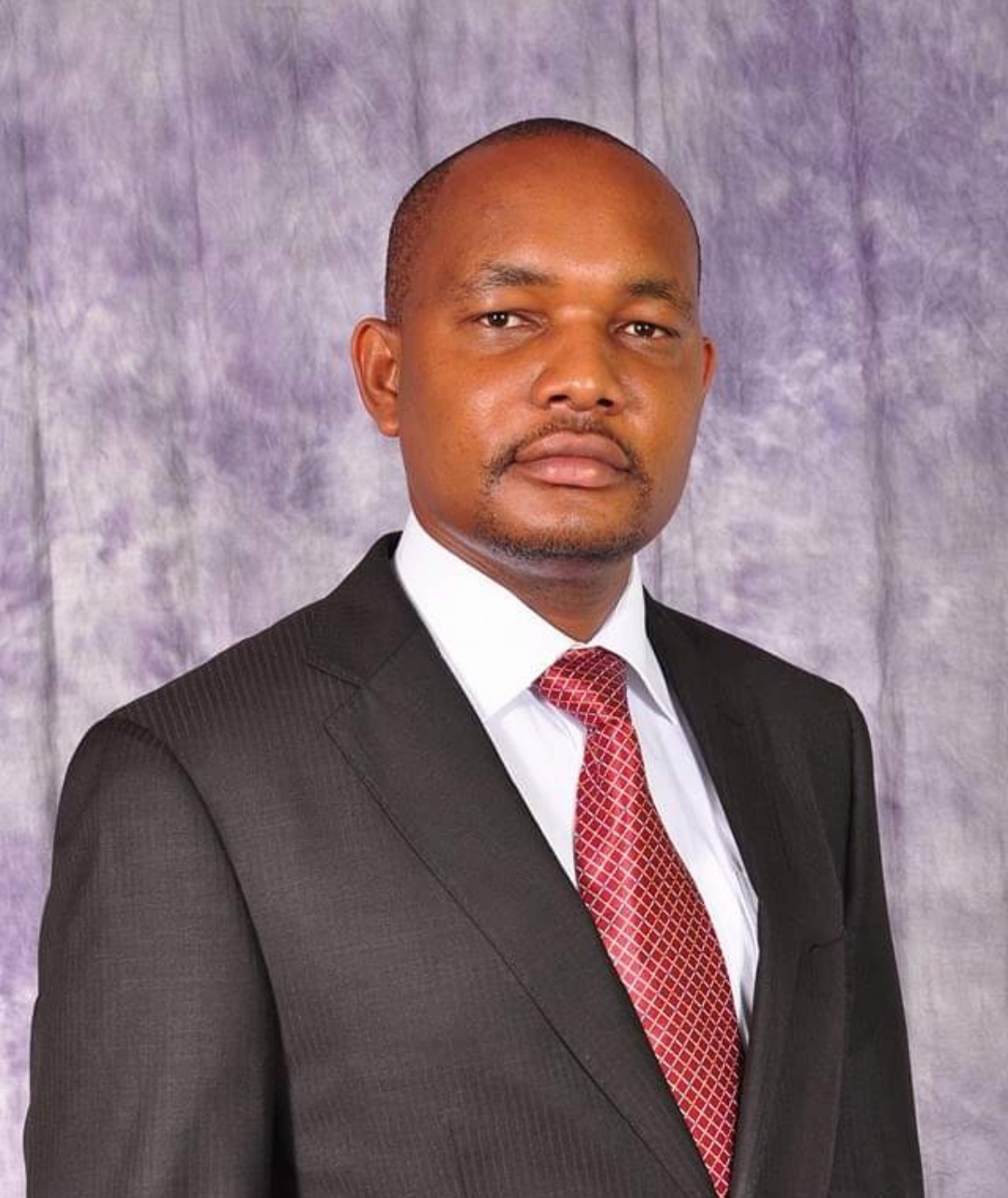
Arch. Martin Tairo

Counties have started receiving cash for the establishment of municipal boards, ending a delay that almost grounded the new urban centres.
The cash is part of the Kenya Urban Support Programme (KUSP), a grant that will go towards the establishment of municipalities in county capitals and towns, which have a population of more than 70,000 residents based on the 2009 census figures.
According to the World Bank data, the municipalities will receive various amounts commensurate with their population until 2023 when the programme will end.
Municipalities, which will receive the highest amounts include Kisumu (Sh773.6m), Nakuru (Sh740m), Eldoret (Sh630m), Kikuyu (Sh534m), Ruiru (Sh484.6m), Kangundo-Tala (Sh441.3m), Naivasha (Sh344m), Thika (Sh305m), Machakos (Sh303.6 m) and Kitale (Sh299m).
Others are Mavoko (Sh273m), Kericho (Sh256m), Vihiga (Sh251m), Nyeri (Sh236.6m), Malindi (Sh233.7m), Thika (Sh233.5m), Garissa (Sh233.5m), Karuri (Sh233.5m), Kitui (Sh232.4m) and Ngong (Sh215.9m).
“The National Treasury has addressed the issue of delays and as a result, the urban institutional grant will be disbursed to all counties this month,” Abdu Muwonge, World Bank Kenya Senior Urban Specialist, told Sunday Nation.
INFRASTRUCTURE
Since the launch of the programme in January 2018, delays in the release of the grant has affected its smooth operation, especially the capacity building of the municipalities and municipal boards, facilitation of their activities and urban planning.
The KUSP is a five-year project targeting 45 counties aimed at improving infrastructure.
The programme excludes the city counties of Nairobi and Mombasa from the financial support, which comes in the form of Urban Institutional Grant and Urban Development Grant grants.
To get funding, a municipality must have a population greater than 70,000 residents.
By the 2009 population census, 14 urban areas became eligible for municipal status as per the Urban Areas and Cities Act 2016 and further in accordance with the amendments brought by the Urban Areas and Cities Act 2019.
In addition, as per the County Government Act of 2012, any urban area that is designated as a county capital, irrespective of its population, is granted municipal status.
PERFORMANCE
This means 45 county capitals are eligible municipalities to benefit from the project. Therefore, in total, 59 municipalities are eligible to benefit.
Each county will receive Sh50 million over three years as an Urban Institutional Grant whose purpose is to capacity-build municipalities, boards and facilitate their operations.
They will then receive the Urban Development Grant allocated based on the per capita allocation per urban resident of roughly Sh2,000.
Municipalities which will receive the least amount from the grant of Sh50 million each include Kathwana, Hola, Wundanyi, Siaya, Maralal, Marsabit, Lamu, Rumuruti and Kwale.
The new disbursement comes after the counties received Sh11.48 billion last December for the establishment of municipalities.
According to the programme, counties that perform better will see an increased allocation.
“Depending on performance, measured annually through an annual performance assessment, counties and eligible municipalities can receive either the full allocation or even zero if they violate programme requirements. Counties that do not adhere to programme standards will lose their annual allocations,” says Mr Muwonge.
INVESTMENT
A total of 10 fastest growing municipalities will benefit from a 60-million-pound Sustainable Urban Economic Development programme supported by the British government through the Department for International Development.
This kitty will go towards developing sustainable urban economic plans, attracting investment for critical climate-resilient infrastructure and value chain projects through stronger rural links with larger urban markets, create climate-resilient jobs and enabling greater private sector-led growth.
According to the World Bank, counties that have taken reforms a step further in establishing municipalities are Kitui, Kisii, Meru, Makueni, Isiolo, Garissa, Mandera, Kirinyaga, Bomet and Uasin Gishu.
“These counties have assigned specific responsibilities to the boards, municipalities and even resources to be devolved to them to undertake specific functions such as solid waste management and disaster risk management,” Mr Mwongera says.
Makueni is being praised for the establishment of a Green Park in Wote, Kisii for the ongoing construction of a fire station, Mandera for its urban resilience programme that seeks to address issues of flood management in Mandera municipality and Machakos for the opening up urban roads with integrated street lighting, stormwater drainage and pedestrian walkways.
WELFARE
Other counties that have made significant progress include Kiambu for the solid waste management projects in six municipalities and the sewer line, Tharaka Nithi for the urban road construction within Kathwana municipality, Migori for the opening up of Awendo municipality through urban road tarmacking and Meru for investing in upgrading of urban roads and markets in Meru municipality.
Murang’a is upgrading urban roads and walkways and has established the modern Mukuyu bus park.
“These are some of the few projects that will create jobs, improve lives of urban residents, and bring about improved productivity in the municipalities,” Mr Muwonge says.
Architect Martin Tairo, Assistant Secretary for the Caucus for Municipality Boards officials, told Sunday Nation that various counties were at different stages of establishing municipalities.
“About 35 have already set up municipal boards and their operations are running. In some counties, the process has been delayed due to politics,” he said.
Kiambu has the highest number of municipalities (Kikuyu, Ruiru, Thika, Karuri, Kiambu and Limuru), followed by Machakos (Kangundo-Tala, Machakos and Mavoko), Migori (Awendo, Rongo and Migori), Nakuru (Naivasha and Nakuru), Bungoma (Kimilili and Bungoma), Kajiado (Ngong and Kajiado), Kakamega (Kakamega and Mumias) and Kilifi (Malindi and Kilifi).

 TAITA TAVETA: SEVEN DAYS HAVE ELAPSED — HAS SENATOR KAJWANG SENT WAKUJAA’S GOVERNMENT FILES TO EACC?
By Kwaela News Network (KNN).
 MZIMA II WATER PROJECT: KSh 50.6 BILLION COASTAL PIPELINE MOVES CLOSER TO IMPLEMENTATION
Chinese firm identified as proposed developer.
 Nairobi in Darkness as Government Billing Dispute Leaves Residents Paying the Price
NAIROBI — As darkness descends on.
 RUTO CONTRADICTS HIMSELF ON FOREIGNERS: FROM “VISA-FREE AFRICA” TO A CRACKDOWN ON SMALL TRADERS
President William Ruto’s latest crackdown.
 NEW UNIFORMS, SAME OLD PROBLEMS: YOU CAN’T TAILOR INTEGRITY
President William Ruto has proudly unveiled.
 SHARON’S JUSTICE CANNOT BE BOUGHT
The latest developments in the.
 HOMA BAY VIOLENCE RAISES TROUBLING QUESTIONS ABOUT KENYA’S DEMOCRACY
The shocking violence that engulfed the.
 JUSTICE AT LAST: WHAT THE SHARON OTIENO MURDER CONVICTION MEANS FOR KENYA
After nearly eight years of.
 ALBERT OJWANG CASE: THE QUESTIONS KENYA REFUSES TO LET DIE
The death of Albert Ojwang in.
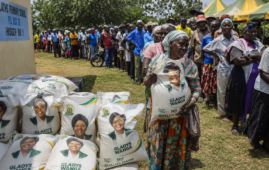 RELIEF FOOD SCANDAL RAISES SERIOUS QUESTIONS AS INVESTIGATIONS CONTINUE
The reported recovery of hundreds.
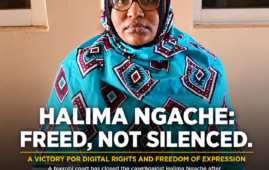 THE HALIMA NGACHE CASE: A COSTLY ASSAULT ON DIGITAL FREEDOM THAT DEMANDS ACCOUNTABILITY
The collapse of the case against.
 WHY FIKIRINI JACOBS MUST STEP ASIDE AS THE CECIL OUMA PROBE CONTINUES
The tragic death of 28-year-old youth.
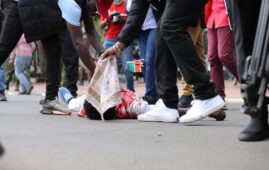 STOP THE KILLING, NOT MERELY COMPENSATE THE DEAD
As Kenya approaches the second.
 PRESIDENT RUTO’S FREQUENT FLYER PRESIDENCY: ARE KENYANS GETTING VALUE FOR MONEY?
President William Ruto has returned to.
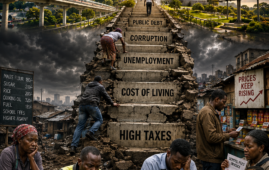 THE SINGAPORE ILLUSION: A REALITY CHECK ON THE STATE OF OUR NATION
There is an increasingly persistent.
 Could the Proposed Ebola Quarantine Facility Cost Kenya More Than It Gains?
The proposed establishment of a United.
What is the population of Wundanyi?
Roughly 350,000 though not official figures.