

The shocking violence that engulfed the Linda Mwananchi rally in Homa Bay on August 16, 2026, should concern every Kenyan regardless of political affiliation. Reports of deaths, dozens of injuries, attacks on journalists, destruction of property, and the disruption of a lawful political gathering represent a serious assault on democratic freedoms and the rule of law.
What is perhaps most disturbing is not merely that the violence occurred, but that it happened in a country with a fully established security apparatus, intelligence services, and law enforcement agencies whose primary responsibility is to protect lives and maintain public order.
How did armed gangs allegedly move freely through Homa Bay, erect roadblocks on major roads, raid hotels, ambush political convoys, attack journalists, and reportedly even pursue victims into a hospital? Where were the security agencies as these events unfolded?
The government has announced arrests, but Kenyans have heard such promises before. The country deserves more than the arrest of foot soldiers. The public wants answers about those who organized, financed, transported, armed, and coordinated the violence. Until those individuals are identified and prosecuted, many citizens will remain unconvinced that justice is being pursued with the seriousness it deserves.
The events also raise uncomfortable political questions.
Why do opposition gatherings repeatedly face disruption by gangs and violent groups, while rallies attended by government leaders generally proceed without similar incidents? Is this merely coincidence, or does it point to a deeper failure of law enforcement to provide equal protection under the law?
These are legitimate questions in any democracy. They do not require speculation; they require answers.
The burden falls squarely on the government to demonstrate that all political actors are protected equally and that security agencies operate impartially. Failure to do so fuels public suspicion and erodes confidence in state institutions.
The attacks on journalists are equally alarming. A democracy cannot function when reporters covering political events are threatened, assaulted, or robbed of their equipment. The media serves the public interest, and attacks on journalists are attacks on the public’s right to know.
Equally troubling are reports that medical facilities became targets. Hospitals should be places of refuge, not battlegrounds. Any attack on injured civilians seeking treatment crosses a dangerous line that no civilized society should tolerate.
Kenya now finds itself at a crossroads.
If political violence can be unleashed against opponents with apparent ease, if public roads can be blocked by armed gangs, if journalists can be attacked in broad daylight, and if organizers and financiers remain beyond the reach of the law, then citizens are justified in asking difficult questions about the state of governance.
Is the government losing its ability to maintain law and order?
Are criminal gangs becoming more powerful than the institutions meant to control them?
Or is there a selective application of the law depending on who benefits from the chaos?
These questions must be answered not through political statements but through credible investigations, transparent prosecutions, and visible accountability.
Kenya’s democratic future depends on the principle that political competition is settled through debate and the ballot box—not through violence, intimidation, and fear.
The people responsible for the Homa Bay violence must be identified, arrested, prosecuted, and punished regardless of their political connections. Anything less would send a dangerous message that violence remains an acceptable tool in Kenya’s politics.
And that is a message the country cannot afford to accept.

more recommended stories
 MZIMA II WATER PROJECT: KSh 50.6 BILLION COASTAL PIPELINE MOVES CLOSER TO IMPLEMENTATION
Chinese firm identified as proposed developer.
 Nairobi in Darkness as Government Billing Dispute Leaves Residents Paying the Price
NAIROBI — As darkness descends on.
 RUTO CONTRADICTS HIMSELF ON FOREIGNERS: FROM “VISA-FREE AFRICA” TO A CRACKDOWN ON SMALL TRADERS
President William Ruto’s latest crackdown.
 NEW UNIFORMS, SAME OLD PROBLEMS: YOU CAN’T TAILOR INTEGRITY
President William Ruto has proudly unveiled.
 SHARON’S JUSTICE CANNOT BE BOUGHT
The latest developments in the.
 JUSTICE AT LAST: WHAT THE SHARON OTIENO MURDER CONVICTION MEANS FOR KENYA
After nearly eight years of.
 ALBERT OJWANG CASE: THE QUESTIONS KENYA REFUSES TO LET DIE
The death of Albert Ojwang in.
 RELIEF FOOD SCANDAL RAISES SERIOUS QUESTIONS AS INVESTIGATIONS CONTINUE
The reported recovery of hundreds.
 THE HALIMA NGACHE CASE: A COSTLY ASSAULT ON DIGITAL FREEDOM THAT DEMANDS ACCOUNTABILITY
The collapse of the case against.
 WHY FIKIRINI JACOBS MUST STEP ASIDE AS THE CECIL OUMA PROBE CONTINUES
The tragic death of 28-year-old youth.
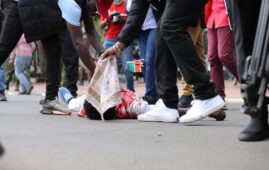 STOP THE KILLING, NOT MERELY COMPENSATE THE DEAD
As Kenya approaches the second.
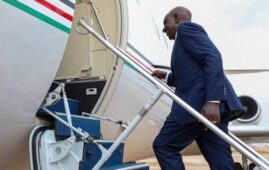 PRESIDENT RUTO’S FREQUENT FLYER PRESIDENCY: ARE KENYANS GETTING VALUE FOR MONEY?
President William Ruto has returned to.
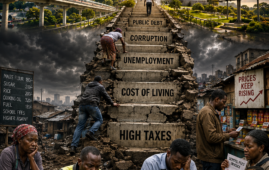 THE SINGAPORE ILLUSION: A REALITY CHECK ON THE STATE OF OUR NATION
There is an increasingly persistent.
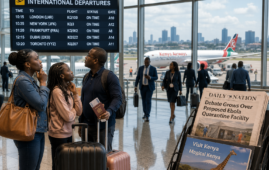 Could the Proposed Ebola Quarantine Facility Cost Kenya More Than It Gains?
The proposed establishment of a United.
-
RUTO’S HAMMER POLITICS: WHY KENYA CANNOT BE GOVERNED THROUGH ENDLESS PUBLICITY TOURS
“If your only tool is.
 LAUNCHES WITHOUT LEGACY: THE GROWING GAP BETWEEN PROMISE AND DELIVERY
In recent years, President William.
Leave a Comment