
By Fred M’bololo
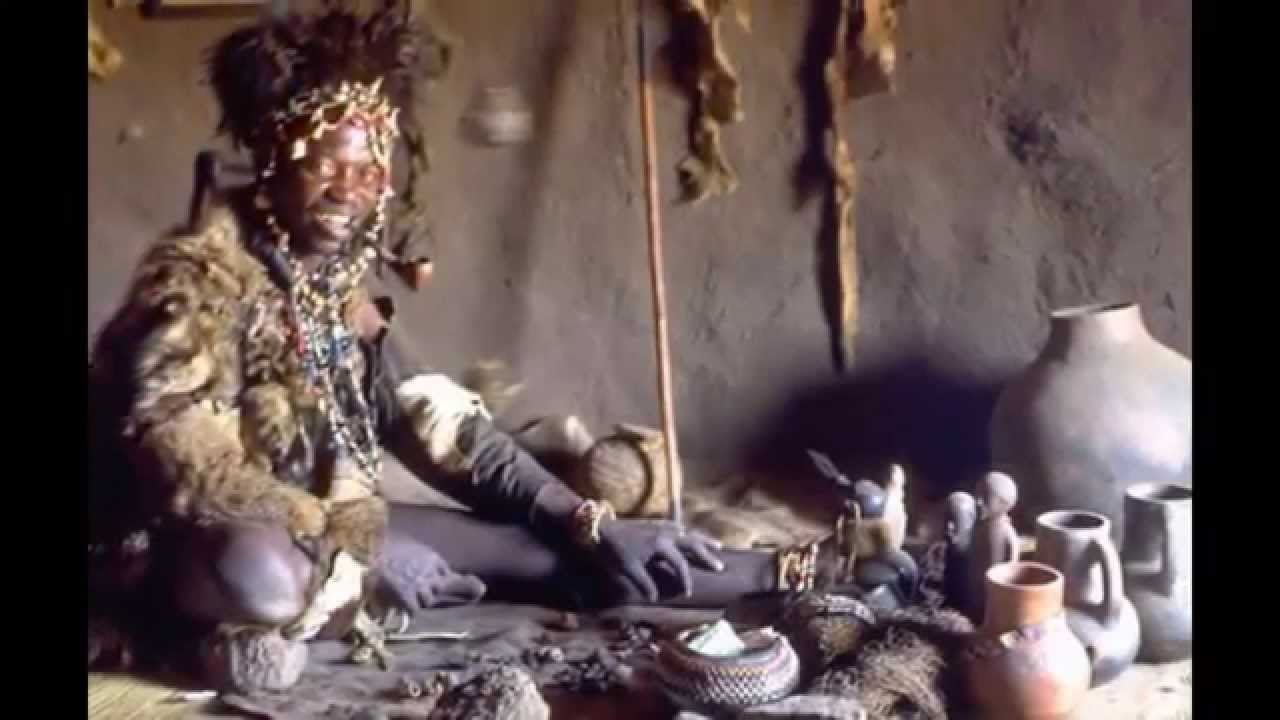
In the taita community they hold the cardinal belief that certain members of the community are in the habit of using supernatural means for illicitly destroying the interests, or even the lives, of their fellows. This basic tenet has led Taitas to attribute to persons designated by terms we might translate as “witches” or “sorcerers” characteristics that resemble those of their counterparts elsewhere. Beliefs about witches are, of course, not directly observable, but they may have overt consequences in everyday life. In Taita land, there is a saying which goes like this “Msawi wadawadwa na vilingo vake” meaning a witch is normally caught with his ingredients (Vilingo) which could include medicines from certains trees, gourds, snakes, rats, beads and other abominable stuffs.
Thus Taita witches (in the generic sense, including sorcerers) are believed to harm others either because they possess powers (of which they may not be aware and which their fellows find incomprehensible) that emanate from their aberrant personalities or because they perform antisocial magic, technically referred to as “sorcery” (see below). Furthermore, they resemble witches in other continents in that they are believed to employ certain species of animals and, in some instances, spirits or humanoid creatures as their servants, messengers, or familiars. Familiars are sometimes reputed to drive their owners to their evil practices.
Like their counterparts elsewhere, Taita witches are believed to belong to secret associations that meet periodically (usually around a fire) to discuss the promotion of their interests, the regulation of relations among them, and to celebrate recent antisocial accomplishments by, for example, having a ghoulish feast of the revived body of someone they have killed supernaturally. These associations form distorted reflections of the societies in which they are believed to exist. On the one hand, they may mirror the authority structure of the polity of which they are a part, as when, among the Taitas, their secret meetings were presided over by a village headman who is himself was a witch.
In any case, witch societies customarily invert normal ethical standards by delighting in the practice of promiscuous sexual activity (including incest), by going naked especially at night, by frequenting forbidden places such as graveyards, and by murdering and eating their fellow human beings, often their close relatives (Taita witches are believed to attack their neighbors and kinsmen rather than distant and unrelated persons because of jealousy and uncouth behaviours). It is also believed that most witches worked together for example a husband and a wife, otherwise, in Taita tradition its believed that most witches are women and they are the ones that contacted witchdoctors more than their male counterparts to get love portions like kimbolo. Men also contacted the witchdoctors also to be given love portions and it is believed once you greeted the girl that you were eyeing then the magic charm will work and she will definitely fall in love with you.
The women would take their husbands, hairs, nails will pretending to cut them and take them to the witchdoctors so that they may become submissive and the women would rule over them. They would also make oriental bread, chapatis and seat on them while naked before giving their husbands to eat that food.
Finally, in Taita land, the belief in witchcraft—together with other components of the religious system—provides an explanatory framework, a means by which the misfortunes that befall people may be understood and, in terms of their beliefs, avoided in the future. In the Taita communities and societies vary in the degree that witchcraft (as opposed to the other elements of religious belief) plays in the explanation of everyday events and, more importantly, crisis. For instance, misfortunes appear to be attributed more often to the intervention of ghosts (marumu, which are half ghost and half dead men) and visuka (which are considered as ghosts, rather than wasawi (witches) themselves. But all in all taita societies witchcraft is a component of the belief system—and this applies even to the Church goers, once in our Mbololo village a man in Church dropped his magic charms (hirizi) in front of the surprised congregants —witchcraft beliefs are of paramount importance insofar as they explain the persistence of evil and the inability of humans to eradicate it.
Witches and sorcerers are considered by the Taita community to be the embodiment of malignant forces ever on the alert to enter into unholy matrimony with the criminal impulses of the human heart. Witchcraft particularly as opposed to sorcery is the essence of evil, vicious and inscrutable, that whirls through the universe and seeks asylum in sinful souls in which the germs of wickedness lie ready to be quickened into life.
Overt consequences of belief
Some of the consequences of witch belief are visible to the ethnographer. This is because, given that Taita people believe in and are concerned about witches, they take steps to protect themselves from them and (as individuals or assisted by professionals such as diviners, or perhaps backed by the political authorities) to detect, prosecute, and sometimes destroy by vengeance-magic those they assume to be bringing them harm. Many of the processes involved in self-protection, divination, and revenge are spiritual, usually involving magical substances (often translated as “medicines”-maghanga in Taita) of botanical origin, though activated by ingredients of animal or human origin which are of symbolic significance, such as a piece of human caul (protective in function) added to the powdered root of a particular species of tree to make a protective amulet.
Protective steps include not only wearing amulets (known as Mbingu) at their waists, this even happens to date but also taking “medicines” orally, washing the body in infusions of them, or rubbing them into incisions made in the skin. Huts and field crops can also be treated to make them invisible to, or impenetrable by, witches. Divination includes the use of oracles such as those of the Taitas, some methods known consisted of administering an oath known as Mghule, and mentioning the name of a suspect each time, and determining the guilt of a particular suspect by noting whether the suspect who took the oath in the accompaniment to his name dies. (an action that will cause him eventually to purge, faint, or actually die) and if innocent the suspect who took the oath will not die.
Sometimes in Taita community, an ordeal is held in which one is giving a drink concotion made from a tree called Mwalola or M’bongoro is administered to the human suspects themselves (and sometimes to the accuser as well to check that he is acting in good faith), and a person is deemed guilty if he becomes drunk and starts confessing the people that he had killed in his witchcraft practices, saying how good he is at practicising witchcraft and innocent if he does not get drunk and start elevating his position as a witch.
In Taita community, it was reported that persons found to be guilty of witchcraft were severly beaten by the accusers and left to die from the injuries and wounds of the beatings, rarely were the suspects traditionally burned. At times the convicted witches could be ex-communicated from the community and chased away to go and leave from away so that he could not be a harm to the community. This was penalty suffered by convicted witches in Taita land.
But with the Advent of Christianity, nowadays in some parts of Taita, witchcraft and sorcery is not highly regarded as its power is broken down by the power of prayers. Normally in Taita land, a witches food will not be eaten by anybody and even people will not even greet them by the way of shaking hands.

more recommended stories
 TAITA TAVETA: KSh 9.86 MILLION IN SALARIES, TWO ALLEGED FORGED DEGREES — WHO VERIFIED THE QUALIFICATIONS?
KNN INVESTIGATIVE EDITORIAL | PUBLIC.
 GODOMA FINALLY GETS ITS TITLE DEEDS — A RIGHT LONG OVERDUE
The issuance of title deeds.
 CHURU CHURU PROJECTS VS REAL DEVELOPMENT
Why Taita Taveta Must Stop.
 CORRUPTION: THE SILENT TAX CRUSHING ORDINARY KENYANS
A Nation Paying Twice for.
 SUMMARY OF THE TAITA TAVETA COUNTY FY 2026 / 2027 BUDGET ESTIMATES
The County Government of Taita Taveta.
 WHOEVER FEEDS YOU CONTROLS YOU: SANKARA’S WARNING AFRICA REFUSES TO HEAR
“He who feeds you, controls you.”.
 Universality and the Rise of a New African Political Consciousness: How Kenyan Gen Z is Reshaping African Politics
Across Africa, the concept of universality.
 PARIS ON OUR PAIN: TAITA TAVETA MCAs STILL FEEDING WHILE THE COUNTY BLEEDS
They say the more things.
 DRAIN THE SWAMP OR GO HOME: TAITA TAVETA DEMANDS ACCOUNTABILITY
When Governor Andrew Mwadime—popularly known as.
 Beyond Personalities: What Taita-Taveta Must Demand in 2027
By Pastor Cassian Ngotho Mwachanya Taita-Taveta.
 Mzima Phase II: A Promise Delayed, A Region Thirsty
For more than six decades, millions.
 THE ACCOUNTABLE AND THE ACCUSED: MWAMBURI, MAGANGA, AND THE RECKONING AT TAITA TAVETA COUNTY ASSEMBLY
By Pastor Cassian Ngotho Mwachanya The.
 HON. DORCAS MLUGHU: THE VOICE THAT REFUSED TO BOW
The court’s decision declaring the impeachment.
 THE CLERK AT THE HEART OF COUNTY ASSEMBLY BUSINES: WHY ADMINISTRATIVE RESPONSIBILITY CANNOT BE ESCAPED
The recent court decision in.
 WHY KENYA WILL NOT BECOME THE “SINGAPORE OF AFRICA” ANYTIME SOON
For more than a decade,.
 CORRUPTION — THE ENEMY IN THE ROOM: HOW IT IS STRANGLING DEVELOPMENT IN TAITA-TAVETA COUNTY (2025)
Taita-Taveta is a county of.
Leave a Comment