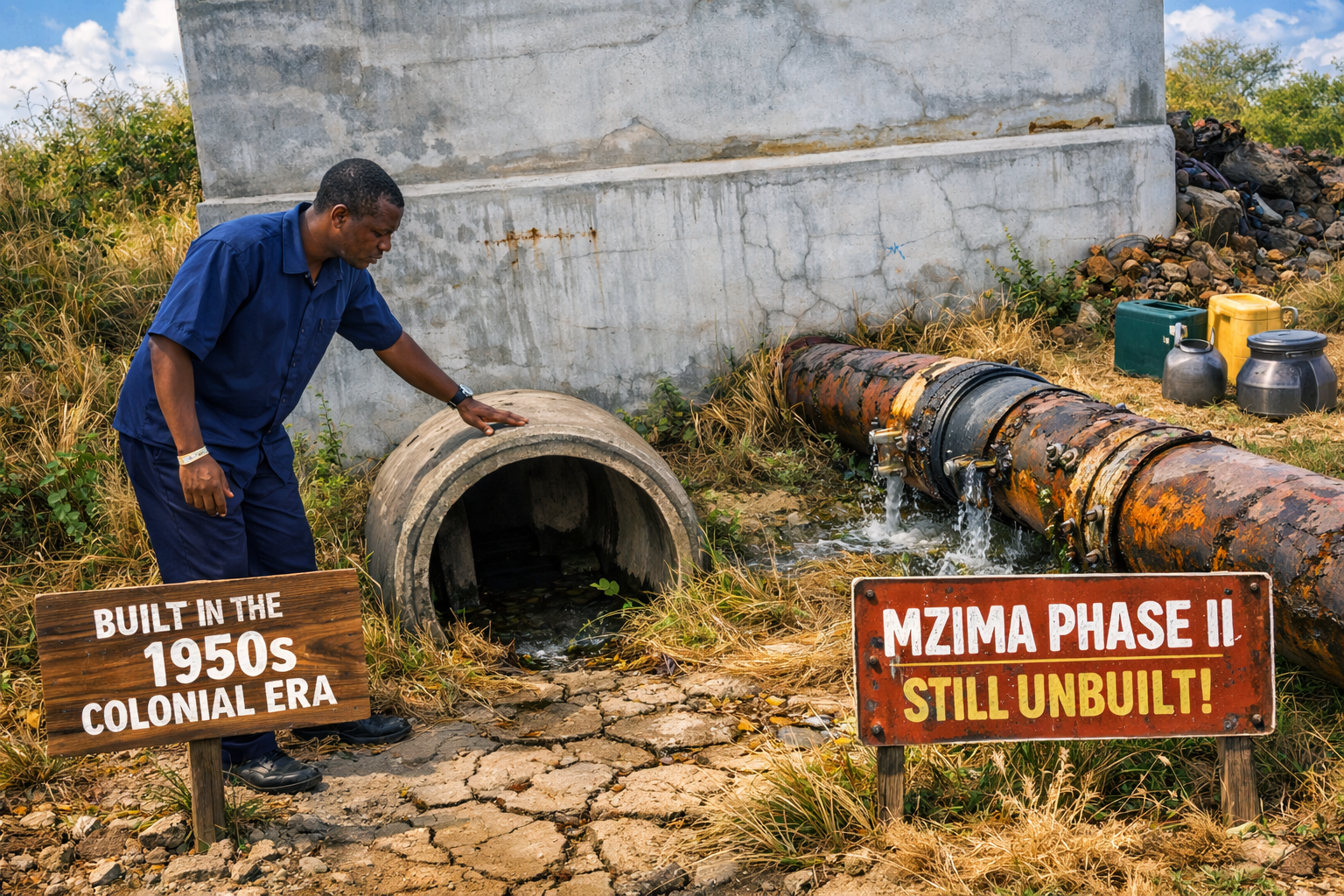
Stalled Mzima Phase II

For more than six decades, millions of residents along Kenya’s Coast have depended on a single aging pipeline carrying fresh water from Mzima Springs. Yet, while the springs continue to produce hundreds of millions of litres of clean water every day, the long-planned expansion known as Mzima Phase II remains unbuilt — a symbol of delayed development and unresolved policy choices.
Today, as water shortages persist across Mombasa, Kwale, Kilifi, and Taita Taveta, the question is no longer whether the Coast needs Mzima Phase II — but why it has taken so long.
Hydrological records show that Mzima Springs produces approximately 400 to 440 million litres of fresh water per day, making it one of the most reliable natural freshwater sources in Kenya. The spring’s flow is stable year-round and gravity-fed, meaning it requires relatively low energy to transport water to the Coast.
Yet despite this vast natural capacity, less than 10 percent of the available water is currently captured for human use.
Most of the water delivered to the Coast still travels through the original Mzima pipeline — built in the 1950s — a system designed for a much smaller population and a very different economic era.
The existing Mzima Phase I pipeline supplies water primarily to Mombasa and surrounding areas. When constructed more than 70 years ago, it was considered a major engineering achievement. Today, it is increasingly fragile.
The pipeline was designed to carry about 35 million litres per day, but frequent bursts, corrosion, and infrastructure fatigue have reduced efficiency. In addition, the Coast water system experiences non-revenue water losses estimated between 40 and 55 percent — meaning nearly half of the water produced never reaches paying consumers due to leaks, illegal connections, and metering gaps.
In real terms, this translates to 14 to 19 million litres of water lost daily — enough to supply hundreds of thousands of people.
As the population of the Coast has grown and tourism, port activity, and industry have expanded, the old system has struggled to keep pace. Water rationing, reliance on private water vendors, and chronic shortages have become part of daily life for many residents.
Mzima Phase II was conceived as a major expansion to unlock more of the springs’ potential and secure the Coast’s long-term water future.
Engineering plans proposed:
Construction of a second bulk pipeline
Increased abstraction from the springs
Expansion of delivery capacity to approximately 105 million litres per day
If implemented, Phase II would triple the amount of water supplied from Mzima and significantly reduce shortages across the region.
For decades, feasibility studies, planning documents, and government announcements have pointed to Phase II as a key solution. Yet construction has never begun.
The delay has carried real consequences.
Households across the Coast often pay high prices for water from private vendors, especially during supply interruptions. In informal settlements, residents sometimes rely on unsafe water sources, increasing health risks.
For businesses — particularly hotels, restaurants, and industries — unreliable water supply raises operational costs and discourages investment. The tourism sector, a pillar of the Coast economy, depends heavily on stable water access.
Government agencies, meanwhile, spend significant funds on emergency water supply measures, pipeline repairs, and stop-gap solutions. Economists note that over time, the cumulative cost of water shortages may rival or exceed the investment required to build Phase II.
Despite its strategic importance, Mzima Phase II has faced repeated delays for a combination of financial, environmental, and institutional reasons.
Financing Challenges
The project’s high capital cost discouraged private investors under the proposed Public-Private Partnership (PPP) model. Concerns about revenue reliability — especially given high water losses — made the investment less attractive.
Institutional Complexity
Water governance in Kenya involves both national and county governments. Questions over funding responsibility, infrastructure ownership, and bulk water pricing complicated progress.
Environmental Safeguards
Mzima Springs lies within Tsavo West National Park, and environmental experts have raised concerns about protecting ecosystems and wildlife dependent on the spring. These concerns led to extended environmental assessments and cautious policy decisions.
Policy Shifts
In recent years, government attention shifted toward alternative projects such as Mwache Dam, Baricho upgrades, and groundwater development. While important, these projects have advanced slowly and have not fully resolved water shortages.
The Coast region’s population continues to grow rapidly, and urban expansion shows no sign of slowing. The Port of Mombasa, tourism infrastructure, and new industrial developments all require reliable water supply.
Without a major increase in bulk water delivery, experts warn that shortages will persist — and may worsen — even as smaller projects come online.
Mzima Phase II, proponents argue, remains one of the most direct ways to address the structural water deficit.
Water experts point to several advantages of reviving Phase II:
Reliable natural source: Mzima Springs offers consistent, high-quality freshwater.
Low operating cost: Gravity-fed supply reduces long-term energy expenses compared to pumped systems.
Public health benefits: Improved water access supports sanitation and disease prevention.
Economic growth: Stable water supply strengthens tourism, manufacturing, and urban development.
Climate resilience: Natural spring sources are generally less vulnerable to drought than surface reservoirs.
Policy analysts suggest that reviving Mzima Phase II would require a revised approach:
Blended financing using public funds and concessional loans rather than relying solely on private investors
Reducing system water losses to improve efficiency and financial sustainability
Clear coordination between national and county governments
Environmental safeguards to ensure sustainable abstraction
Transparent implementation timelines and public accountability
Such steps, they argue, could turn decades of planning into tangible progress.
For generations, the Coast has watched as vast volumes of fresh water flow from Mzima Springs while communities continue to struggle for reliable supply. The aging Phase I pipeline has served the region for more than half a century, but its limitations are now unmistakable.
The debate over Mzima Phase II is no longer simply about engineering. It is about development, equity, and the right to basic services.
As demand rises and shortages persist, many residents and leaders are asking: how much longer can the Coast afford to wait?
Kwaela News Network will continue to follow developments surrounding Mzima Springs and regional water security.

 TAITA TAVETA: KSh 9.86 MILLION IN SALARIES, TWO ALLEGED FORGED DEGREES — WHO VERIFIED THE QUALIFICATIONS?
KNN INVESTIGATIVE EDITORIAL | PUBLIC.
 GODOMA FINALLY GETS ITS TITLE DEEDS — A RIGHT LONG OVERDUE
The issuance of title deeds.
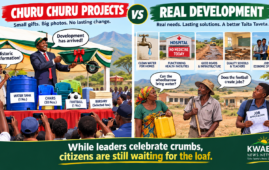 CHURU CHURU PROJECTS VS REAL DEVELOPMENT
Why Taita Taveta Must Stop.
 CORRUPTION: THE SILENT TAX CRUSHING ORDINARY KENYANS
A Nation Paying Twice for.
 SUMMARY OF THE TAITA TAVETA COUNTY FY 2026 / 2027 BUDGET ESTIMATES
The County Government of Taita Taveta.
 WHOEVER FEEDS YOU CONTROLS YOU: SANKARA’S WARNING AFRICA REFUSES TO HEAR
“He who feeds you, controls you.”.
 Universality and the Rise of a New African Political Consciousness: How Kenyan Gen Z is Reshaping African Politics
Across Africa, the concept of universality.
 PARIS ON OUR PAIN: TAITA TAVETA MCAs STILL FEEDING WHILE THE COUNTY BLEEDS
They say the more things.
 DRAIN THE SWAMP OR GO HOME: TAITA TAVETA DEMANDS ACCOUNTABILITY
When Governor Andrew Mwadime—popularly known as.
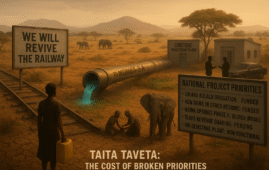 Beyond Personalities: What Taita-Taveta Must Demand in 2027
By Pastor Cassian Ngotho Mwachanya Taita-Taveta.
 THE ACCOUNTABLE AND THE ACCUSED: MWAMBURI, MAGANGA, AND THE RECKONING AT TAITA TAVETA COUNTY ASSEMBLY
By Pastor Cassian Ngotho Mwachanya The.
 HON. DORCAS MLUGHU: THE VOICE THAT REFUSED TO BOW
The court’s decision declaring the impeachment.
 THE CLERK AT THE HEART OF COUNTY ASSEMBLY BUSINES: WHY ADMINISTRATIVE RESPONSIBILITY CANNOT BE ESCAPED
The recent court decision in.
 WHY KENYA WILL NOT BECOME THE “SINGAPORE OF AFRICA” ANYTIME SOON
For more than a decade,.
 CORRUPTION — THE ENEMY IN THE ROOM: HOW IT IS STRANGLING DEVELOPMENT IN TAITA-TAVETA COUNTY (2025)
Taita-Taveta is a county of.
 WITO WA UWAZI NA MAADILI: MBUNGE WA TAVETA, MHESHIMIWA JOHN OKANO BWIRE, AHOJIWE KUHUSU MGONGANO WA MASLAHI NA UTETEZI WA WATUHUMIWA WA UFISADI
TAREHE: 12 Novemba 2025 MAHALI:.
Leave a Comment