
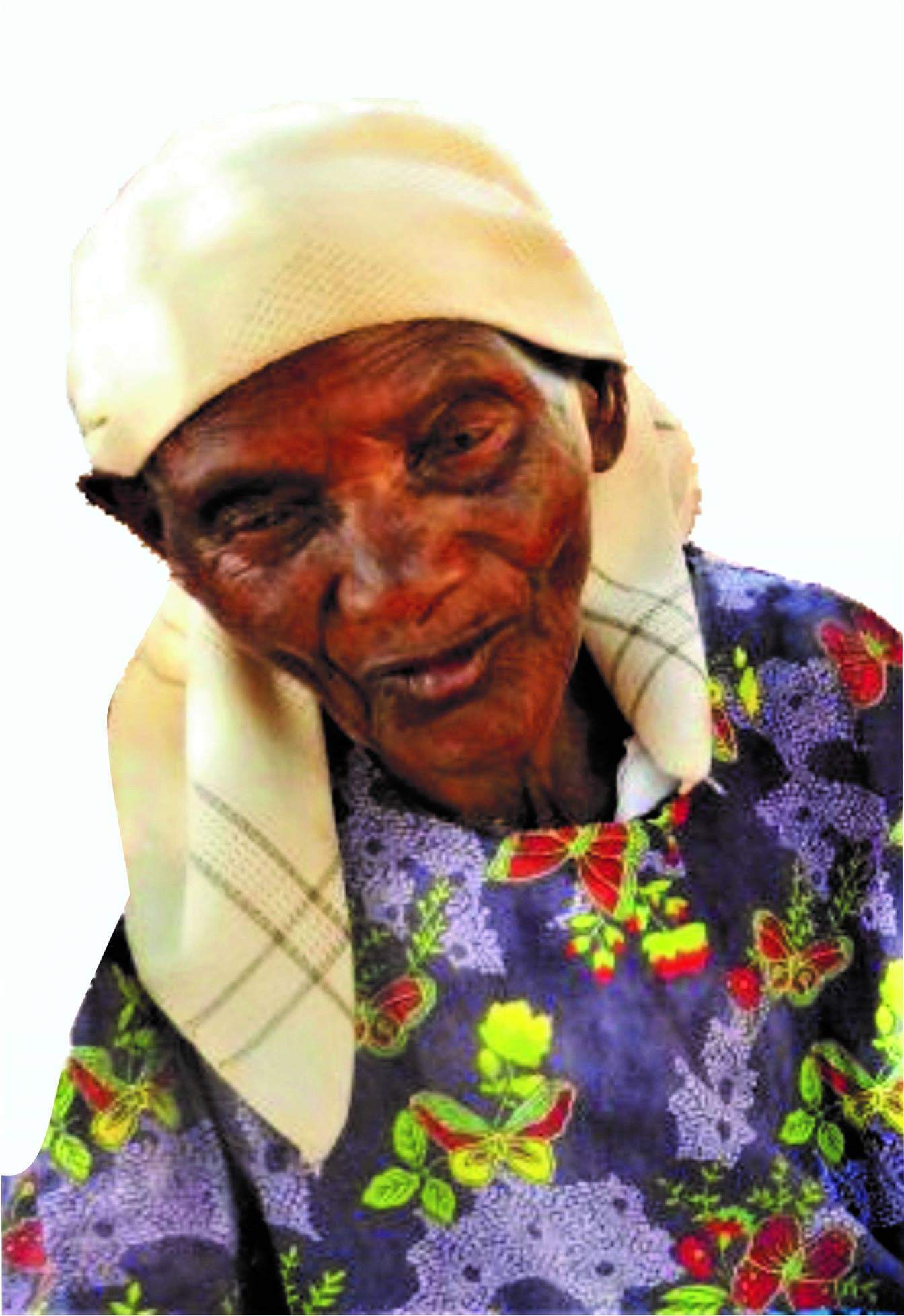
By Tito Almasi
There was neither earthquake nor thunder to make her death so it’s alright if you didn’t hear about it. Few did.
She was 114.
During her burial, hundreds came; few cried. At such an age, people sort of get used to you not waking up. She rests.
Mama Wali was the last surviving Kasighau deported to Malindi in 1916 by British soldiers. She would be one of the few who came back after 20 years in exile.
Like Sudan the last of the Northern White Rhino, Mama Wali was the last of her kind. With her death, an era died.
You can imagine our delight when reports said British envoy Nic Hailey and his German Counterpart Annett Gunther were coming to TTC to commemorate the end of WW1.
‘The first port of call will be at Wali’s graveside,’ I told myself.
It makes sense doesn’t it? For the dignitaries to pay homage to a child; now a dead granny, displaced by war that was not of her making; to honor lost innocence; disrupted lives; as a sign of atonement; to show contriteness for crimes meted out on innocent victim by a senseless war between Germans and Brits?
Well, the envoys came. In full pomp. In armored SUVs. Fully secured; looking as smart as you would like.
They land at the exclusive Vacani and Taita Hills Hotel. For treats and delicious cuisines and stuff. They are taken through a presentation of EA WW1 campaign.
They are chauffeured to all the Commonwealth War Graves Cemeteries to lay wreath and honor the dead soldiers. White soldiers.
There is a military parade; there is a bungle cry; there are salutes and prayers. For dead white soldiers; Britons, Germans, South Africans, Balluchis who lie in protected cemetery with a cute picket fence and flowers with well-tended and polished tombstones; the enduring symbols of WW1 in this county.
And after three days, the visitors go away. No more salutes; bungles or prayers. It is as if the commemoration of WW1 here never happened.
All this time, an old granny; lies under a mound of red soil in the foot of Kasighau hills; unacknowledged; unhonored; unappreciated. A civilian victim of the war.
On Sunday evening, a drinking friend voiced my disquiet.
“Do we really matter?”
Do we?
Is commemoration all about the dead soldiers? What about villagers? What about the casualties of war? Like those four men forced to dig their graves and shot at the back of their heads for betraying Britons? Or the hundreds who died in the train to Mombasa? Or the dozens who died in the high seas on their way to Malindi and bodies thrown overboard? Who remembers such?
In France, a campaign to honor 11 million animals that died in the WW1 has started. Goats, cows, chicken and horses will be given official recognition but we cannot remember our Walis.
With a budget of 6M; meals, guests, publicity, transport, accommodation- a surprise visit to Wali’s grave would have been novel; a truly memorable and remarkable act.Out of ordinary.
But what do I know? Why didn’t they go to Kasighau? Were the visitors told tales of aggressive jiggers and fleas of Kasighau; or perhaps of ticks and mosquitoes that can bite a chunk of your flesh through your jeans?
Whatever the case, there was not as much as a look towards Kasighau. And here lies the problem. There is no commitment to make Kasighau’s plight the face of WW1 in Kenya.
When rumors came that county had boycotted the event, I knew it was all over.
But then perhaps it all one big hoax! This story.
As in who exactly said Kasighaus were displaced? That they died? Who can prove it? Couldn’t all these be tall tales intended to excite idle intellect? Could it be the Kasighau folk have felt sidelined in history that they made it up to attract some attention?
Who amongst you was displaced in that mythical journey?Mama Wali would know. But she is dead; with all her secrets.
Perhaps it’s time Kasighau accepted and moved on. You are on your own. Your bitter tales of pain, history of displacement, hunger and death might remain just that. tales. Your tales.
But there is hope. Another commemoration will be in 2118; a hundred years from now. I propose we all hang around until then and revive this debate again.
A community of Rip Van Winkles.

more recommended stories
 TAITA TAVETA: KSh 9.86 MILLION IN SALARIES, TWO ALLEGED FORGED DEGREES — WHO VERIFIED THE QUALIFICATIONS?
KNN INVESTIGATIVE EDITORIAL | PUBLIC.
 GODOMA FINALLY GETS ITS TITLE DEEDS — A RIGHT LONG OVERDUE
The issuance of title deeds.
 CHURU CHURU PROJECTS VS REAL DEVELOPMENT
Why Taita Taveta Must Stop.
 CORRUPTION: THE SILENT TAX CRUSHING ORDINARY KENYANS
A Nation Paying Twice for.
 SUMMARY OF THE TAITA TAVETA COUNTY FY 2026 / 2027 BUDGET ESTIMATES
The County Government of Taita Taveta.
 WHOEVER FEEDS YOU CONTROLS YOU: SANKARA’S WARNING AFRICA REFUSES TO HEAR
“He who feeds you, controls you.”.
 Universality and the Rise of a New African Political Consciousness: How Kenyan Gen Z is Reshaping African Politics
Across Africa, the concept of universality.
 PARIS ON OUR PAIN: TAITA TAVETA MCAs STILL FEEDING WHILE THE COUNTY BLEEDS
They say the more things.
 DRAIN THE SWAMP OR GO HOME: TAITA TAVETA DEMANDS ACCOUNTABILITY
When Governor Andrew Mwadime—popularly known as.
 Beyond Personalities: What Taita-Taveta Must Demand in 2027
By Pastor Cassian Ngotho Mwachanya Taita-Taveta.
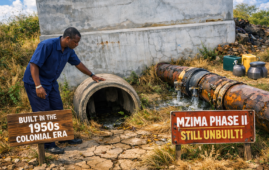 Mzima Phase II: A Promise Delayed, A Region Thirsty
For more than six decades, millions.
 THE ACCOUNTABLE AND THE ACCUSED: MWAMBURI, MAGANGA, AND THE RECKONING AT TAITA TAVETA COUNTY ASSEMBLY
By Pastor Cassian Ngotho Mwachanya The.
 HON. DORCAS MLUGHU: THE VOICE THAT REFUSED TO BOW
The court’s decision declaring the impeachment.
 THE CLERK AT THE HEART OF COUNTY ASSEMBLY BUSINES: WHY ADMINISTRATIVE RESPONSIBILITY CANNOT BE ESCAPED
The recent court decision in.
 WHY KENYA WILL NOT BECOME THE “SINGAPORE OF AFRICA” ANYTIME SOON
For more than a decade,.
 CORRUPTION — THE ENEMY IN THE ROOM: HOW IT IS STRANGLING DEVELOPMENT IN TAITA-TAVETA COUNTY (2025)
Taita-Taveta is a county of.
Leave a Comment