
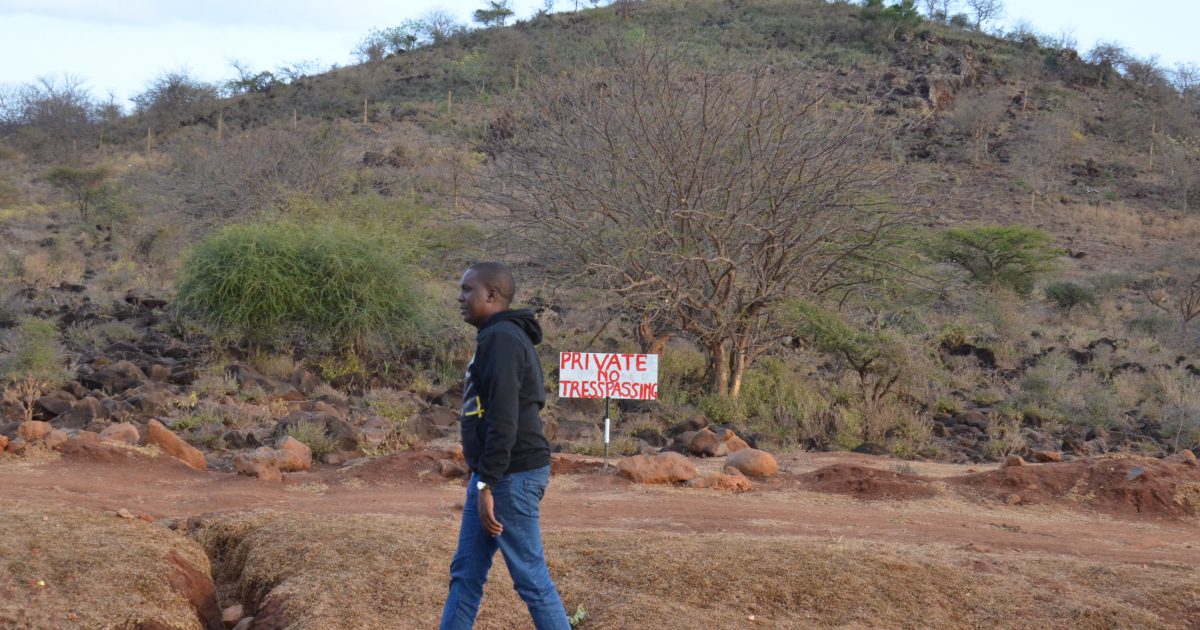
The erection of a fence around the iconic Salaita Hill, a national monument in Taveta sub-county, is necessary for protection of the site against destruction and degradation, the government has said.
In 2014, the National Museums of Kenya gazetted Salaita Hill one of the fourteen sites in Taita-Taveta County of historical interest and significance due to its role in 1914 during the World War
Other sites identified under the National Museums and Heritage Act (No 6 of 2006) include Kenyatta Caves in Wundanyi, Maktau Picket Hill in Mwatate, Voi Commonwealth War graves and Taveta Indian Military Cemetery.
Speaking to KNA on Thursday, Taveta Deputy County Commissioner Stanley Kamande said Salaita Hill was part of the investor’s private land.
The administrator said declaration of the hill as a national monument did not make the land public unless the government initiates the process of repossessing it.
The Salaita Hill monument and the adjacent land occupies an area of 150 acres.
“The fencing is part of owner’s obligation to fence and duty to protect the site from degradation. It is a private land,” said Mr. Kamande.
In the past one week, members of public, tourism stakeholders and a section of leaders from the region have been up in arms after the investor started fencing off the historical site.
They argued that being part of a national monument, Salaita Hill is a government land. They also expressed worries over public access to the site.
The matter became more complicated after Jipe Multi-Purpose claimed the historical site was part of its land.
Mr. Silas Ngulo, a resident of Challa in Taveta, said Salaita Hill was part of land under Jipe Multi-purpose and should not be fenced off.
He said the investor was encroaching on their land and should stop. “This is part of Jipe Multi-Purpose land and we are shocked to see a fence coming up,” he said.
Mr. Kamande however said the investor and his lawyers had presented documents to prove ownership.
He stated that the Museums and Heritage Act barred the owner from interfering with the integrity of the site through altering its physical appearance.
The investor can also not mine or engage in any activity that will compromise the status of the site.
“He is not allowed to engage in any activity that will reduce the magnificence of the monument,” he said.
Structures and sites classified as monuments by the National Museum of Kenya fall under both public and private land.
In Taita-Taveta County for instance, Kino caves also known as Kenyatta Caves are located within Zephaniah Nyambu’s private farm in Wundanyi.
Since 2015, Salaita Hill has slowly been degraded by human activities including grazing and small-scale mining of ballast by local residents.
During the celebration of World War One centenary, diplomats from a dozen countries toured the Hill and erected flags of their respective countries in memory of those who died during the war.
By Wagema Mwangi

more recommended stories
 TAITA TAVETA: SEVEN DAYS HAVE ELAPSED — HAS SENATOR KAJWANG SENT WAKUJAA’S GOVERNMENT FILES TO EACC?
By Kwaela News Network (KNN).
 MZIMA II WATER PROJECT: KSh 50.6 BILLION COASTAL PIPELINE MOVES CLOSER TO IMPLEMENTATION
Chinese firm identified as proposed developer.
 Nairobi in Darkness as Government Billing Dispute Leaves Residents Paying the Price
NAIROBI — As darkness descends on.
 RUTO CONTRADICTS HIMSELF ON FOREIGNERS: FROM “VISA-FREE AFRICA” TO A CRACKDOWN ON SMALL TRADERS
President William Ruto’s latest crackdown.
 NEW UNIFORMS, SAME OLD PROBLEMS: YOU CAN’T TAILOR INTEGRITY
President William Ruto has proudly unveiled.
 SHARON’S JUSTICE CANNOT BE BOUGHT
The latest developments in the.
 HOMA BAY VIOLENCE RAISES TROUBLING QUESTIONS ABOUT KENYA’S DEMOCRACY
The shocking violence that engulfed the.
 JUSTICE AT LAST: WHAT THE SHARON OTIENO MURDER CONVICTION MEANS FOR KENYA
After nearly eight years of.
 ALBERT OJWANG CASE: THE QUESTIONS KENYA REFUSES TO LET DIE
The death of Albert Ojwang in.
 RELIEF FOOD SCANDAL RAISES SERIOUS QUESTIONS AS INVESTIGATIONS CONTINUE
The reported recovery of hundreds.
 THE HALIMA NGACHE CASE: A COSTLY ASSAULT ON DIGITAL FREEDOM THAT DEMANDS ACCOUNTABILITY
The collapse of the case against.
 WHY FIKIRINI JACOBS MUST STEP ASIDE AS THE CECIL OUMA PROBE CONTINUES
The tragic death of 28-year-old youth.
 STOP THE KILLING, NOT MERELY COMPENSATE THE DEAD
As Kenya approaches the second.
 PRESIDENT RUTO’S FREQUENT FLYER PRESIDENCY: ARE KENYANS GETTING VALUE FOR MONEY?
President William Ruto has returned to.
 THE SINGAPORE ILLUSION: A REALITY CHECK ON THE STATE OF OUR NATION
There is an increasingly persistent.
 Could the Proposed Ebola Quarantine Facility Cost Kenya More Than It Gains?
The proposed establishment of a United.
Leave a Comment