
Ms Christine Zighe Mwashighadi

KNN INVESTIGATIVE EDITORIAL | PUBLIC ACCOUNTABILITY
When public offices are allegedly secured through forged academic qualifications, taxpayers become the victims. When government fails to act despite prior warnings, the silence itself demands scrutiny.
The Ethics and Anti-Corruption Commission (EACC) has brought renewed attention to the integrity of public appointments in Taita Taveta County, following investigations into two individuals who allegedly used forged academic qualifications to secure public positions.
The figures are staggering.
A sitting County Executive Committee Member (CECM) responsible for Lands, Physical Planning, Mining and Urban Development allegedly received KSh 6,050,154.90 in salaries between October 2025 and June 2026 after presenting academic qualifications that the University of Nairobi reportedly disowned.
A former political adviser to the Governor allegedly received KSh 3,807,563 in salaries between September 2022 and March 2025 after presenting a purported Computer Science degree from the same university, which EACC investigators reportedly established was not genuine.
Together, the two cases account for approximately KSh 9.86 million in reported salary payments.
But these figures may not represent the full financial exposure to taxpayers.
The reported amounts relate to salaries. They do not necessarily include per diem, allowances, benefits or other payments that may have been received during the respective periods.
The question confronting Taita Taveta County is no longer merely whether the academic qualifications were genuine.
It is whether the county’s appointment and oversight systems were allowed to fail — and whether public officials responsible for safeguarding taxpayers’ money have taken meaningful action.
CHRISTINE ZIGHE: KNN HAD ALREADY RAISED THE ALARM
The case involving the serving Lands CECM, Christine Zighe Mwashighadi, is particularly troubling because it is not a new public concern.
Kwaela News Network had previously published an investigation raising questions about her academic qualifications and the apparent silence of the county government.
Our earlier publication, Unanswered Questions: The Christine Zighe Degree Controversy and the Silence of Taita Taveta County Government, can be read here.
Other articles examining the controversy have also been published on the Kwaela News Network website.
The latest EACC findings now give the matter a new and serious dimension.
According to reporting on the Commission’s third-quarter 2026 investigations, the University of Nairobi confirmed that neither the purported Bachelor of Project Planning and Management degree nor the accompanying transcripts had been issued by the institution.
EACC reportedly forwarded the investigation file to the Director of Public Prosecutions (DPP) on 4 August 2026, recommending charges relating to fraudulent acquisition of public property and forgery.
The DPP returned the file on 22 September 2026 for further investigations.
These are serious developments.
But they also raise a fundamental question:
If the county government was already aware of the controversy surrounding the CECM’s academic qualifications, why did it fail to take decisive administrative action to protect public funds and uphold the integrity of the office?
Did the county independently verify the qualifications?
Did it seek clarification from the University of Nairobi?
Was the County Assembly’s vetting process sufficient?
Did the Governor’s office undertake any internal review?
And if the county took action, where is the evidence?
The public deserves answers.
The county government cannot simply wait for the criminal justice process to run its course while ignoring its own responsibility to uphold the standards of public service.
Administrative action, where legally justified, is not a substitute for prosecution. Equally, the existence of an ongoing investigation should not become a convenient excuse for institutional inaction.
KSh 6 MILLION: WHO APPROVED THE PAYMENTS?
The EACC investigation reportedly established that the Lands CECM received KSh 6,050,154.90 in salaries between October 2025 and June 2026.
The Commission reportedly linked these payments to the alleged use of forged academic qualifications to secure the appointment.
This is a direct question of public finance accountability.
Who authorised the appointment?
Who verified the degree?
Who approved the payroll entries?
Who certified that the official met the legal requirements for the position?
Was the University of Nairobi contacted before the appointment, or only after allegations were raised?
The County Governments Act provides for academic qualification requirements for appointment to a County Executive Committee. The purpose is to ensure that public offices are occupied by individuals who meet the required standards.
If those standards were allegedly circumvented, the failure cannot be treated as a minor administrative oversight.
It would represent a serious breach of public trust.
And if the alleged fraud is established in court, the public must not be left carrying the financial burden.
THE FORMER POLITICAL ADVISER: ANOTHER PUBLIC FUNDS QUESTION
The second EACC investigation concerns a former political adviser to the Governor.
The individual allegedly presented a purported Bachelor of Science degree in Computer Science from the University of Nairobi.

EACC reportedly established that the degree was not issued by the university.
The reported salary payments amount to KSh 3,807,563 between September 2022 and March 2025.
The DPP reportedly returned the investigation file for further investigations.
Read Also: ON THE TERMINATION OF TAITA TAVETA COUNTY POLITICAL ADVISOR
This case raises similar questions about recruitment, verification, payroll controls and the responsibility of the appointing authority.
Who verified the academic documents?
What was the minimum qualification required for the position?
Was the appointment subjected to proper scrutiny?
Did the county government act after concerns were raised?
And what steps are being taken to establish the full amount of public money received?
The issue is not whether political advisers are necessary in government.
The issue is whether public positions are being occupied in accordance with the law — and whether taxpayers are paying for appointments that may have been secured through fraudulent means.
THE KSh 9.86 MILLION IS NOT NECESSARILY THE FINAL FIGURE
The reported KSh 9.86 million represents the combined salaries cited in the two EACC investigations.
It should not automatically be treated as the complete amount received by the two individuals.
KNN calls for a comprehensive audit of all payments made during the relevant periods, including:
The relevant county departments must produce records.
The County Treasury must explain the payments.
The County Public Service Board, where applicable, must account for its role in the recruitment and verification process.
The County Assembly must explain what scrutiny was undertaken during vetting.
And the Governor’s office must answer for the appointment decisions made under its authority.
Public money is not a private resource.
Every shilling must be accounted for.
IF GUILT IS ESTABLISHED, RECOVERY MUST FOLLOW
KNN is unequivocal on this point.
If the courts establish that either individual obtained public employment through forged academic qualifications and unlawfully received public funds, the appropriate legal consequences must follow.
This should include the recovery of all money found to have been unlawfully obtained, subject to the applicable law and the court’s determination.
Where legally justified, the recovery should include interest.
Criminal penalties, including imprisonment, should follow where the offences are proved and the law provides for such punishment.
The county government and the relevant recovery agencies must not allow public funds to disappear simply because the individuals involved once held influential positions.
The principle must be clear:
You cannot use forged qualifications to obtain a public office, receive taxpayers’ money and then walk away without accountability.
But recovery must be grounded in evidence and due process. The amounts legally recoverable must be established, not merely assumed.
The public deserves justice — not a political spectacle.
THE GOVERNOR AND COUNTY GOVERNMENT MUST ANSWER
The responsibility for ensuring integrity in public appointments does not end with the individual who submits academic documents.
There are institutional responsibilities.
There are verification procedures.
There are vetting processes.
There are payroll controls.
And there is the ultimate responsibility of the appointing authority to ensure that public offices are occupied in accordance with the law.
The Governor must explain what action the county government has taken following the allegations and the latest EACC findings.
The County Secretary must explain the administrative safeguards in place.
The County Public Service Board must clarify its role in verifying qualifications and ensuring compliance with recruitment requirements.
The County Assembly must demonstrate that its vetting processes are meaningful and not merely ceremonial.
The EACC and DPP must keep the public informed of the progress of the investigations, within the limits of the law.
The public is entitled to know whether the county government is protecting taxpayers or protecting individuals accused of wrongdoing.
CORRUPTION DOES NOT PAY — OR AT LEAST IT MUST NOT
Taita Taveta County cannot achieve meaningful development while public institutions tolerate the misuse of public office.
Every shilling lost through fraud, corruption or irregular appointments is a shilling denied to healthcare, water, education, roads, agriculture and other essential services.
The county cannot continue demanding sacrifices from ordinary residents while allegations of public officers benefiting from questionable appointments remain unresolved.
There must be consequences.
There must be transparency.
There must be recovery of public funds where unlawful acquisition is established.
And there must be institutional reform to prevent similar cases from recurring.
The purpose of accountability is not revenge. It is to restore public trust, protect public resources and ensure that government works for the people.
The law must apply equally to everyone — whether a public officer is a junior employee, a political adviser or a member of the County Executive Committee.
KNN DEMANDS ANSWERS.
KNN DEMANDS ACCOUNTABILITY.
KNN DEMANDS THE PROTECTION OF PUBLIC FUNDS.
Taita Taveta residents deserve a government that respects the law and safeguards their resources.
The message must be unmistakable:
CORRUPTION DOES NOT PAY. PUBLIC OFFICE IS NOT A PERSONAL ATM. TAXPAYERS’ MONEY MUST BE PROTECTED.
EDITORIAL NOTE
The amounts cited in this article are those reported in connection with the EACC’s third-quarter 2026 investigations. The reported investigation findings and recommendations do not constitute a criminal conviction. The DPP reportedly returned the relevant files for further investigations. The individuals concerned are entitled to due process and the presumption of innocence unless and until guilt is established by a court of law.
This publication calls for accountability, transparency, lawful administrative action and recovery of public funds where unlawful acquisition is established.
KWAELA NEWS NETWORK (KNN)
Public Interest. Civic Accountability. The People’s Right to Know.

 GODOMA FINALLY GETS ITS TITLE DEEDS — A RIGHT LONG OVERDUE
The issuance of title deeds.
 CHURU CHURU PROJECTS VS REAL DEVELOPMENT
Why Taita Taveta Must Stop.
 CORRUPTION: THE SILENT TAX CRUSHING ORDINARY KENYANS
A Nation Paying Twice for.
 SUMMARY OF THE TAITA TAVETA COUNTY FY 2026 / 2027 BUDGET ESTIMATES
The County Government of Taita Taveta.
 WHOEVER FEEDS YOU CONTROLS YOU: SANKARA’S WARNING AFRICA REFUSES TO HEAR
“He who feeds you, controls you.”.
 Universality and the Rise of a New African Political Consciousness: How Kenyan Gen Z is Reshaping African Politics
Across Africa, the concept of universality.
 PARIS ON OUR PAIN: TAITA TAVETA MCAs STILL FEEDING WHILE THE COUNTY BLEEDS
They say the more things.
 DRAIN THE SWAMP OR GO HOME: TAITA TAVETA DEMANDS ACCOUNTABILITY
When Governor Andrew Mwadime—popularly known as.
 Beyond Personalities: What Taita-Taveta Must Demand in 2027
By Pastor Cassian Ngotho Mwachanya Taita-Taveta.
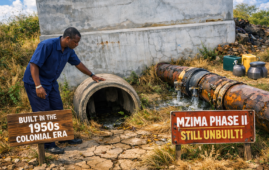 Mzima Phase II: A Promise Delayed, A Region Thirsty
For more than six decades, millions.
 THE ACCOUNTABLE AND THE ACCUSED: MWAMBURI, MAGANGA, AND THE RECKONING AT TAITA TAVETA COUNTY ASSEMBLY
By Pastor Cassian Ngotho Mwachanya The.
 HON. DORCAS MLUGHU: THE VOICE THAT REFUSED TO BOW
The court’s decision declaring the impeachment.
 THE CLERK AT THE HEART OF COUNTY ASSEMBLY BUSINES: WHY ADMINISTRATIVE RESPONSIBILITY CANNOT BE ESCAPED
The recent court decision in.
 WHY KENYA WILL NOT BECOME THE “SINGAPORE OF AFRICA” ANYTIME SOON
For more than a decade,.
 CORRUPTION — THE ENEMY IN THE ROOM: HOW IT IS STRANGLING DEVELOPMENT IN TAITA-TAVETA COUNTY (2025)
Taita-Taveta is a county of.
 WITO WA UWAZI NA MAADILI: MBUNGE WA TAVETA, MHESHIMIWA JOHN OKANO BWIRE, AHOJIWE KUHUSU MGONGANO WA MASLAHI NA UTETEZI WA WATUHUMIWA WA UFISADI
TAREHE: 12 Novemba 2025 MAHALI:.
1 Comment on this post
Leave a Comment