
2022 swearing in Ceremony

A Constitutional Impossibility, a Political Probability
The assertion that President William Ruto will be sworn in after the 2027 general election “whether he wins or not” has gained traction in political discourse. Constitutionally, the claim is indefensible. Politically, however, it reflects a widening public concern about incumbency power, institutional independence, and the credibility of electoral competition in Kenya.
This analysis examines why a statement that is legally false has become politically believable — and what that says about the state of Kenya’s democracy ahead of 2027.
Kenya’s Constitution provides a clear framework for presidential elections and transitions of power. A president can only be sworn in after:
There is no lawful mechanism that allows a candidate to be sworn in after losing an election. Any such scenario would require the collapse or total capture of multiple constitutional institutions simultaneously.
From a strictly legal standpoint, therefore, the claim is incorrect.
Despite constitutional safeguards, public confidence in electoral processes remains fragile. The belief that an incumbent could retain power regardless of electoral outcome is rooted not in legal theory, but in political practice — specifically, the cumulative effects of incumbency.
Political outcomes are shaped long before election day. Control over institutions, narratives, resources, and incentives can render competition unequal without overtly violating the law.
A recurring feature of entrenched incumbency is the strategic placement of loyalists in key state and quasi-state institutions, including:
While such appointments are typically legal, their combined effect is institutional alignment. Resistance becomes risky, neutrality costly, and compliance rational.
Modern political intimidation rarely takes the form of open violence. Instead, it manifests through:
These mechanisms do not eliminate opposition outright but weaken its capacity to organize, fundraise, and mobilize effectively.
As power consolidates, leadership circles often narrow. Loyalty increasingly outweighs competence, and dissent is reframed as disloyalty.
This environment produces two consequences:
At this stage, systems begin prioritizing preservation over competition.
High levels of voter illiteracy in Kenya are political rather than intellectual. Many voters face:
In such conditions, electoral choice is shaped more by immediate economic realities than constitutional principles.
Incumbency alone does not guarantee victory. Fragmented opposition does.
Kenya’s opposition politics has historically struggled with:
A divided opposition lowers the threshold required for an incumbent to retain power.
Elections are effectively decided before ballots are cast. Key pre-election battlegrounds include:
Loss of credibility in these processes undermines confidence in the final outcome, regardless of voting day conduct.
A politically tilted system does not require blatant election rigging. When:
This is how a constitutional impossibility becomes a political probability.
Historical precedent suggests entrenched incumbency weakens under specific conditions:
Public outrage alone rarely dismantles entrenched systems; internal fractures do.
The statement that President Ruto will be sworn in “whether he wins or not” is less a prediction than a reflection of democratic anxiety.
Kenya remains constitutionally democratic. Politically, however, its democracy faces pressure from incumbency advantages, institutional trust deficits, and opposition disunity.
Whether 2027 reinforces or dispels these fears will depend not on election day alone, but on the integrity of institutions, the cohesion of political alternatives, and the ability of citizens to translate economic realities into informed political choice.
Democracy does not usually collapse abruptly.
More often, it erodes quietly — until outcomes feel inevitable.

 TAITA TAVETA: SEVEN DAYS HAVE ELAPSED — HAS SENATOR KAJWANG SENT WAKUJAA’S GOVERNMENT FILES TO EACC?
By Kwaela News Network (KNN).
 MZIMA II WATER PROJECT: KSh 50.6 BILLION COASTAL PIPELINE MOVES CLOSER TO IMPLEMENTATION
Chinese firm identified as proposed developer.
 Nairobi in Darkness as Government Billing Dispute Leaves Residents Paying the Price
NAIROBI — As darkness descends on.
 RUTO CONTRADICTS HIMSELF ON FOREIGNERS: FROM “VISA-FREE AFRICA” TO A CRACKDOWN ON SMALL TRADERS
President William Ruto’s latest crackdown.
 NEW UNIFORMS, SAME OLD PROBLEMS: YOU CAN’T TAILOR INTEGRITY
President William Ruto has proudly unveiled.
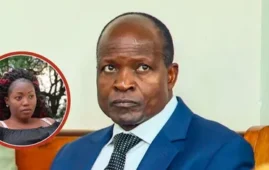 SHARON’S JUSTICE CANNOT BE BOUGHT
The latest developments in the.
 HOMA BAY VIOLENCE RAISES TROUBLING QUESTIONS ABOUT KENYA’S DEMOCRACY
The shocking violence that engulfed the.
 JUSTICE AT LAST: WHAT THE SHARON OTIENO MURDER CONVICTION MEANS FOR KENYA
After nearly eight years of.
 ALBERT OJWANG CASE: THE QUESTIONS KENYA REFUSES TO LET DIE
The death of Albert Ojwang in.
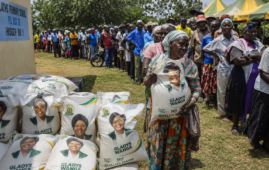 RELIEF FOOD SCANDAL RAISES SERIOUS QUESTIONS AS INVESTIGATIONS CONTINUE
The reported recovery of hundreds.
 THE HALIMA NGACHE CASE: A COSTLY ASSAULT ON DIGITAL FREEDOM THAT DEMANDS ACCOUNTABILITY
The collapse of the case against.
 WHY FIKIRINI JACOBS MUST STEP ASIDE AS THE CECIL OUMA PROBE CONTINUES
The tragic death of 28-year-old youth.
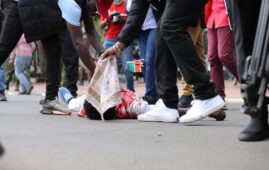 STOP THE KILLING, NOT MERELY COMPENSATE THE DEAD
As Kenya approaches the second.
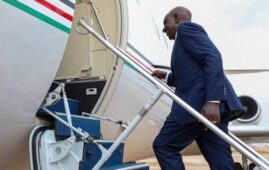 PRESIDENT RUTO’S FREQUENT FLYER PRESIDENCY: ARE KENYANS GETTING VALUE FOR MONEY?
President William Ruto has returned to.
 THE SINGAPORE ILLUSION: A REALITY CHECK ON THE STATE OF OUR NATION
There is an increasingly persistent.
 Could the Proposed Ebola Quarantine Facility Cost Kenya More Than It Gains?
The proposed establishment of a United.
Leave a Comment