
For more than a decade, Kenyan leaders have dangled the slogan “turning Kenya into the Singapore of Africa.”
It is a convenient political line — polished, ambitious, and empty.
Because the moment you compare how the two countries govern themselves, handle public money, enforce the law, and discipline public institutions, that dream collapses under its own weight.
Singapore rose from poverty to global prosperity by building a state where systems — not tribes, not slogans — determine outcomes.
Kenya, in contrast, continues to operate on a political logic where dysfunction is rewarded, corruption is protected, and public offices are treated as personal property.
This is not cynicism. It is an audit of reality.
1. What Singapore Got Right — And Why It Worked
Singapore’s transformation was not magic. It was discipline. It was structure. It was leadership that made the rules apply to everyone, including itself.
Merit, Not Ethnicity
Singapore built a public service staffed by:
- experienced professionals
- vetted technocrats
- people with proven competence and unquestioned integrity
Appointments are not a tribal puzzle. They are a national investment.
Real Anti-Corruption Enforcement
The Corrupt Practices Investigation Bureau (CPIB) is independent, feared, and empowered.
It prosecutes everyone: civil servants, CEOs, MPs, even ministers.
Investigations are:
- fast
- evidence-led
- immune to political pressure
Convictions are swift. Ill-gotten wealth is seized. No theatrics. No excuses.
Policy Stability
Investors trust Singapore because its rules do not change with political moods.
Taxes are predictable. Regulations are consistent. Institutions do not improvise.
Professional Infrastructure Development
From ports to energy, water to digital networks, Singapore builds first and talks later.
Projects are transparent, tightly monitored, and delivered on time and within budget.
Zero Tolerance for Waste
Every public dollar is treated as a national asset — not campaign fuel.
That is how a once-struggling island became one of the world’s most efficient economies.
2. Kenya’s System: Built to Protect the Powerful, Not Serve the Public
Kenya’s political architecture is the reverse of Singapore’s.
It is not defective by accident — it is defective by design.
Appointments Driven by Tribe and Loyalty
Key government jobs go to:
- ethnic allies
- campaign financiers
- political loyalists
Competence is optional. Loyalty is currency.
EACC and DCI: Institutions in Costume
Instead of acting as guardians of integrity, Kenya’s investigative agencies play to the gallery.
EACC specializes in:
- publicized raids
- half-baked investigations
- cases that collapse in court
DCI is known for:
- loud announcements
- weak evidence trails
- selective targeting based on politics
Both agencies operate like political instruments, not watchdogs.
Prosecutions That Fall Apart on Cue
The ODPP and judiciary then complete the cycle:
- adjournments become permanent
- files “go missing”
- witnesses “forget”
- suspects remain in office
- politically connected individuals walk free
Justice in Kenya is slow when it should be swift, and swift when politics demands it.

When Corruption Becomes a Career Ladder
In Kenya:
- governors under investigation attend cabinet events
- MPs facing serious charges vote on national budgets
- officials caught stealing are transferred, not prosecuted
Scandals become stepping stones, not stumbling blocks.
Chronic Policy Instability
Every budget cycle is a lottery: new taxes, new levies, new forms, new rules.
Businesses cannot plan. Investors cannot trust. Citizens cannot breathe.
Mega-Projects: Mega-Leaks
Kenyan infrastructure projects routinely:
- cost triple their original budgets
- overrun timelines
- involve ghost contractors
- leak billions in kickbacks
Singapore builds accountability. Kenya builds scandals.
3. The Corruption Battle: Singapore Fights; Kenya Performs
Singapore’s Model
- independent investigations
- no political interference
- ministers prosecuted without ceremony
- money recovered
- cases concluded quickly
- zero sacred cows
Corruption is suicidal.
Kenya’s Model
- press conferences instead of convictions
- cases timed to political seasons
- evidence mishandled
- witnesses intimidated
- deals cut behind closed doors
- justice auctioned to the highest bidder
Corruption is profitable.
Kenya is not losing the war on corruption — it is refusing to fight it.
4. Conclusion: Kenya Cannot Become Singapore Without Rebuilding the State
Singapore’s rise is anchored on:
- meritocracy
- strong, independent institutions
- predictable policy environments
- ruthless accountability
- absolute intolerance for corruption
Kenya’s stagnation is anchored on:
- politicized appointments
- ethnic arithmetic
- weakened law enforcement
- inconsistent policies
- normalized graft
- institutions aligned to power, not the public
Until Kenya stops treating corruption as political oxygen and starts treating it as a national cancer, the dream of becoming “Africa’s Singapore” will remain a decorative slogan — good for speeches, useless for progress.
Kenya does not need new visions, new blueprints, or new grand promises.
It needs courage. It needs discipline. It needs institutions that work.
Until then, Singapore is not a model Kenya can copy; it is a mirror Kenya refuses to look into.

more recommended stories
 TAITA TAVETA: KSh 9.86 MILLION IN SALARIES, TWO ALLEGED FORGED DEGREES — WHO VERIFIED THE QUALIFICATIONS?
KNN INVESTIGATIVE EDITORIAL | PUBLIC.
 GODOMA FINALLY GETS ITS TITLE DEEDS — A RIGHT LONG OVERDUE
The issuance of title deeds.
 CHURU CHURU PROJECTS VS REAL DEVELOPMENT
Why Taita Taveta Must Stop.
 CORRUPTION: THE SILENT TAX CRUSHING ORDINARY KENYANS
A Nation Paying Twice for.
 SUMMARY OF THE TAITA TAVETA COUNTY FY 2026 / 2027 BUDGET ESTIMATES
The County Government of Taita Taveta.
 WHOEVER FEEDS YOU CONTROLS YOU: SANKARA’S WARNING AFRICA REFUSES TO HEAR
“He who feeds you, controls you.”.
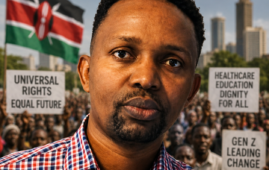 Universality and the Rise of a New African Political Consciousness: How Kenyan Gen Z is Reshaping African Politics
Across Africa, the concept of universality.
 PARIS ON OUR PAIN: TAITA TAVETA MCAs STILL FEEDING WHILE THE COUNTY BLEEDS
They say the more things.
 DRAIN THE SWAMP OR GO HOME: TAITA TAVETA DEMANDS ACCOUNTABILITY
When Governor Andrew Mwadime—popularly known as.
 Beyond Personalities: What Taita-Taveta Must Demand in 2027
By Pastor Cassian Ngotho Mwachanya Taita-Taveta.
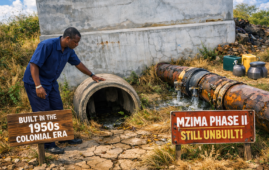 Mzima Phase II: A Promise Delayed, A Region Thirsty
For more than six decades, millions.
 THE ACCOUNTABLE AND THE ACCUSED: MWAMBURI, MAGANGA, AND THE RECKONING AT TAITA TAVETA COUNTY ASSEMBLY
By Pastor Cassian Ngotho Mwachanya The.
 HON. DORCAS MLUGHU: THE VOICE THAT REFUSED TO BOW
The court’s decision declaring the impeachment.
 THE CLERK AT THE HEART OF COUNTY ASSEMBLY BUSINES: WHY ADMINISTRATIVE RESPONSIBILITY CANNOT BE ESCAPED
The recent court decision in.
 CORRUPTION — THE ENEMY IN THE ROOM: HOW IT IS STRANGLING DEVELOPMENT IN TAITA-TAVETA COUNTY (2025)
Taita-Taveta is a county of.
 WITO WA UWAZI NA MAADILI: MBUNGE WA TAVETA, MHESHIMIWA JOHN OKANO BWIRE, AHOJIWE KUHUSU MGONGANO WA MASLAHI NA UTETEZI WA WATUHUMIWA WA UFISADI
TAREHE: 12 Novemba 2025 MAHALI:.
3 Reactions on this Article
Leave a Comment