
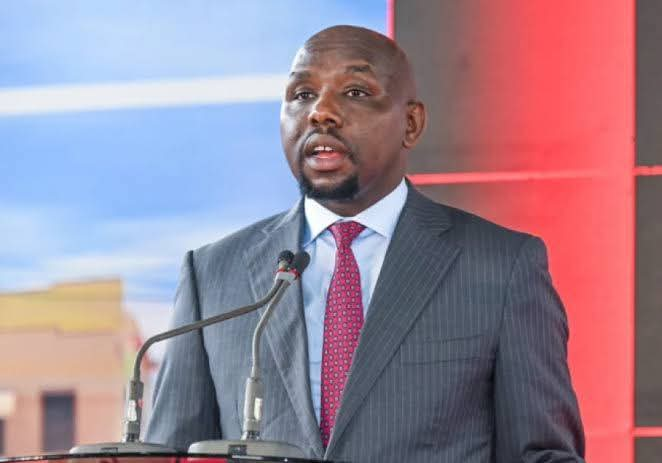
Kenya stands at a dangerous crossroads. The government has repeatedly condemned the rise of political goonism— groups mobilised to intimidate rivals, distort public opinion, or disrupt civic processes. Interior Cabinet Secretary Onesimus Murkomen has vowed that those who organise or finance such groups “will face the law.”
But this commitment to law and order collapses when placed next to the behaviour of the very institutions tasked with upholding it.
The Gen Z protests exposed a harsh truth: while the government denounces civilian goons, its own armed agents acted with a level of violence far beyond acceptable policing standards. Young citizens like Rex Masai were shot dead during peaceful demonstrations. Independent investigations, including verified video analyses by global media outlets, documented officers firing live rounds at unarmed crowds.
This was not chaos—it was the state turning its weapons on its own people.
In another widely publicised incident, an officer identified as Klinzy Barasa Masinde was filmed beating and shooting a mask vendor, Boniface Kariuki, at point-blank range. He was arrested, arraigned—and then the case disappeared into the fog of institutional silence. Justice in Kenya often moves only when cameras are rolling, and stops when they switch off.
Boniface Kariuki was shot as police cracked down on a protest in the capital Nairobi against the death in detention of blogger and teacher Albert Ojwang, 31.

Police officer who was accused of shooting mask vendor, Boniface Kariuki.
Albert Ojwang’s death in police custody remains one of the most troubling unresolved incidents in Kenya’s recent history. He died under unexplained circumstances inside a cell where the state holds full responsibility for his safety, yet no transparent investigation, public report, or accountability process has followed. Like other cases involving suspicious deaths or excessive force, Ojwang’s case has quietly faded from official discourse, reinforcing the perception of a system that goes silent when the accused wear uniforms. His family—and the country—still await answers that have never been given.
The troubling pattern does not end there. When CS Murkomen instructed officers to shoot any protester approaching a police station, and when the President publicly echoed similar directives—telling police to shoot protestors “on the legs”—those were not slip-of-the-tongue remarks. They were signals. Signals that force is permissible. Signals that lethal policing is negotiable.
Signals that the uniform can act with impunity.
How then can the government denounce goonism on one hand, yet empower violent suppression on the other?
If a politician pays a mob to intimidate citizens, it is rightly condemned as goonism.
But if armed officers intimidate, beat, or shoot citizens under the cover of state authority, what do we call it?
Is violence suddenly legitimate because it comes from a uniform?
Kenya cannot speak from two mouths. It cannot wage war against “goons” while nurturing state actors who behave like them. The credibility of law enforcement collapses when justice is selective, accountability is inconsistent, and the state shields its own while pointing fingers at others.
If the government is truly committed to ending goonism, it must begin where the rot is most dangerous — within its own institutions. That means transparent investigations, independent oversight, real prosecutions, and a rejection of political directives that normalise excessive force.
Until then, the loud warnings against political goons are nothing more than empty theatre.
Kenya deserves leadership that protects citizens, not intimidates them.
Kwaela News Network
We Observe. We Question. We Hold Power Accountable.

more recommended stories
 MZIMA II WATER PROJECT: KSh 50.6 BILLION COASTAL PIPELINE MOVES CLOSER TO IMPLEMENTATION
Chinese firm identified as proposed developer.
 Nairobi in Darkness as Government Billing Dispute Leaves Residents Paying the Price
NAIROBI — As darkness descends on.
 RUTO CONTRADICTS HIMSELF ON FOREIGNERS: FROM “VISA-FREE AFRICA” TO A CRACKDOWN ON SMALL TRADERS
President William Ruto’s latest crackdown.
 NEW UNIFORMS, SAME OLD PROBLEMS: YOU CAN’T TAILOR INTEGRITY
President William Ruto has proudly unveiled.
 SHARON’S JUSTICE CANNOT BE BOUGHT
The latest developments in the.
 HOMA BAY VIOLENCE RAISES TROUBLING QUESTIONS ABOUT KENYA’S DEMOCRACY
The shocking violence that engulfed the.
 JUSTICE AT LAST: WHAT THE SHARON OTIENO MURDER CONVICTION MEANS FOR KENYA
After nearly eight years of.
 ALBERT OJWANG CASE: THE QUESTIONS KENYA REFUSES TO LET DIE
The death of Albert Ojwang in.
 RELIEF FOOD SCANDAL RAISES SERIOUS QUESTIONS AS INVESTIGATIONS CONTINUE
The reported recovery of hundreds.
 THE HALIMA NGACHE CASE: A COSTLY ASSAULT ON DIGITAL FREEDOM THAT DEMANDS ACCOUNTABILITY
The collapse of the case against.
 WHY FIKIRINI JACOBS MUST STEP ASIDE AS THE CECIL OUMA PROBE CONTINUES
The tragic death of 28-year-old youth.
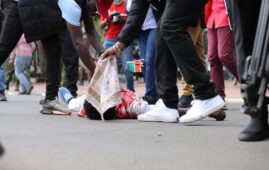 STOP THE KILLING, NOT MERELY COMPENSATE THE DEAD
As Kenya approaches the second.
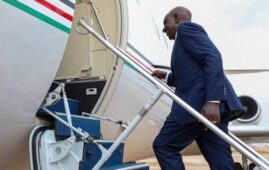 PRESIDENT RUTO’S FREQUENT FLYER PRESIDENCY: ARE KENYANS GETTING VALUE FOR MONEY?
President William Ruto has returned to.
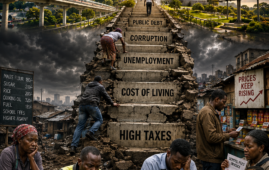 THE SINGAPORE ILLUSION: A REALITY CHECK ON THE STATE OF OUR NATION
There is an increasingly persistent.
 Could the Proposed Ebola Quarantine Facility Cost Kenya More Than It Gains?
The proposed establishment of a United.
-
RUTO’S HAMMER POLITICS: WHY KENYA CANNOT BE GOVERNED THROUGH ENDLESS PUBLICITY TOURS
“If your only tool is.
Leave a Comment