
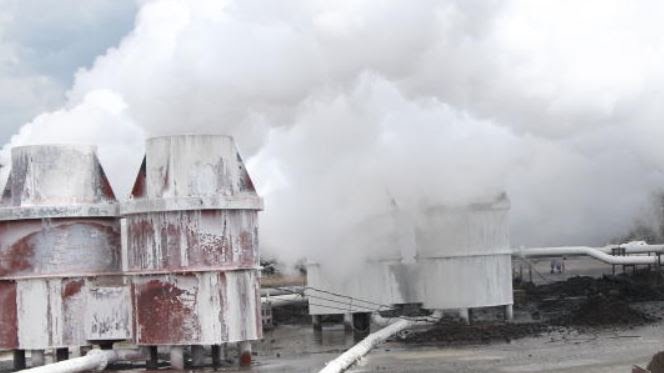
Kenya has raced past Italy to emerge the seventh-largest geothermal power producer in the world, new global data shows.
Kenya’s geothermal capacity stands at 823 megawatts (MW), having grown by 165MW since last year and moving the East African country above Italy’s 800MW.
This is according to Renewable Capacity Statistics 2020 prepared by Abu Dhabi-based International Renewable Energy Agency (Irena).
Italy is the birthplace of geothermal technology.
In 2010, Italy’s steam power capacity stood at 728MW compared to the current 800MW, meaning the European nation has only managed a 9.8 per cent growth over the past decade.
On the other hand, Kenya’s stock of geothermal has expanded four times over a similar period from 198MW in 2010.
Kenya’s deepening of geothermal development has put it on track to joining the elite Gigawatt Club of countries with geothermal production of 1,000MW (1GW) and above.
Only four nations, including the US, belong to this club. Geothermal is an attractive low-cost renewable energy source with low emissions and serves as stable, reliable base-load electricity.
Last year, Kenya added the third largest geothermal capacity in the world, enabling it to move to top seven global geothermal powerhouses.
“Geothermal power capacity grew by 682MW in 2019 (globally), slightly more than in 2018. Again, Turkey led with an expansion of 232MW, followed by Indonesia (+185MW) and Kenya (+160MW),” Irena said in its update.
Pulled coup
Until last year, Kenya was ranked ninth in geothermal production, but steamed ahead to leapfrog Iceland to position eight and has now pulled a similar coup on Italy.
Geothermal now accounts for 30 per cent of Kenya’s total installed power capacity of 2,700MW with the other share occupied by hydropower, wind, solar and thermal power.
The US is the world’s top geothermal producer with an installed capacity of 2,555 MW – three times Kenya’s output – though the country’s stock has been declining recently.
It is followed by Indonesia (2,131MW) in second place, the Philippines (1,928MW), while Turkey’s 1,515MW comes in fourth.
New Zealand is fifth with 965MW, while Mexico is sixth with 936MW of steam power. Kenya, having dislodged Italy and Iceland comes in seventh
Geothermal energy was first discovered and developed in Italy over 100 years ago at the beginning of the last century (20th century).
It held the top spot until the second half of the 20th century when other countries took an interest in the power source.
Kenya constructed its first geothermal plant in 1981, the Olkaria 1.
The East African nation has since built a fleet of other geothermal plants in the Rift Valley steam fields.
Besides Kenya, Ethiopia is the only other African nation that has developed geothermal energy (7MW).
Presently, 85 per cent of Kenya’s geothermal capacity is owned and operated by government-owned power producer KenGen.
KenGen’s installed geothermal capacity currently stands at 607MW, with the firm having more projects in the pipeline.
The company recently added Olkaria V geothermal plant with a capacity of 165.4MW to the national grid and is behind Kenya’s improved fortunes in the Irena rankings.
American firm Ormat is currently the only independent power producer (IPP) with geothermal plants in Kenya and holds the remaining 15 per cent of Kenya’s geothermal power capacity.
More exploration works are being undertaken by other IPPs such as Akiira Geothermal and African Geothermal International Ltd (AGIL), while Mauritius-based Quantum and Kenyan firm Sosian Energy are in the development stage.
The country has an untapped potential of 10,000MW of steam energy in its Rift Valley basin where a series of exploration works are ongoing.
Globally, the total developed geothermal capacity stands at 13,931MW, with Kenya’s 823MW representing a global share of six per cent.
Africa Sustainability Matters is a platform for all matters of sustainability, innovation and leadership in Africa.

more recommended stories
 TAITA TAVETA: SEVEN DAYS HAVE ELAPSED — HAS SENATOR KAJWANG SENT WAKUJAA’S GOVERNMENT FILES TO EACC?
By Kwaela News Network (KNN).
 MZIMA II WATER PROJECT: KSh 50.6 BILLION COASTAL PIPELINE MOVES CLOSER TO IMPLEMENTATION
Chinese firm identified as proposed developer.
 Nairobi in Darkness as Government Billing Dispute Leaves Residents Paying the Price
NAIROBI — As darkness descends on.
 RUTO CONTRADICTS HIMSELF ON FOREIGNERS: FROM “VISA-FREE AFRICA” TO A CRACKDOWN ON SMALL TRADERS
President William Ruto’s latest crackdown.
 NEW UNIFORMS, SAME OLD PROBLEMS: YOU CAN’T TAILOR INTEGRITY
President William Ruto has proudly unveiled.
 SHARON’S JUSTICE CANNOT BE BOUGHT
The latest developments in the.
 HOMA BAY VIOLENCE RAISES TROUBLING QUESTIONS ABOUT KENYA’S DEMOCRACY
The shocking violence that engulfed the.
 JUSTICE AT LAST: WHAT THE SHARON OTIENO MURDER CONVICTION MEANS FOR KENYA
After nearly eight years of.
 ALBERT OJWANG CASE: THE QUESTIONS KENYA REFUSES TO LET DIE
The death of Albert Ojwang in.
 RELIEF FOOD SCANDAL RAISES SERIOUS QUESTIONS AS INVESTIGATIONS CONTINUE
The reported recovery of hundreds.
 THE HALIMA NGACHE CASE: A COSTLY ASSAULT ON DIGITAL FREEDOM THAT DEMANDS ACCOUNTABILITY
The collapse of the case against.
 WHY FIKIRINI JACOBS MUST STEP ASIDE AS THE CECIL OUMA PROBE CONTINUES
The tragic death of 28-year-old youth.
 STOP THE KILLING, NOT MERELY COMPENSATE THE DEAD
As Kenya approaches the second.
 PRESIDENT RUTO’S FREQUENT FLYER PRESIDENCY: ARE KENYANS GETTING VALUE FOR MONEY?
President William Ruto has returned to.
 THE SINGAPORE ILLUSION: A REALITY CHECK ON THE STATE OF OUR NATION
There is an increasingly persistent.
 Could the Proposed Ebola Quarantine Facility Cost Kenya More Than It Gains?
The proposed establishment of a United.
Leave a Comment