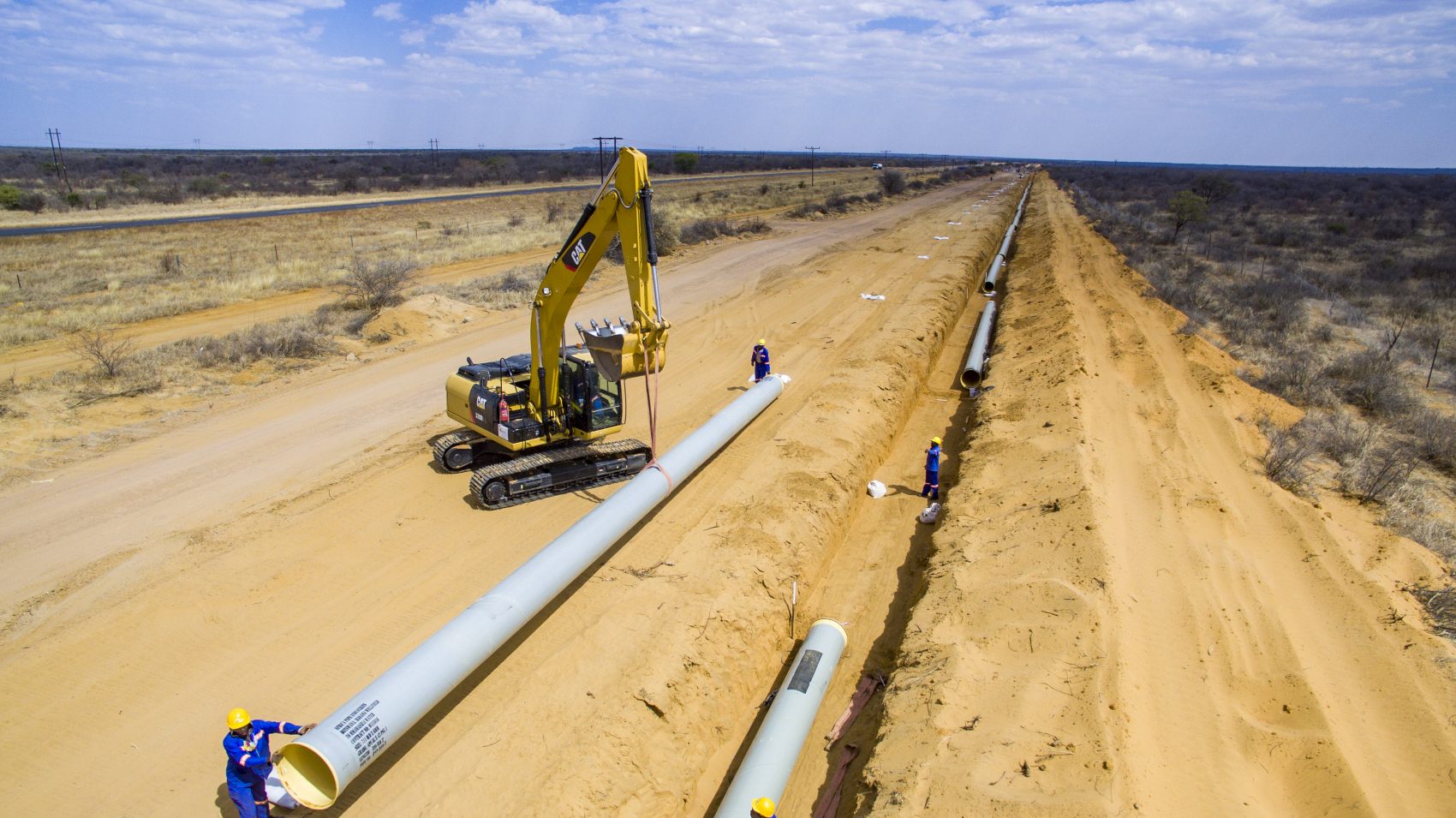
Laying a Pipeline in Botswana

As Mombasa continues to grapple with chronic water shortages, the government’s increasing focus on desalination projects raises serious questions about priorities, sustainability, and long-term value for citizens. While desalination is often presented as a modern solution to water scarcity, the decision to sideline the expansion of the Mzima water system in favor of treating Indian Ocean water deserves critical scrutiny.
At the heart of this debate lies a simple but powerful reality: Mzima Springs already provide a naturally clean, reliable, and significantly underutilized freshwater source. With an estimated output exceeding 400 million liters per day—of which less than 10% is currently exploited—the springs represent one of Kenya’s most valuable natural water assets.
It is difficult to justify why a government facing fiscal constraints would prioritize desalination—one of the most energy-intensive and expensive water production methods—over expanding access to an existing freshwater source.
Desalination plants require:
In contrast, Mzima water flows naturally and requires far less processing. The main challenge lies not in the water itself, but in the infrastructure needed to deliver it efficiently to Mombasa.
The argument that Mzima expansion is “not viable” often masks a deeper systemic problem: decades of underinvestment in water infrastructure. Mombasa currently loses nearly half of its water through leaks, illegal connections, and outdated systems—so-called non-revenue water.
Instead of addressing these inefficiencies, the government appears to be pursuing a parallel system that does not fix the root problem. Building a desalination plant without repairing the distribution network risks creating an expensive supply feeding into a broken system.
From an investment standpoint, desalination projects may appear more attractive. They are centralized, easier to meter, and offer predictable revenue streams under public-private partnerships. However, what is financially convenient for investors is not always what is economically or socially optimal for the public.
Mzima-based solutions, while requiring more coordination and upfront infrastructure work, promise:
Although desalination technology can produce safe drinking water, it begins with heavily saline and increasingly polluted ocean water. Coastal waters near major ports like Mombasa are exposed to:
Treating such water to potable standards is technically feasible—but costly and energy-intensive. This raises a broader question: why invest heavily in cleaning degraded water when a clean, natural alternative already exists?
Investing in Mzima Phase II would not only improve water access but also strengthen national infrastructure, create jobs, and promote equitable resource use. It would signal a commitment to maximizing Kenya’s natural advantages rather than bypassing them.
Critics increasingly view the repeated shelving of Mzima projects as a symptom of short-term planning—where highly visible, capital-intensive projects are favored over less glamorous but more impactful system improvements.
Mombasa does not lack water—it lacks effective delivery and management. The continued emphasis on desalination risks diverting attention and resources away from a more practical, sustainable solution already within reach.
A balanced strategy is essential. However, prioritizing desalination over the expansion and optimization of Mzima water infrastructure is difficult to defend on economic, environmental, or social grounds.
If the goal is long-term water security for Mombasa, the path forward should begin not in the ocean—but at Mzima.

 TAVEVO: THE GRAND WATER SCAM DRAINING TAITA TAVETA COUNTY DRY?
Before demanding more water from.
 USAWA NI SAWA: A PRINCIPLE THAT MUST TRANSCEND NATIONAL AND COUNTY POLITICS
Picture a grand tapestry, woven with.
 KAUNTI YA TAITA TAVETA ITAKWISHA KAMA HUU UONGOZI UTAENDELEA BAADA YA UCHAGUZI WA 2027
Taita Taveta imebarikiwa kwa utajiri wa.
 THE CROSSROADS OF TAITA-TAVETA: CHOOSING THE NEXT PATH
For decades, the conversation surrounding leadership.
 KSh600 FOR A WHOLE DAY: HOW TAITA TAVETA’S “BODA BODA CROWD” MAY HAVE TURNED RUTO’S TOUR INTO A POLITICAL PHOTO SHOOT
There is a rather amusing —.
 2027 BEGINS EARLY: THE MWANGOLO-BWIRE RIVALRY EXPOSES A GENERATIONAL DIVIDE
The political war between Principal Secretary.
 THE ODM-UDA COALITION: A MARRIAGE OF CONVENIENCE, NOT CONVICTION
When the Orange Democratic Movement and.
 LEGAL OPINION EXPOSES IRREGULAR COUNTY APPOINTMENT: QUESTIONS MOUNT FOR GOVERNOR WAKUJAA’S ADMINISTRATION
Fresh questions are emerging over governance.
 GOVERNORS NEED STRONG ASSEMBLIES, NOT CHEERLEADERS
My elder sister, Hon. Dorcas.
 BEI YA MAFUTA, UBORA WA BARABARA NA GHARAMA HALISI YA KUENDESHA UCHUMI WA TAITA TAVETA
MAONI Malalamiko ya wananchi kuhusu.
 THE ART OF POLITICAL PARASITISM
There comes a point when.
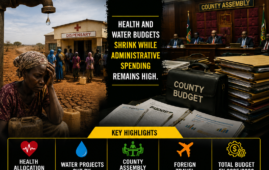 Professional Analysis of the Taita Taveta FY 2025/2026 Supplementary II Budget
Executive Summary The County Government of.
 UNDERSTANDING THE REALITY: WHY SALARY DELAYS ARE NOT GOVERNOR WAKUJAA’S FAILURE
There has been a lot of.
 LET’S SET THE RECORD STRAIGHT ON TAITA TAVETA SALARIES & GOVERNOR WAKUJAA
There has been a wave of.
 The Mouse, The Cat, and the Glass Jar Politics of Taita Taveta
In village folklore, they say wisdom.
 WAKUJAA and the Politics of Development: Why Taita Taveta Must Renew Governor Andrew Mwadime’s Mandate in 2027
In politics, leadership must ultimately be.
1 Comment on this post
Leave a Comment