
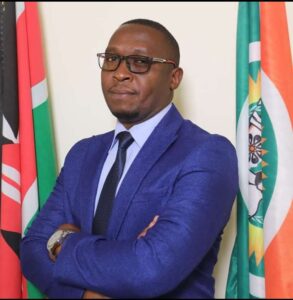
Taita Taveta County Assembly Clerk - Gadiel Maghanga

Kwaela News Network – Investigative Desk
For more than a year, the Ethics and Anti-Corruption Commission (EACC) has walked around the corruption case of Gadiel Mnyambo Maghanga — the Taita Taveta County Assembly Clerk accused of participating in the suspected theft of KSh 17 million in a fake “bonding trip” to Zanzibar — with the softness of a man carrying a newborn. What was once announced as a bold anti-graft crackdown has decayed into one of the most glaring symbols of selective justice in recent memory.
And the question Taita Taveta residents keep asking is simple:
Why is Gadiel Maghanga still walking free without even entering a plea — 18 months after he was supposed to?
This is not a minor procedural delay. It is a collapse of integrity within agencies claiming to fight corruption.
THE DAY THE CASE DIED: APRIL 8, 2024
That was the day Maghanga was scheduled to take a plea at the Mombasa Anti-Corruption Court.
He didn’t show up.
He claimed illness.
The EACC and ODPP protested sharply. They accused him — not privately, but on record — of “playing games.” They knew what this was. Kenya has seen this script before. But what Kenyans did not expect is what came after.
The Commission softened.
The pressure evaporated.
The urgency died.
And Gadiel Maghanga simply… vanished from court.
THE YEAR OF SILENCE: WHAT EXACTLY WAS EACC DOING?
It has now been over a year since Maghanga skipped court over “illness.”
No further mandatory summonses.
No court – enforced appearance.
No warrant drama. No public pressure.
No follow -up from the very agency that arrested him.
EACC — usually loud, boastful, and eager to perform arrests for TV cameras — went silent.
An entire year has passed.
Is Maghanga still sick?
Is the illness terminal?
Does illness last 18 months only when one is charged with corruption?
Or did the EACC simply lose interest in bringing him back?
WHO IS PROTECTING GADIEL MAGHANGA?
This is the question buzzing across Taita Taveta and Nairobi political circles.
Because the pattern is too suspicious to ignore:
His co-accused, Deputy Speaker Anselm Mwadime, went to court.
Mwadime pleaded not guilty.
His hearings continue.
He is facing 40 witnesses lined up by the ODPP.
Yet Maghanga remains untouched, his case drifting in thin air as if held in place by invisible hands.
A senior county official avoiding plea – taking for over a year is not normal.
An anti-corruption commission allowing this is even worse.
So what interests does EACC have in shielding Maghanga?
Is someone powerful leaning on the system?
Is this a case of insiders protecting insiders?
Or is the Commission itself afraid of what a full trial might expose —contracts, kickbacks, procurement networks, political godfathers?
THE EACC’S DOUBLE STANDARD
When it comes to low – ranking officers — constables, clerks, junior procurement officers — the EACC acts with speed and aggression. They parade people before cameras. They tweet their victories. They boast of “decisive action.”
But when it comes to senior county mandarins linked to deeper networks?
Suddenly:
Files move slowly.
Summonses are “being processed.”
Illness suspends justice indefinitely.
Cases “remain open” but never advance.
The silence around Maghanga is not a coincidence. It is a choice.
THE COST OF EACC’S FAILURE
While the Commission hesitates, the public continues to lose confidence.
This case is not about one man.
It’s about the credibility of the anti – corruption war in Kenya.
If the EACC cannot compel one clerk to appear in court for a plea, how can it claim to fight governors, PSs, CSs, MPs, or billion – shilling cartels?
The Commission’s behaviour has sent a chilling message:
Some people are too connected to face justice.
WHAT HAPPENS NEXT?
Legally, Maghanga’s case is “still active.”
Realistically, it is on life support.
Unless public pressure forces action, the EACC appears content to let the matter rot in procedural limbo until the file quietly dies.
This investigation raises disturbing but necessary questions:
And most importantly: Is the EACC still fighting corruption — or protecting it?
Until these questions are answered, the Commission’s credibility hangs by a thread—and the war on corruption remains nothing more than a slogan.

 THE ERA OF POLITICAL EUPHORIA IN TAITA TAVETA COUNTY IS OVER
The days when political party.
 TAVEVO: THE GRAND WATER SCAM DRAINING TAITA TAVETA COUNTY DRY?
Before demanding more water from.
 USAWA NI SAWA: A PRINCIPLE THAT MUST TRANSCEND NATIONAL AND COUNTY POLITICS
Picture a grand tapestry, woven with.
 KAUNTI YA TAITA TAVETA ITAKWISHA KAMA HUU UONGOZI UTAENDELEA BAADA YA UCHAGUZI WA 2027
Taita Taveta imebarikiwa kwa utajiri wa.
 THE CROSSROADS OF TAITA-TAVETA: CHOOSING THE NEXT PATH
For decades, the conversation surrounding leadership.
 KSh600 FOR A WHOLE DAY: HOW TAITA TAVETA’S “BODA BODA CROWD” MAY HAVE TURNED RUTO’S TOUR INTO A POLITICAL PHOTO SHOOT
There is a rather amusing —.
 2027 BEGINS EARLY: THE MWANGOLO-BWIRE RIVALRY EXPOSES A GENERATIONAL DIVIDE
The political war between Principal Secretary.
 THE ODM-UDA COALITION: A MARRIAGE OF CONVENIENCE, NOT CONVICTION
When the Orange Democratic Movement and.
 LEGAL OPINION EXPOSES IRREGULAR COUNTY APPOINTMENT: QUESTIONS MOUNT FOR GOVERNOR WAKUJAA’S ADMINISTRATION
Fresh questions are emerging over governance.
 GOVERNORS NEED STRONG ASSEMBLIES, NOT CHEERLEADERS
My elder sister, Hon. Dorcas.
 BEI YA MAFUTA, UBORA WA BARABARA NA GHARAMA HALISI YA KUENDESHA UCHUMI WA TAITA TAVETA
MAONI Malalamiko ya wananchi kuhusu.
 THE ART OF POLITICAL PARASITISM
There comes a point when.
 Professional Analysis of the Taita Taveta FY 2025/2026 Supplementary II Budget
Executive Summary The County Government of.
 WHY MOMBASA DESERVES MZIMA WATER OVER COSTLY DESALINATION EXPERIMENTS
As Mombasa continues to grapple with.
 UNDERSTANDING THE REALITY: WHY SALARY DELAYS ARE NOT GOVERNOR WAKUJAA’S FAILURE
There has been a lot of.
 LET’S SET THE RECORD STRAIGHT ON TAITA TAVETA SALARIES & GOVERNOR WAKUJAA
There has been a wave of.
Leave a Comment