
1. PROTECTION OF 3 CONSTITUENCY BOUNDARIES AGAINST ARTICLE 89 OF COK 2010
The drafters of our current constitution in their wisdom provided Article 89 to define the number of constituencies that the nation shall have for the purposes of effective representation in the National Assembly. The Article provides that there shall be 290 constituencies in the Republic.
The same Article provides that the boundaries of each constituency shall be such that the number of inhabitants in the constituency is, as nearly as possible, equal to the population quota, but the number of inhabitants of a constituency may be greater or lesser than the population quota in the manner specified in clause (6) to take account of—
(a) geographical features and urban centres;
(b) community of interest, historical, economic and cultural ties; and
(c) means of communication.
Faced with constituencies with varying number of inhabitants, the drafters attempted to correct this anomaly by inserting subsection 5, which requires that the boundaries shall be such that the number of inhabitants in each constituency is as nearly as possible equal to the population quota. The population quota by the way is a simple arithmetic of dividing the national population by the number of constituencies. There was an attempt to recognize that there are extenuating circumstances that made it impossible for some constituencies to meet the population quota but in my opinion this issue has not been analyzed sufficiently. As a result, there is a real concern that some constituencies will disappear in the next review as a result of this anomaly.
Subsection 6 provides that the number of inhabitants of a constituency or ward may be greater or lesser than the population quota by a margin of not more than—
(a) forty per cent for cities and sparsely populated areas; and
(b) thirty per cent for the other areas.
(7) In reviewing constituency and ward boundaries the Commission shall—
(a) consult all interested parties; and
(b) progressively work towards ensuring that the number of inhabitants in each constituency and ward is, as nearly as possible, equal to the population quota.
Taking into consideration sub sections 5 and 6(a) the situation for constituencies in Taita Taveta County.
As it stands, only Voi constituency meets the population quota. All the other three namely Mwatate, Taita and Taveta will not meet the set population threshold. What emerges is that, in whichever way the boundaries are redrawn and reorganized, the county stands to lose one constituency if the anomaly is not addressed. The loss in a constituency results in a loss in devolved funds eg CDF and employment opportunities in the Military, Police, Prison, NYS and Teachers.
It should be noted that even as the constitution was being drafted and promulgated, the three constituencies were not meeting the population threshold. The only way these constituencies can meet the threshold is if the birth rates and population growth accelerates at trebble the national average of approx. 2.5 which is a practical impossibility. This Article is discriminatory and should therefore be amended to protect all the constituencies that existed at the promulgation of CoK 2010 due to special community interests and historical reasons. The Article should indeed only apply when setting up new constituencies.
2. OWNERSHIP OF TSAVO PARK
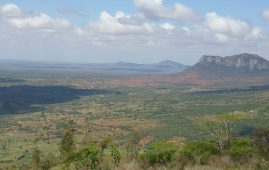
Currently, the ownership of Tsavo Park vests with the national government. Tsavo occupies 62% of the land mass of the county. The revenues are collected by the national government unlike Amboseli, Masai Mara and Samburu Parks. The national government policy and law on wildlife management is discriminatory against the citizens of Taita Taveta County. The community feel very aggrieved and they would like to be treated like citizens of Kajiado, Narok, Samburu and Turkana counties where the revenues flow directly to the respective county governments.
3. COMPENSATION ARISING FROM HUMAN WILDLIFE CONFLICT
Irrespective of the ownership/management of the park, the residents of Taita Taveta County suffer through death, injuries, crop and livestock destruction from the wildlife. Whereas the Wildlife Management Act provides for compensation in the event of such losses, the reality on the ground is that there is no single individual who has received compensation. This is despite the fact that losses occur almost on a daily basis and the reports get duly filed with KWS. It is therefore recommended that the law should be amended to fix a time frame of 3 months within which compensation shall be made.
4. ADMINISTRATION OF COMMUNITY LAND
The Administration of Community is provided for in the Community Land Act 27 of 2016. This law assigns roles ranging from registering, planning, mapping, surveying, prescribing procedures for determination of appeals, adjudication and preparation of regulations to the Cabinet Secretary. Some of these roles are devolved and hence the responsibility of county governments. As per the constitution, community land is supposed to be managed by county governments yet this Act assigns supervisory roles to the Cabinet Secretary. It is therefore recommended that the Act should be amended to transfer supervisory roles to the county government
5. DIVISION OF REVENUE BETWEEN NATIONAL AND COUNTY GOVERNMENTS
Currently, the country is facing an impasse between the National Assembly and the Senate on the Revenue Division Bill. When passed this is the law that shares the revenue between the two levels of government. In as much as it appears the impasse is between the two houses, the reality is that this is fight between the two levels of government on sharing of resources. Resources are finite, scarce and there will never be enough for everybody. Hence need to set up a structure to manage the competing interests between the national and county governments. This was envisaged and CoK in Article 202 provides that national revenues shall be shared equitably between national and county governments.
For this purpose, CoK provided for the setting up Commission on Revenue Allocation to arbitrate on the process. Article 205 establishes the Authority while Art 216 defines its main functions, which are:
• Make recommendations to Parliament and Senate on revenue sharing;
• Define and enhance revenue sources of both national and county governments
Yet
Article 2 provides that Sovereign Power of the Republic is delegated to:
• Parliament and County Assemblies
• National Executive and Executives at County Governments
• Judiciary and Independent Commissions
Clearly, the two Articles are in-consistent and as can be seen from what is playing out now, the current arrangement will result in conflicts every year. It is therefore recommended that in order to achieve the principle of equitable sharing of national revenues, there is a case to strengthen the role of CRA by changing its role to one of determination.
6. LEADER OF OFFICIAL OPPOSITION
In order to move away from winner- takes- all practice that is now in force, it is recommended that, the law is amended such the runners up candidate for presidential and governorship election be absorbed as leader of opposition in parliaments at both levels of government.
7. ENHANCEMENT OF THE ROLE OF SENATE
In order to protect devolution and the counties it is recommended that the Senate is elevated to Upper House status.
8. COMPLIANCE WITH CHAPTER FOUR BILL OF RIGHTS ARTICLE 27
Whereas, compliance with gender rule has been achieved in many governmental entities, the same cannot be said to be the case at the national assembly. Even where it has been achieved, there is a general dissatisfaction on the fact that it is a nomination process. Even the nomination process has never been without controversies. Indeed, many court cases are still being in motion. To cure this problem, it is being proposed that nomination for gender, youth and persons with disability positions in the assemblies be replaced with elections. For the women representation for example, the election for women representation, the runner ups in each county can be used to fill the positions until the required number is achieved. Where, the slots are less than the number of counties, then the counties can be ranked and be awarded on the basis of women who have been elected in that particular election. In this regard, section 27 (8) should be amended appropriately to take the above remendations.
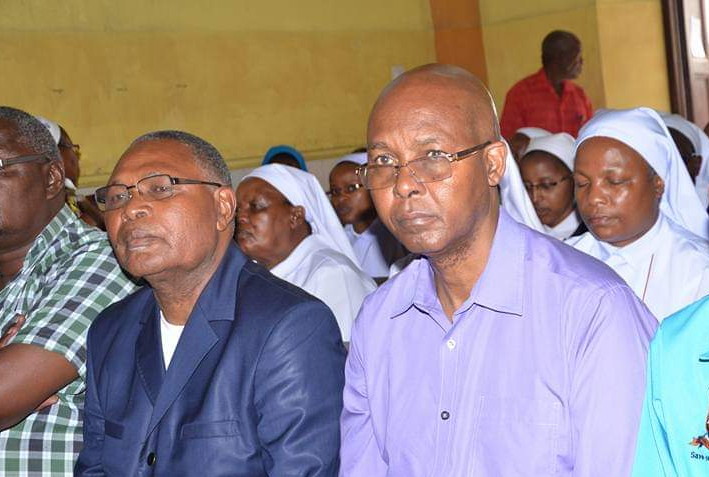
HE JOHN M MRUTTU
HON THOMAS MWADEGHU
HON CALIST MWATELA
MR ABDI CHOME
HON FLUMENCE MSHILA
HON ANISA MWAKIO

more recommended stories
 TAITA TAVETA: WE CANNOT CONTINUE THIS WAY — A COUNTY GOVERNMENT IN CRISIS OF ACCOUNTABILITY
Kwaela News Network | Editorial Taita.
 DOCUMENT REVIEW: TAITA TAVETA COUNTY CIDP III (2023–2027)
A Review of Planned Development Priorities,.
 COVID-19 FUNDS IN TAITA TAVETA: YEARS AFTER THE AUDIT, WHO ANSWERED THE QUESTIONS — AND WHO WAS HELD ACCOUNTABLE?
As High Court reduces Rodger Ngoo’s.
 RUTO’S TAITA TAVETA TOUR: DEVELOPMENT INSPECTION OR PROMISE DELIVERY MISSION?
President William Ruto is expected to.
 VOI THIRSTS AS LEADERS TRADE STATEMENTS, EXCUSES AND BLAME
Years of promises, unpaid.
 MRUGHUA SOCIAL HALL: A DECADE OF WAITING, MILLIONS SPENT, AND STILL NO ANSWERS
Ten Years Later, Why Is.
 SIX-YEAR DEFAMATION CASE ENDS AS COURT AWARDS COSTS TO KWAELA NEWS NETWORK, BUT QUESTIONS OVER COVID-19 FUNDS REMAIN
VOI, TAITA TAVETA — A six-year.
 Family, Power and Public Trust: The Questions Governor Wakujaa Must Answer
The latest appointments in Taita Taveta.
 PETITIONERS FAIL TO PROVE OWNERSHIP OF 1,306 HECTARES AS COURT DISMISSES NDARA B LAND CASE
Case: Gadiel Mnyambo Mwaisama & Others.
 NJORO KUBWA OR MZIMA PHASE II? WEIGHING TAITA TAVETA’S BIG WATER OPTIONS
Water has long been one.
 WHY KENYANS ARE TURNING AGAINST SAFARICOM OVER SURVEILLANCE FEARS
For years, Safaricom has enjoyed enormous.
 FIRES, FEAR AND FAILURE: THE HARD QUESTIONS TAITA TAVETA SCHOOLS MUST ANSWER
A disturbing pattern is emerging in.
 PARIS JUU YA MACHOZI YETU: AIBU YA VIONGOZI WALIOSAHAU WATU WAO
Katika wakati ambapo wananchi wa.
 ISANGAIWISHI DEVELOPMENT COMMUNITY OFFICIAL STATEMENT ON LAND OWNERSHIP, HISTORICAL RECORD, AND DEVELOPMENT
1. Introduction The Isangaiwishi Development Community.
 AUDIT SHOCKER: HUNDREDS OF MILLIONS IN WORKERS’ DEDUCTIONS UNACCOUNTED FOR AS FINANCE SHAKE UP ROCKS TAITA TAVETA
By Kwaela News Network Investigations Desk.
 COURT EXPOSES ILLEGAL IMPEACHMENT: TAITA TAVETA COUNTY ASSEMBLY FAULTED FOR RUSHED, UNCONSTITUTIONAL REMOVAL OF SPEAKER MWAMBURI
Mombasa, Kenya — In a damning.
It shall be interesting to understand what progressive work that will be carried out to subsection 6b aforementioned to save the case of constituencies Mwatate, Wundanyi & Taveta 😌
It shall be interesting to understand what progressive work that will be carried out to subsection 6b aforementioned to save the case of constituencies Mwatate, Wundanyi & Taveta 😌
I would agree on doing away with the nomination for gender, youth and persons with disability positions in the assemblies to be replaced with elections, otherwise as it is I don’t see any meaningful or significance currently!
its interesting to understand this matter at hand. Truly despite the factor that birth rates in the county are too low, I took an initiative to investigate the same. Most of taitas have permanently migrated with their families to different parts of this country. The campaign ditalwo Davida should be picked with a serious note.