
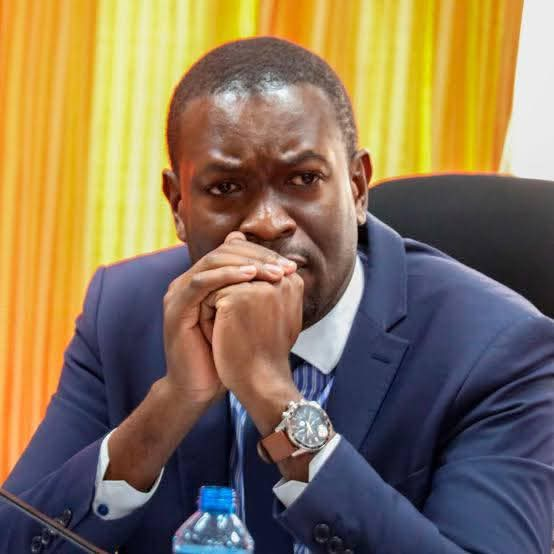
Mombasa, 11 February 2026 – The removal of Edwin Sifuna as Secretary-General of the Orange Democratic Movement (ODM) marks one of the most consequential internal shifts within the party since the transition into the post-Raila Odinga era. The decision, taken during a high-stakes National Executive Committee (NEC) meeting in Mombasa, signals not merely a leadership change, but a strategic consolidation of authority under Acting Party Leader Oburu Oginga.
Sifuna, who served as the party’s chief administrative and communication strategist, had become both a prominent national voice of ODM and a central figure in internal ideological tensions. His ouster therefore represents a decisive recalibration of the party’s internal command structure.
The Decision and Immediate Context
The NEC voted to remove Sifuna from his position as Secretary-General, appointing Catherine Omanyo in an acting capacity. The Secretary-General’s office is critical within ODM’s architecture — overseeing party communication, coordinating national structures, managing nominations, and acting as the operational bridge between leadership and grassroots machinery.
The removal came amid:
-
Growing factional tensions within the NEC,
-
Disagreements over party discipline and strategic direction,
-
Broader restructuring moves that also saw other NEC changes,
-
ODM’s formal exit from the Azimio coalition.
While framed as a disciplinary and structural decision, the timing and scale of the reshuffle suggest a broader consolidation of authority by Oburu Oginga’s faction.
What Sifuna Represented Within ODM
Sifuna was widely viewed as:
-
A vocal defender of ODM’s opposition identity,
-
An assertive public communicator,
-
A bridge between the party’s reformist wing and its traditional leadership base.
His removal therefore carries symbolic weight. It reflects a shift from a decentralized, personality-driven party model toward a more centralized and tightly controlled structure.
Possible Consequences
1. Internal Party Stability: Discipline vs. Discontent
Short-term effect:
ODM may experience improved internal coordination. A unified leadership structure often reduces mixed messaging and procedural gridlock.
Medium-term risk:
If Sifuna’s allies or sympathizers feel sidelined, the party could face:
-
Quiet resistance within parliamentary ranks,
-
Reduced enthusiasm during grassroots mobilization,
-
Strategic distancing by influential county leaders.
ODM’s historical strength has depended on managing diverse power centers. Consolidation without reconciliation may generate latent instability.
2. Impact on ODM’s Public Image
Sifuna was one of ODM’s most recognizable national communicators. His removal could:
-
Temporarily weaken the party’s media visibility,
-
Alter its tone from confrontational opposition to controlled messaging,
-
Create perceptions of internal intolerance for dissent.
However, it may also allow ODM to present a more disciplined and strategically consistent front, particularly if the party seeks repositioning beyond traditional opposition politics.
3. Electoral Implications for 2027
The ouster must be understood in the context of ODM’s broader electoral strategy.
A. Centralized Campaign Machinery
A leadership realignment allows Oburu to:
-
Control nomination processes more tightly,
-
Shape candidate vetting mechanisms,
-
Reduce factional sabotage during primaries.
This could improve efficiency ahead of 2027.
B. Risk of Regional Fracturing
If influential leaders interpret the move as factional consolidation rather than institutional reform, ODM risks fragmentation in:
-
Nyanza strongholds,
-
Coastal constituencies,
-
Urban opposition bases.
Kenyan electoral politics is heavily personality-driven. Alienating high-profile figures can weaken turnout and local mobilization networks.
4. Coalition Politics After Azimio
Sifuna’s tenure coincided with ODM’s Azimio-era alignment. His removal, coupled with the formal distancing from Azimio, signals a broader strategic reset.
Consequences may include:
-
Reopening negotiations for new coalitions,
-
Strengthening ODM’s independent bargaining power,
-
Or isolating the party if realignments fail.
The party now bears full responsibility for crafting a compelling post-Azimio identity.
5. Institutional Precedent
The manner of Sifuna’s removal sets an internal precedent:
-
If viewed as constitutional and procedural, it strengthens party discipline.
-
If perceived as factional retaliation, it may deepen distrust within the NEC.
How ODM communicates the rationale — and whether due process was transparently followed — will determine how this precedent shapes future internal governance.
The Strategic Calculation
Oburu Oginga’s consolidation suggests a belief that:
-
Unity under centralized leadership is preferable to negotiated factional balance,
-
A disciplined structure is necessary for 2027 competitiveness,
-
The party must redefine itself beyond the Raila-centric era.
This approach prioritizes structural clarity over broad accommodation.
Conclusion
Edwin Sifuna’s ouster is more than a personnel change; it is a defining moment in ODM’s evolution. It signals a shift toward centralized authority, strategic recalibration, and tighter internal discipline.
Whether this strengthens ODM ahead of 2027 will depend on three factors:
-
How effectively sidelined leaders are managed or reintegrated,
-
Whether grassroots structures remain energized rather than divided,
-
How successfully ODM navigates coalition politics in a rapidly shifting national landscape.
In Kenyan politics, consolidation can produce momentum — but only if unity extends beyond the NEC boardroom into the counties where elections are ultimately decided.

more recommended stories
 THE POWER OF KSH 50: WHY SIFUNA MUST KEEP ASKING KENYANS TO INVEST IN THEIR POLITICAL FUTURE
The Benjamin Franklin Effect, grassroots financing.
-
SIFUNA, LINDA MWANANCHI AND THE SEARCH FOR A NEW POLITICAL CHAPTER: IS KENYA WITNESSING THE EMERGENCE OF A DIFFERENT KIND OF LEADERSHIP?
KENYA POLITICS | 30 OCTOBER 2026.
 Where the Rain Started Beating President Ruto
By Nathaniel Noti, former Taita.
 THE QUESTIONS UHURU KENYATTA CANNOT ESCAPE
Former President Uhuru Kenyatta’s declaration.
 THE POLITICS OF DECEPTION, CONTRADICTION AND POLITICAL REINVENTION OF HON MWASHAKO
A couple of days ago,.
 WHEN ELECTIONS NEAR, THE SAINTS RETURN: HOW KENYA’S CHURCHES BECAME CAMPAIGN ARENAS
Every election cycle in Kenya.
 THE VERMIN OF TRIBALISM & POLITICS OF ENTITLEMENT
The word Murima has forced.
 UDA MUST RETHINK, REPLAN AND RE-EXECUTE ITS STRATEGY IN TAITA TAVETA
Over the past several months, the.
 WHEN GOOD POLICIES DON’T DELIVER: WHY IMPLEMENTATION MATTERS MORE THAN WE THINK
Strong policies create direction, but implementation.
 THE 186 MPs WHO ABSCONDED TO VOTE FOR THE FINANCE BILL 2026/27
Every five years, Kenyans troop.
 SOCIAL MEDIA: THE BATTLEGROUND THAT WILL DEFINE THE 2027 ELECTIONS
The digital revolution has fundamentally.
 CAMPAIGN FINANCING AND THE MYTH OF THE WEALTHY SAVIOUR: WHAT KIND OF LEADERSHIP DOES DEMOCRACY NEED?
As political campaigns gather momentum,.
 Ulimwengu wa Universalism na Kuibuka kwa Ufahamu Mpya wa Kisiasa Afrika: Jinsi Gen Z wa Kenya Wanavyobadilisha Mwelekeo wa Siasa za Afrika
Barani Afrika, dhana ya universality au.
 WHEN LEADERSHIP BECOMES AN INVESTMENT: WHY KENYA MUST RETHINK CAMPAIGN SPENDING
In an ideal democracy, leadership.
 THE SENATE NEEDS EXPERIENCE, NOT EXPERIMENTS: WHY ENG. JOHN MTUTA MRUTTU IS THE RIGHT CHOICE
In moments when a county stands.
 Mwadime Joins UDA: Strategic Realignment or Political Gamble in Taita Taveta?
The political landscape of Taita Taveta.
Leave a Comment