
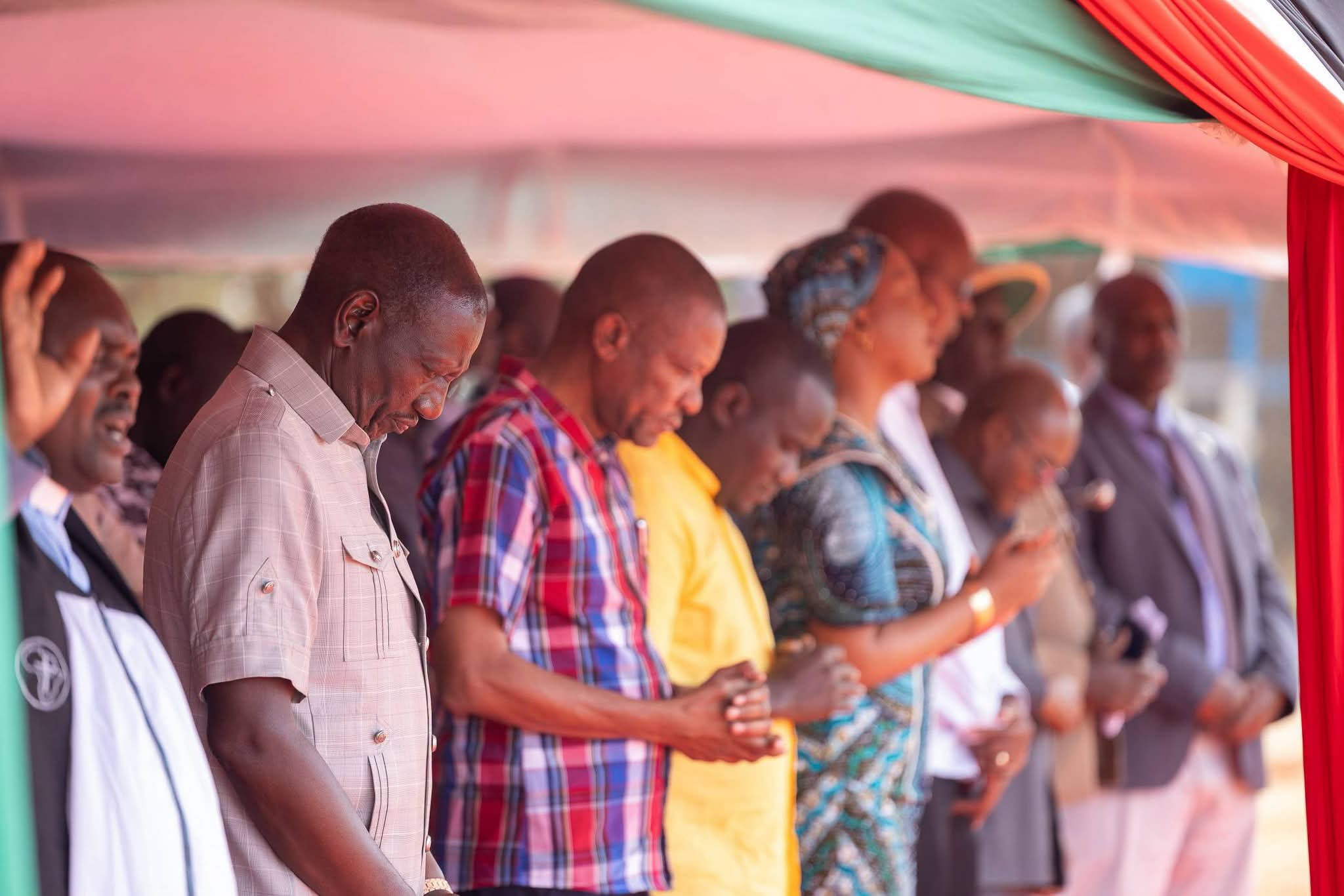
Every election cycle in Kenya follows a familiar script.
For four years, many politicians are largely absent from church activities, community worship, and the moral conversations affecting ordinary citizens. They are nowhere to be seen when congregations struggle to raise funds for community projects, when young people battle unemployment, or when families cry out for leadership on matters of justice and accountability.
Then election season arrives.
Suddenly, politicians rediscover God.
The same leaders who spent years ignoring church invitations become regular worshippers. They occupy front-row seats every Sunday. They carry oversized cheques to harambees. They quote Scripture with remarkable confidence. They speak passionately about faith, unity, and national values.
To an observer unfamiliar with Kenyan politics, one might conclude that a nationwide spiritual revival is underway.
Unfortunately, what is often taking place is not revival. It is rebranding.
Churches have increasingly become convenient campaign platforms where politicians seek votes disguised as blessings. The pulpit has become an extension of the political rally. Congregations have become captive audiences. Worship services have become opportunities for image management.
Instead of leading people closer to God, some churches have become stages upon which politicians perform their latest roles as humble servants of faith.
The irony is impossible to ignore.
A leader who ignored public concerns for years suddenly discovers compassion when nominations are around the corner. A politician linked to corruption scandals suddenly becomes the chief guest at every fundraiser. A public official who rarely quoted Scripture during difficult national moments suddenly becomes a walking Bible during campaign season.
The transformation is often so dramatic that it deserves recognition as one of the country’s greatest political miracles.
Perhaps the most troubling aspect is the growing culture of competitive donations.
Politicians arrive at church functions not merely to worship but to outbid one another in public generosity. Large donations attract applause, media coverage, and favorable introductions from church leaders. The congregation watches as politics and money occupy center stage while the spiritual purpose of the gathering quietly moves to the background.
The message being communicated is dangerous: that generosity measured in public donations is more important than integrity demonstrated in public office.
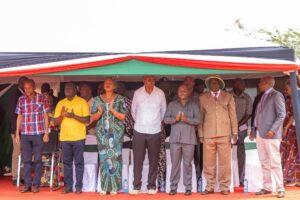
Yet the role of the church should never be to sanitize political reputations.
A church exists to speak truth to power, not to become dependent on it. It exists to challenge injustice, not to accommodate it. It exists to nurture souls, not to manage political campaigns.
When religious institutions become too comfortable with politicians seeking endorsements, they risk losing the moral authority that makes them valuable to society in the first place.
The tragedy is that many faithful worshippers attend church seeking spiritual guidance, hope, and transformation. Instead, they are increasingly exposed to political speeches disguised as testimonies and campaign messages wrapped in religious language.
The result is a growing public perception that some politicians view churches less as houses of worship and more as strategic voting centers.
Kenya deserves better.
The church must remain a sacred space where leaders are held accountable rather than celebrated because of their wealth or political influence. Politicians should be welcomed as worshippers, not treated as special guests whose donations purchase influence and visibility.
Most importantly, voters must learn to distinguish genuine faith from election-season devotion.
A politician’s character is not measured by the size of a church donation. It is measured by how they exercise power when nobody is watching. It is measured by their honesty, accountability, respect for the law, and service to the people.
If a leader only discovers God when elections approach, citizens have every right to question whether the visit is inspired by faith or by fear of losing votes.
The church was established to save souls, guide communities, and proclaim truth. It was never meant to function as a political campaign headquarters.
If both politicians and religious leaders fail to remember this distinction, the greatest casualty will not be the election.
It will be the integrity of the church itself.

more recommended stories
 THE POWER OF KSH 50: WHY SIFUNA MUST KEEP ASKING KENYANS TO INVEST IN THEIR POLITICAL FUTURE
The Benjamin Franklin Effect, grassroots financing.
-
SIFUNA, LINDA MWANANCHI AND THE SEARCH FOR A NEW POLITICAL CHAPTER: IS KENYA WITNESSING THE EMERGENCE OF A DIFFERENT KIND OF LEADERSHIP?
KENYA POLITICS | 30 OCTOBER 2026.
 Where the Rain Started Beating President Ruto
By Nathaniel Noti, former Taita.
 THE QUESTIONS UHURU KENYATTA CANNOT ESCAPE
Former President Uhuru Kenyatta’s declaration.
 THE POLITICS OF DECEPTION, CONTRADICTION AND POLITICAL REINVENTION OF HON MWASHAKO
A couple of days ago,.
 THE VERMIN OF TRIBALISM & POLITICS OF ENTITLEMENT
The word Murima has forced.
 UDA MUST RETHINK, REPLAN AND RE-EXECUTE ITS STRATEGY IN TAITA TAVETA
Over the past several months, the.
 WHEN GOOD POLICIES DON’T DELIVER: WHY IMPLEMENTATION MATTERS MORE THAN WE THINK
Strong policies create direction, but implementation.
 THE 186 MPs WHO ABSCONDED TO VOTE FOR THE FINANCE BILL 2026/27
Every five years, Kenyans troop.
 SOCIAL MEDIA: THE BATTLEGROUND THAT WILL DEFINE THE 2027 ELECTIONS
The digital revolution has fundamentally.
 CAMPAIGN FINANCING AND THE MYTH OF THE WEALTHY SAVIOUR: WHAT KIND OF LEADERSHIP DOES DEMOCRACY NEED?
As political campaigns gather momentum,.
 Ulimwengu wa Universalism na Kuibuka kwa Ufahamu Mpya wa Kisiasa Afrika: Jinsi Gen Z wa Kenya Wanavyobadilisha Mwelekeo wa Siasa za Afrika
Barani Afrika, dhana ya universality au.
 WHEN LEADERSHIP BECOMES AN INVESTMENT: WHY KENYA MUST RETHINK CAMPAIGN SPENDING
In an ideal democracy, leadership.
 THE SENATE NEEDS EXPERIENCE, NOT EXPERIMENTS: WHY ENG. JOHN MTUTA MRUTTU IS THE RIGHT CHOICE
In moments when a county stands.
 Mwadime Joins UDA: Strategic Realignment or Political Gamble in Taita Taveta?
The political landscape of Taita Taveta.
 ICHUNG’WAH’S CLAIMS DEEPEN THE CRISIS OF CREDIBILITY
Equally disturbing are remarks by Kimani.
Leave a Comment