
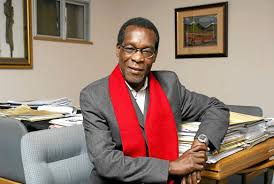
Professor Shadrack Gutto was a brother, comrade and friend. He was a great Kenyan patriot, Pan-Africanist, Marxist intellectual and revolutionary. I mourn him even while I celebrate his life together with his immediate family, friends and comrades of South Africa, Kenya and all over the World where he touched many hearts with his life well lived as an independent, conscious, creative social being. That is why as sad as I am to bid him farewell, I join all those berieved by his death wherever they are not to mourn him but to celebrate his life.
When I was offerer political asylum in Sweden through UNHCR in November 1991 following numerous years of arrests, torture and imprisonments by the Moi – Kanu regime, it was Shadrack Guto who received my family and I at Arlanda Airport, Stockholm. We stayed at his house in Uppsala for two weeks before we moved to our own house nearby. My late brother, comrade and friend Jembe Mwakalu a great revolutionary politician and Marxist intellectual – the former MP for Bahari – had visited us the same weekend we arrived and did so several times afterwards, had brought two slaughtered goats to welcome us to Sweden.
While under interrogation and tortured by the Kenya Special Branch at Buruburu Police Station, Kamiti Maximum Prison and Nyayo House, I was tortured a lot purportedly to force me to reveal information about my relationship and collaboration with Mwakalu. In fact, I had never met him before I arrived in Sweden. He was then living and working at Eskilstuna, about 200 kilometers from Uppsala. Mwakalu and Guto used to assist me and my family a lot while I was in Dar-es-saalam as an asylum seeker. They would often send me money. They called me often using the telephone of Mushi and her wife Mama Tonga who happened to come from Taita Taveta and who Mzirai Kishushe and I had met by chance outside their home at Kijito Nyama, a suburb of Dar. She had overheard us talking and concluded correctly that we were Kenyans from Taita Taveta. From then onwards they became family.
It was Gutto and Mwakalu who introduced us to Uppsala City before we settled down and started making our own way there and Sweden in general.They also introduced us to Dr Beth Maina and her husband Pelle Alberg who were living near our place and who also became close friends. Beth introduced us to Karina, her brother in law Gikanga and wife Emily, the wife of Odenyo, whose children become friends of my then young daughter Wandoye. All were political activist at Uppsala that we were involved with in the international progressive democratic and human rights struggles in general and of Kenya in particular.
I had actually not met Guto in Kenya. I had heard of him when I joined University of Nairobi in 1980. Then I used to read the progressive ideological papers that Willy Mutunga and he used to write and distribute to the University students. My found sister, mentor, mother, comrade and friend Professor Micere Mugo who was then Dean of Faculty of Arts, encouraged me to read the papers and also to attend the public lectures of the likes of Anyang’ Nyong’o, Katama Mkangi, Mukaru Ng’ang’a, Kimani Gicau and other lecturers and personalities that used to take place often those days at the Education Theater of the Faculty of Arts and Taifa Hall those.
Soon after, Guto had to flee the country. He ended up in Zimbabwe where he was a lecturer at Harare University and a progressive political activist. In April 1984 as the immediate former Chairman of Student Organisation Nairobi University (SONU), I accompanied President Moi to Harare for the opening of Preferential Trade Area (PTA) Conference. I had deliberately selected nine other students, who were student leaders and also members and coordinators of my underground DTM cells at Nairobi and Kenyatta universities, to also travel with me to Zimbabwe. I had discussed the matter with the leaders of our underground December Twelfths Movement (DTM) who adviced me that I accept the offer to accompany the dictator on the journey as this would help provide cover to our underground political activities and also to make contacts with Kenyan political exiles in Zimbabwe.
We I arrived at Harare and we were booked at Mwanamotapa Hotel. While at the hotel, I connected with my friend and comrade, who later became the former MP for Mwingi North, John Munuve. Munuve was one of the student leaders who founded SONU and who together with other student leaders had been expelled from the University for their progressive political activities. We took over from them. After completing his undergraduate studies at Dar-es-saalam University, thanks to the progressive leadership of President Julius Nyerere who was in solidarity with the struggle for progressive reforms in Kenya, Munuve had moved to Zimbabwe for his graduate studies and also to work and live as a political exile.
At about 8.00 PM that evening, I invited comrade Oduor Ong’wen to silently join me a lone “on a night tour of Harare” as the others went to sample the night life of the City. The Ong’wen was the immediate Secretary General of SONU while I was the Chairman. He was also part and parcel of DTM at the University.
We found Munuve at the parking of the hotel. He drove us to his hostel and then to the house of Guto who was then lecturer at Harare University. That was the first time I met him face to face. We were joined by Dr Kimani Gicau who happened to have been the Chairman of the Department of Literature and also one of my lecturers. Like many Kenyans, Gicau too was living in exile in Zimbabwe and lecturing at the University of Harare. We were also joined by the late Ngugi wa Mirii, who was a close friend and comrade of Ngugi wa Thing’o and who also happened to be living in Harare with his family. We were informed that Micere Mugo too was living nearby but had traveled abroad the time we were there.
We spent the whole night at Guto’s house talking about the political situation in Kenya and the struggle thereof. Ong’wen and I informed them about the then on going DTM underground organisational work and also about Kenyan student’ and university politics. We discussed a lot about the politics of Kenyans in exile and the need for establishing concrete working relations between the underground organisations inside Kenya with those forced to live and work in exile. We were also informed about the internal struggles within ZANU between the progressive forces and the emerging greedy opportunistic elites that were threatening the Zimbabwe decolonisation process and progressive reforms. In fact, it was those conditions and Guto’s revolutionary involvement that made him to be expelled from Zimbabwe.
It was about 5.00 AM when we said bye to Guto and others as Munuve drove us back to the hotel. We had aggreed how DTM and those in exile in Zimbabwe would collaborate in the struggle and strengthen contacts against the Moi – KANU regime for freedom and for socialism.
From the time we came to Sweden in November 1991, Guto was part and parcel of my family. Often he would be visited by her young daughter Malaika who made friends with my daughter. He would be in my house several times a week and almost all weekends when he had not travelled about one thousand kilometers from Uppsala to Lund where he was pursuing his PhD studies at Lund University.
Guti was wakerholic and used to spend the whole day at his office and often left after midnight. He was also a prolific writer and avid reader with a large library at his office and house. He was always publishing articles and papers.
It was at Lund University where I first met comrade Professor Issa Shivaji then from Dar-es-saalm University. He had come to lead Guto in defending his thesis. What an intellectual academic dial it was! It was a debate of the intellectual academic titans Guto successfully defended his thesis in sociology of law and achieved his doctorate. We made a party to celebrate, Pelle and my wife Manga were there.
With Guto we met people from all over the World, particularly from Africa and especially East Africa at his home, office, my home and other places in Sweden. I often visited Guto at his office at downtown Uppsala where we discussed poltics and all sorts of things. We would be heard laughing loudly as Guto liked making jokes and laughing, even as we discussed serious matters.
Among other Kenyans who visited us often at my home with Guto were Mutahi Ngunyi and Karuti Kanyinga who used to visit Uppsala often as graduate political science researchers affiliated to the Scandinavian Institute of African Studies that is in Uppsala. At the same time, Mwakalu introduced me to the late flamboyant Dr. Mukaru Ng’anga who was also living in Uppsala with his wife and children. Mwakalu also introduced me to the late Mike Jali from Kilifi who was living near Uppsala after moving from Russia and Eastern Europe with his wife Evyline who became close family friends. Later together we met and discussed with several Kenyans who were living in exile, many at Stockholm.
A few months after I arrived in Sweden, Guto, Mwakalu, Beth, Manga and I organized meeting at my home to unite the Kenyan revolutionary organisationw for the struggle for liberation from Moi KANU dictatorship and fór socialism. At the meeting we were joined by Professor Micere Mugo who was then living in Canada and Dr. Adhu Awiti who was living in the Netherlands. Guto played the key role of drafting the required documents before and after the the meeting. It was at that meeting that we united UWAKE, MEKAREMO, KAIF and other underground organisation working from abroad, inside Kenya and in Uganda with a “special mission there”. Micere, Adhu and I were elected chairs of the movement and Guto the secretary. We met many times afterwords for the organisational work with Micere and Awiti traveling to Uppsala for the meetings.
Later, somewhere in 1994 Jembe relocated from Sweden to Uganda for “the special assignment” there. We were to meet him soon afterwards with Guto when we traveled secretly from Sweden to Kenya and held underground meeting of our movement with the leaders of the underground cells in Kenya and others who came from Uganda, including Oduor Ong’wen. The meeting was at Chonyi in Bahari at Mwakalu’s birthplace. I remember after the meeting on the eve of our departure, Guto, Mwakalu and I visiting the home of my aunt Susan Dena at nearby Kikambala. My late grandmother Mariam Mighulo was living there while my mother was visiting from Taita. I remember Guto creating laughter the whole time.
Soon after we returned, Guto left Sweden and relocated to South Africa where he was offered the position of professor of law at Wits University. On the eve of his departure he slept at my home as he had packed his possessions for shipment to South Africa.
Afterwards I met him a few times in Sweden and also in Kenya when I returned.
I convey my heartfelt condolences to the immediate and extended family of comrade Shadrack Guto in Kenya, South Africa and wherever they are. I thank all those from all over the World who who cherish his memory and particularly the people of South Africa that accepted him as their own. I celebrate his life as he lived as a person ought to in many ways. As I celebrate him, I remember he used to tell me that as revolutionaries we must not only celebrate fallen heroes. The most important thing is to continue with the struggle they have left behind: organizing and participating in revolutionary political parties and movements to create revolution.
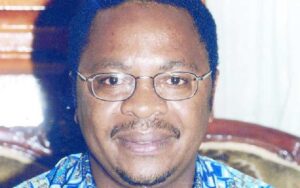
Mwandawiro Mghanga, National Chairperson of CPK, Wundanyi, Sunday November 5 2023

more recommended stories
 THE POWER OF KSH 50: WHY SIFUNA MUST KEEP ASKING KENYANS TO INVEST IN THEIR POLITICAL FUTURE
The Benjamin Franklin Effect, grassroots financing.
-
SIFUNA, LINDA MWANANCHI AND THE SEARCH FOR A NEW POLITICAL CHAPTER: IS KENYA WITNESSING THE EMERGENCE OF A DIFFERENT KIND OF LEADERSHIP?
KENYA POLITICS | 30 OCTOBER 2026.
 Where the Rain Started Beating President Ruto
By Nathaniel Noti, former Taita.
 THE QUESTIONS UHURU KENYATTA CANNOT ESCAPE
Former President Uhuru Kenyatta’s declaration.
 THE POLITICS OF DECEPTION, CONTRADICTION AND POLITICAL REINVENTION OF HON MWASHAKO
A couple of days ago,.
 WHEN ELECTIONS NEAR, THE SAINTS RETURN: HOW KENYA’S CHURCHES BECAME CAMPAIGN ARENAS
Every election cycle in Kenya.
 THE VERMIN OF TRIBALISM & POLITICS OF ENTITLEMENT
The word Murima has forced.
 UDA MUST RETHINK, REPLAN AND RE-EXECUTE ITS STRATEGY IN TAITA TAVETA
Over the past several months, the.
 WHEN GOOD POLICIES DON’T DELIVER: WHY IMPLEMENTATION MATTERS MORE THAN WE THINK
Strong policies create direction, but implementation.
 THE 186 MPs WHO ABSCONDED TO VOTE FOR THE FINANCE BILL 2026/27
Every five years, Kenyans troop.
 SOCIAL MEDIA: THE BATTLEGROUND THAT WILL DEFINE THE 2027 ELECTIONS
The digital revolution has fundamentally.
 CAMPAIGN FINANCING AND THE MYTH OF THE WEALTHY SAVIOUR: WHAT KIND OF LEADERSHIP DOES DEMOCRACY NEED?
As political campaigns gather momentum,.
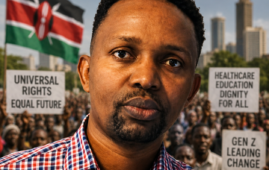 Ulimwengu wa Universalism na Kuibuka kwa Ufahamu Mpya wa Kisiasa Afrika: Jinsi Gen Z wa Kenya Wanavyobadilisha Mwelekeo wa Siasa za Afrika
Barani Afrika, dhana ya universality au.
 WHEN LEADERSHIP BECOMES AN INVESTMENT: WHY KENYA MUST RETHINK CAMPAIGN SPENDING
In an ideal democracy, leadership.
 THE SENATE NEEDS EXPERIENCE, NOT EXPERIMENTS: WHY ENG. JOHN MTUTA MRUTTU IS THE RIGHT CHOICE
In moments when a county stands.
 Mwadime Joins UDA: Strategic Realignment or Political Gamble in Taita Taveta?
The political landscape of Taita Taveta.
Leave a Comment