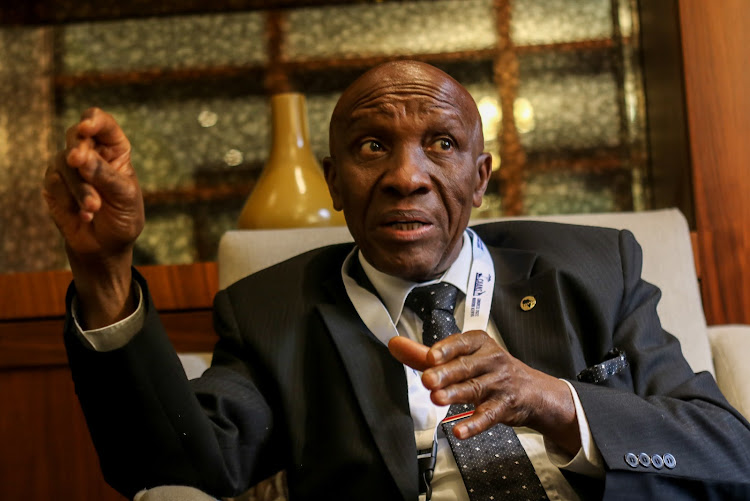
Prof Nimrod Mwang'ombe

Most patients nowadays get a quick CT scan or MRI of the brain or spine to diagnose any suspected abnormalities. But it was not always like that.
These gadgets were not there when Prof Nimrod Mwang’ombe trained as a neurosurgeon between 1977 and 1980.
He retired from the University of Nairobi in 2021 after 44 years of medical practice, which made him the giant of neurosurgery in Kenya.
“It’s really been a game changer. The CT scanner is a recent invention of the 70s. Before that, neurosurgery was pretty tough practising because we needed to do some other types of images to diagnose the condition,” he says.
MRI machines became commercially available in the 1980s.
Prof Mwang’ombe says in 1970s and early 1980s, doctors would inject a dye through the vessels which supply the brain, then take an X-ray.
“So we’ll see the vessels through the dye when we check the X-ray. Anywhere where the vessel looks abnormal is where our problem is.”
The other way was to cut a hole in the skull and inject a dye into the cavity, called the ventricle. They would take the X-ray again and see if there was something abnormal.
“Because if there’s something abnormal, there’ll be a distortion. So with the distortion, we would know there’s a problem somewhere here, then you’d go in and do the surgery. It wasn’t easy,” he recounts.
Prof Mwang’ombe is arguably the father of neurosurgery in Kenya, and has seen it move from a basic practice to one that now heavily relies on modern imaging.
The Star caught up with him at the ongoing fourth Annual Continental Association of African Neurosurgical Societies in Nairobi.
He is now 71 years old and retired from the University of Nairobi, where he established Kenya’s only Master of surgery in neurosurgery programme in 2006.
“It was not easy (starting the programme). There was a lot of opposition. And we had to convince many people that it was important, it’s necessary. They didn’t think that it’s a priority,” he says.
“But it succeeded. And now we have residents who come to train here not only from our country but from all of Africa. We have also trained neurosurgeons working in Botswana, Rwanda, Zambia and Mauritius.”
He further solicited a modern operating microscope worth Sh11 million for the KNH-UoN neurosurgery unit.
Prof Mwang’ombe is also proud of the neurosurgeons in Eldoret because they were all trained at the UoN’s residency programme at Kenyatta National Hospital and they have set up a modern unit at the Moi Teaching and Referral Hospital.
“That shows you how much we can achieve if we believe in ourselves. The most important thing is to believe in yourself, then put a lot of effort into it.”
Still, Kenya has only 39 neurosurgeons and 35 trainees in the residency programme. That means there is one neurosurgeon for every 1.4 million Kenyans. The World Health Organization recommends one for every 200,000 people.
Dr Mwang’ombe is currently a consultant at Kenyatta University School of Medicine, where he plans to set up a master’s programme.
He says neurosurgery is popular but can only take a few people, hence the low numbers. “It’s an apprenticeship. You have to assist and work and gain experience. Which then means that we can take maybe four, or five at a time. Because the more you take, the less they learn, the less you take, the more they will learn. That’s the unfortunate bit about the specialities of surgery,” he says.
The practice deals with disorders of the brain, nerves and spinal cord.
Training is also expensive. In his keynote presentation at the ongoing Continental Association of African Neurosurgical Societies in Nairobi, he estimated that training a neurosurgeon at UoN costs Sh21,620,000 for six years, or $36,000 a year.
He advises Kenya should have several regional centres of excellence where neurosurgeons can be based, with KNH being the national referral centre.
Prof Mwang’ombe advises that doctors considering training in neurosurgery must learn to be calm even when confronted with a challenge.
“I think neurosurgery is probably like obstetrics and gynaecology. You cannot predict an emergency. A patient would look very well. Then there’s an emergency during delivery and you have to get ready,” he explains.
“So you must be calm. You cannot afford to panic when you are confronted with a challenge.”
Prof Mwang’ombe–full name Nimrod Juniahs Mwakitawha Mwang’ombe–was born in Taita Taveta in 1951. He studied at Buxton Primary School in Mombasa, then Allidina Visram High School, and moved to Nairobi School for his A Level.
He joined UoN for his bachelor of medicine and bachelor of surgery degree in 1975.
Besides his masters in neurosurgery from UoN, he also has a PhD from the University of London.
It is said that in many countries, neurosurgeons make the most money, but they never have time to enjoy it.
“I’ve never made any money myself. I can tell you, I mean whatever I made is what God gave me. And I can’t complain because I can’t say that I’m a poor person. I’ve led a comfortable life, but I’ve enjoyed whatever life I wanted to enjoy,” Mwang’ombe, a staunch Anglican, says.
“I would say that neurosurgery is like all other fields. Politicians are very important to people. But a good politician will find time for his family. If a politician has no time for his family, he’ll be a disappointed person when he retires from politics.”
He adds, “Because the children have moved on. A journalist is a very important person, but you must find that time for your family. So it’s not just in neurosurgery. Having a balance in life is very, very important.”
~ The Star

 TAITA TAVETA: WE CANNOT CONTINUE THIS WAY — A COUNTY GOVERNMENT IN CRISIS OF ACCOUNTABILITY
Kwaela News Network | Editorial Taita.
 DOCUMENT REVIEW: TAITA TAVETA COUNTY CIDP III (2023–2027)
A Review of Planned Development Priorities,.
 COVID-19 FUNDS IN TAITA TAVETA: YEARS AFTER THE AUDIT, WHO ANSWERED THE QUESTIONS — AND WHO WAS HELD ACCOUNTABLE?
As High Court reduces Rodger Ngoo’s.
 RUTO’S TAITA TAVETA TOUR: DEVELOPMENT INSPECTION OR PROMISE DELIVERY MISSION?
President William Ruto is expected to.
 VOI THIRSTS AS LEADERS TRADE STATEMENTS, EXCUSES AND BLAME
Years of promises, unpaid.
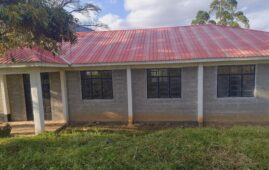 MRUGHUA SOCIAL HALL: A DECADE OF WAITING, MILLIONS SPENT, AND STILL NO ANSWERS
Ten Years Later, Why Is.
 SIX-YEAR DEFAMATION CASE ENDS AS COURT AWARDS COSTS TO KWAELA NEWS NETWORK, BUT QUESTIONS OVER COVID-19 FUNDS REMAIN
VOI, TAITA TAVETA — A six-year.
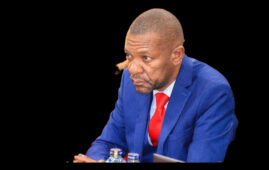 Family, Power and Public Trust: The Questions Governor Wakujaa Must Answer
The latest appointments in Taita Taveta.
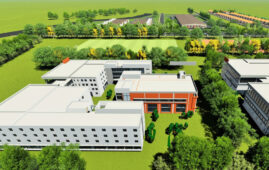 PETITIONERS FAIL TO PROVE OWNERSHIP OF 1,306 HECTARES AS COURT DISMISSES NDARA B LAND CASE
Case: Gadiel Mnyambo Mwaisama & Others.
 NJORO KUBWA OR MZIMA PHASE II? WEIGHING TAITA TAVETA’S BIG WATER OPTIONS
Water has long been one.
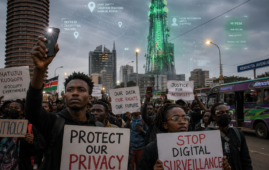 WHY KENYANS ARE TURNING AGAINST SAFARICOM OVER SURVEILLANCE FEARS
For years, Safaricom has enjoyed enormous.
 FIRES, FEAR AND FAILURE: THE HARD QUESTIONS TAITA TAVETA SCHOOLS MUST ANSWER
A disturbing pattern is emerging in.
 PARIS JUU YA MACHOZI YETU: AIBU YA VIONGOZI WALIOSAHAU WATU WAO
Katika wakati ambapo wananchi wa.
 ISANGAIWISHI DEVELOPMENT COMMUNITY OFFICIAL STATEMENT ON LAND OWNERSHIP, HISTORICAL RECORD, AND DEVELOPMENT
1. Introduction The Isangaiwishi Development Community.
 AUDIT SHOCKER: HUNDREDS OF MILLIONS IN WORKERS’ DEDUCTIONS UNACCOUNTED FOR AS FINANCE SHAKE UP ROCKS TAITA TAVETA
By Kwaela News Network Investigations Desk.
 COURT EXPOSES ILLEGAL IMPEACHMENT: TAITA TAVETA COUNTY ASSEMBLY FAULTED FOR RUSHED, UNCONSTITUTIONAL REMOVAL OF SPEAKER MWAMBURI
Mombasa, Kenya — In a damning.
Great,proud of you daktari.
Good work Doc,I know how media shy you are,however the contribution you have made towards the medical field can not be understated, it’s humongous. Kudos.
Aboo Mwashighadi, is used to Doc… He is Prof….Lala mana mndu wa ♝ Bishop..