
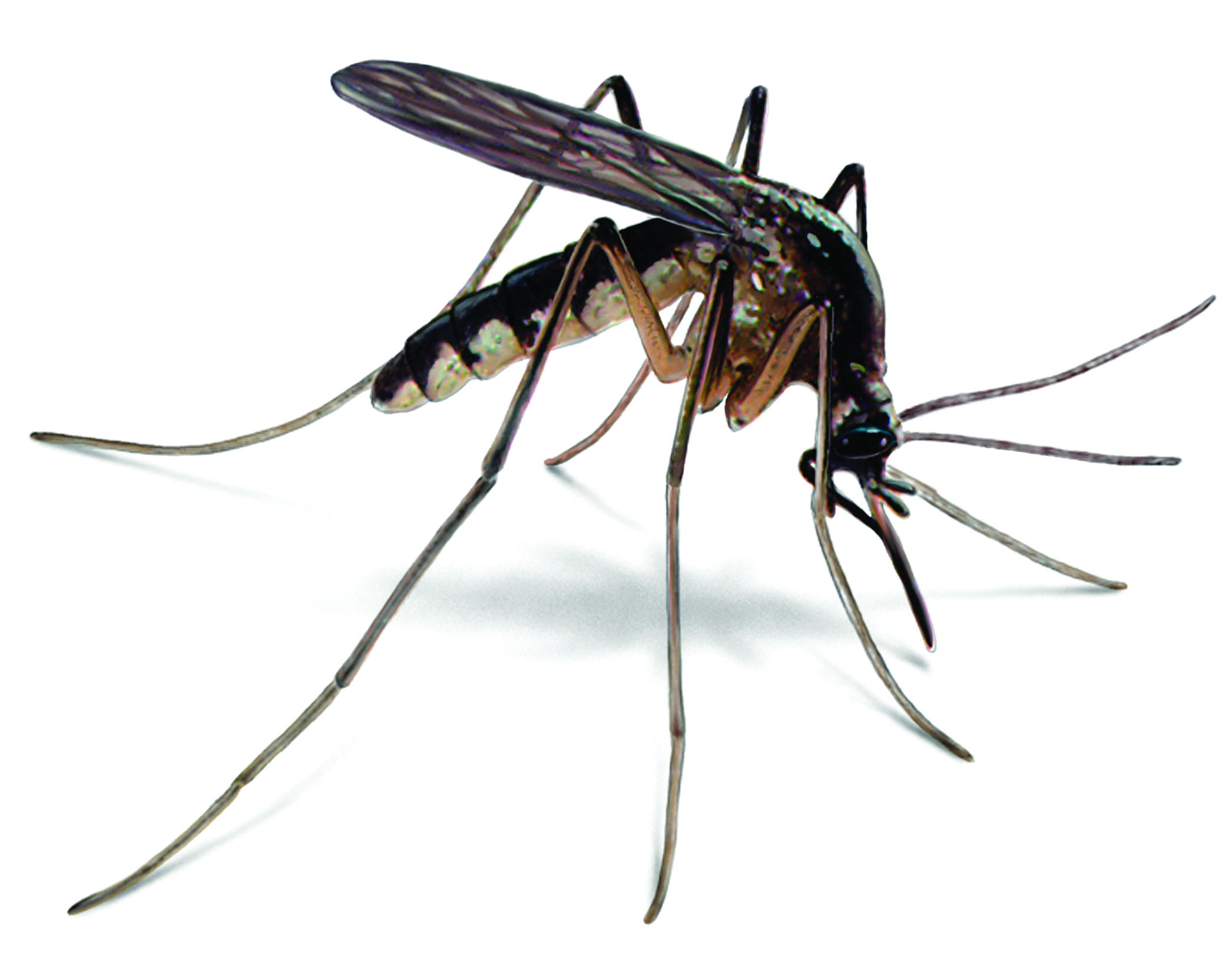
DDT was once a common insecticide in the United States, but it was banned in 1972 due to health concerns and danger to other wildlife. It’s still used in other countries to kill mosquitoes that spread malaria and other diseases, and that’s why there’s a problem when mosquitoes become resistant to DDT.
Malaria sickened 225 million people and caused 781,000 deaths in 2009, according to the World Health Organization (WHO). Most of the deaths occurred among African children, where 20 percent of childhood deaths are caused by malaria. The only way to get malaria is by being bitten by an Anopheles mosquito which is carrying the disease, so reducing the number of mosquitoes, preventing mosquito bites, or shortening the lifespan of mosquitoes so the disease can’t develop inside them, will eliminate malaria.
The WHO currently recommends pyrethrum-impregnated mosquito nets in countries with malaria problems, but also recommends spraying: “Indoor residual spraying (IRS) with insecticides is the most powerful way to rapidly reduce malaria transmission,” according to a WHO fact sheet on malaria. “DDT can be effective for 9-12 months in some cases.” [1] But if mosquitoes develop resistance to DDT, it becomes less effective.
Even though DDT causes serious health problems in humans, some people, like this author, defend its use, and blame its poor reputation on distortions by the mainstream media.
“The author pulls no punches in pointing out how everyone from Bill Gates to the World Health Organization has bumbled, when trying to save the world from malaria, despite throwing millions of dollars and tons of DDT at the problem.”
DDT use peaked in the United States in 1959, when 79 million pounds were spread and manufacturers exported another 76 million pounds to other countries, but soon afterwards, increasing insect resistance and tighter safety regulation caused a decline. By the time the Environmental Protection Agency banned it for crops in the United States in 1972, most of it was being used only for pests on cotton crops.
Health Dangers
Several serious human health problems, including diabetes and hormonal disruptions, have been linked to DDT, and it is suspected to be carcinogenic. It also can harm other unintended species, such as when it endangered Bald Eagles in the United States before it was banned. For these reasons, its use is only justifiable as a last resort where greater health problems are being spread by mosquitoes or insects, where the mosquitoes aren’t resistant, and no other effective control is practical. Though the WHO still recommends DDT, it hopes to phase out its use as better and safer control methods are developed.
The photo to the right shows spraying DDT in huts in India, 1961. Many disease-carrying mosquitoes have become resistant to DDT in India, though it still repels them, even though it doesn’t kill them.
Alternatives to DDT include pyrethroids, organophosphate insecticides such as malathion, and carbamate insecticides, but they also come with problems. They are more expensive, though pyrethroids last longer, so the actual expense is about the same, but they have their own health side effects and mosquitoes can develop resistance to them as well.
Other alternatives include solutions such as eliminating mosquito larvae habitats by draining ditches and standing water, though this may be difficult or impossible in some areas. Netting over beds to prevent mosquitoes from biting is a safer alternative, though not effective for people who need to be outdoors or working in the evening and night.
Failed Worldwide Campaign
Paul Muller of Switzerland first recognized DDT’s value as an insecticide. During World War II, the United States and its allies sprayed it in the South Pacific to control mosquitoes that spread malaria and dengue fever. Though malaria was already in decline in the U.S. and Europe, the use of DDT helped hasten its eradication there also.
The World Health Organization attempted a major worldwide malaria eradication program, starting in 1955, that emphasized the use of DDT as well as medical treatment and inspection. Though there were some successes, lack of funding, wars, supply shortages, and increased mosquito resistance to insecticides forced the WHO to abandon the plan for eradication. Instead, they now hope to reduce the amount of disease and death.
Resistance was recognized as a potential problem within a few years after widespread spraying began. Mosquitoes which survived the toxins in DDT lived to breed and pass on whatever small amount of resistant they naturally had. As more generations passed with only the survivors breeding, their resistance increased, and fewer succumbed to the toxins.
In 2008, scientists discovered exactly how some Anopheles gambiae mosquitoes were able to survive the poison. They found that resistant ones produced more of a specific protein, which helped them metabolize DDT. Scientists hope that better understanding why some individual insects are able to withstand the pesticide will help them develop a way to overcome the resistance.
Still Repellant
Even though mosquitoes are becoming resistant to the fatal effects of DDT, one study in 2007 showed that more than half of resistant Aedes aegyptimosquitoes were still repelled by it when it was sprayed in huts. Aedesmosquitoes carry yellow fever and dengue, but scientists predicted that Anopheles mosquitoes, which carry malaria, would be at least as likely to be repelled, since they are normally more sensitive to DDT. This may explain why DDT still helps reduce diseases in areas like India, where most mosquitoes have become resistant.
The video at right is a 1944 educational film about DDT, made by the U.S. War Department during World War II. It is presented as a historical artifact and is not necessarily scientifically correct today, nor politically correct either!

more recommended stories
 KEEP SNAKES OUT: PROVEN TIPS TO PROTECT YOUR HOME IN TROPICAL AREAS
Living in tropical regions comes with.
 EJF Condemns Coast Water Works Over Violations of Taita Taveta Residents’ Water Rights
The Economic Justice Forum (EJF) strongly.
 FLOOD DISASTER IN NAIROBI EXPOSES DEEP GOVERNANCE FAILURES AND URBAN PLANNING NEGLECT
The devastating floods that struck.
 TSAVO NATIONAL PARK CRISIS: THE JUDICIAL FAILURE PUTTING OUR LAND AT RISK
1. Overview Tsavo National Park—one.
 TAITA TAVETA’S HUMAN-WILDLIFE CRISIS: A LONG-IGNORED TRAGEDY
For generations, residents of Taita Taveta.
 GARBAGE COLLECTION IN VOI SUB COUNTY; A REFLECTION OF ADMINISTRATIVE FAILURE
Truth be told, Voi, the.
 UZEMBE WA GAVANA MWADIME NA BODI ZAKE ZA MANISPAA
Licha za manispaa ya Taveta.
 ICONIC STONE BROUGHT DOWN
By Innocent Kirigha It’s saddening to.
 TAITA HILLS ARE ON FIRE; LETS STOP THIS DISASTER!
The hills of Taita are on.
 IN NGANGAO FOREST, KENYA, ENVIRONMENTAL PROTECTION ON A RIDGE LINE
Failing to obtain the support of.
 TWO KEY TAITA TAVETA DAMS DRY UP, THREATENING WELLBEING OF HUMANS, WILDLIFE
By Lucy Mkanyika Asworld leaders gather.
 WATER SOURCES DRY UP AS DROUGHT RAVAGES TAITA TAVETA
By Solomon Muingi The prolonged drought.
 LIVESTOCK DEATHS RAISE IN DROUGHT HIT TAITA TAVETA
By Arnold Linga Masila In fair.
 MINERS SUFFER AS KSH 50 M GEMOLOGY CENTRE LIES IDLE
In the gemstone-mining fields of Taita.
 CONCERN OVER ALGAE INFESTATION IN KISHENYI DAM
Kishenyi Dam in Wundanyi has been.
 IT’S NOW MAN VS BEAST AS THOUSFACE STARVATIONANDS
It’s mid-morning at Nkaroni village in.
Leave a Comment