
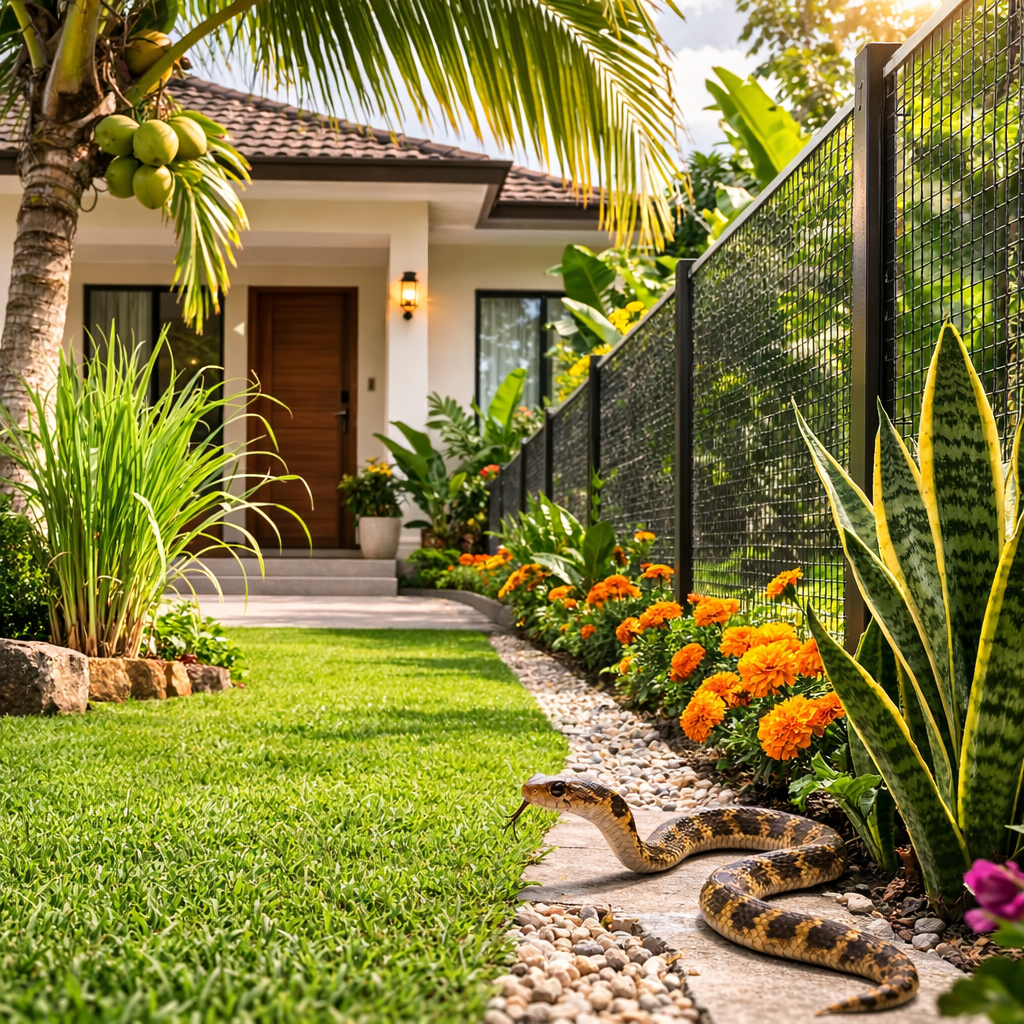
Living in tropical regions comes with many benefits—lush greenery, warm weather, and vibrant wildlife—but it also increases the likelihood of encountering snakes. Snakes are primarily attracted to homes that provide shelter, water, and easy access to prey such as rodents and frogs. Preventing snake encounters requires a strategic approach combining habitat modification, food source management, physical barriers, and, in some cases, natural deterrents.
1. Eliminate Hiding Spots
Snakes are ambush predators that rely on dark, cool, and moist areas for concealment. Reducing these hiding places around your property is critical.
Maintain a tidy yard: Regularly mow your lawn and keep grass short. Long grass provides cover and makes snakes harder to detect.
Remove debris: Clear away piles of rocks, wood, leaves, and cut grass, as these offer ideal hiding spots.
Trim vegetation: Keep shrubs and bushes trimmed at least 24–36 inches above the ground to reduce low-level cover and improve visibility.
Use snake-unfriendly mulch: Avoid thick wood chip mulch or large loose rocks. Opt for crushed stone, gravel, or river rock, which are uncomfortable for snakes to traverse.
2. Remove Food and Water Sources
Snakes often linger in areas with abundant food and moisture. Minimizing these attractants helps discourage their presence.
- Control rodents: Snakes follow rodent scent trails. Store pet food and birdseed in metal, rodent-proof containers with tight lids.
- Manage water sources: Repair leaking faucets, hoses, or air conditioning units. Remove unnecessary standing water and position ponds or bird baths away from your home’s foundation.
- Clean up fallen fruit: In tropical gardens, fallen mangoes, papayas, or other fruit attract rodents and birds, which in turn draw snakes.
3. Install Physical Barriers and Seal Your Home
Preventing snakes from entering your home or specific yard areas is one of the most effective strategies.
- Seal entry points: Inspect foundations, walls, and under sinks. Seal any gaps larger than a quarter-inch (≈6mm) using caulk, mortar, or spray foam.
- Secure doors and windows: Install fine-mesh screens and use weather stripping or rubber guards to close gaps at the bottom of doors.
- Snake-proof fencing: In high-risk areas, a fine metal mesh fence (1/4 inch or smaller) can be effective. The fence should be at least 3 feet high, buried 6 inches into the ground, and angled outward at the top to prevent climbing.
4. Use Natural and Chemical Deterrents
While less reliable than habitat management, deterrents can provide an additional layer of protection.
- Repellent plants: Plant lemongrass, marigolds, Mother-in-Law’s Tongue (Sansevieria), or garlic/onions around your property perimeter. Their strong scent or sharp texture can discourage snakes.
- Essential oils: A mixture of cinnamon and clove oils sprayed around potential entry points may irritate a snake’s senses.
- Ammonia or vinegar: Placing ammonia-soaked rags in unsealed bags or applying white vinegar near water sources can act as a temporary deterrent.
Safety Reminder
Many snakes are nocturnal hunters. Always use a flashlight when walking outdoors at night and exercise caution, especially in tropical environments.
By combining these strategies—tidy landscaping, removal of food and water sources, physical barriers, and selective deterrents—you can significantly reduce the risk of snake encounters and maintain a safer, more comfortable home environment.

more recommended stories
 EJF Condemns Coast Water Works Over Violations of Taita Taveta Residents’ Water Rights
The Economic Justice Forum (EJF) strongly.
 FLOOD DISASTER IN NAIROBI EXPOSES DEEP GOVERNANCE FAILURES AND URBAN PLANNING NEGLECT
The devastating floods that struck.
 TSAVO NATIONAL PARK CRISIS: THE JUDICIAL FAILURE PUTTING OUR LAND AT RISK
1. Overview Tsavo National Park—one.
 TAITA TAVETA’S HUMAN-WILDLIFE CRISIS: A LONG-IGNORED TRAGEDY
For generations, residents of Taita Taveta.
 GARBAGE COLLECTION IN VOI SUB COUNTY; A REFLECTION OF ADMINISTRATIVE FAILURE
Truth be told, Voi, the.
 UZEMBE WA GAVANA MWADIME NA BODI ZAKE ZA MANISPAA
Licha za manispaa ya Taveta.
 ICONIC STONE BROUGHT DOWN
By Innocent Kirigha It’s saddening to.
 TAITA HILLS ARE ON FIRE; LETS STOP THIS DISASTER!
The hills of Taita are on.
 IN NGANGAO FOREST, KENYA, ENVIRONMENTAL PROTECTION ON A RIDGE LINE
Failing to obtain the support of.
 TWO KEY TAITA TAVETA DAMS DRY UP, THREATENING WELLBEING OF HUMANS, WILDLIFE
By Lucy Mkanyika Asworld leaders gather.
 WATER SOURCES DRY UP AS DROUGHT RAVAGES TAITA TAVETA
By Solomon Muingi The prolonged drought.
 LIVESTOCK DEATHS RAISE IN DROUGHT HIT TAITA TAVETA
By Arnold Linga Masila In fair.
 MINERS SUFFER AS KSH 50 M GEMOLOGY CENTRE LIES IDLE
In the gemstone-mining fields of Taita.
 CONCERN OVER ALGAE INFESTATION IN KISHENYI DAM
Kishenyi Dam in Wundanyi has been.
 IT’S NOW MAN VS BEAST AS THOUSFACE STARVATIONANDS
It’s mid-morning at Nkaroni village in.
 PAIN AND TEARS AS ELEPHANTS WREAK HAVOC IN TAITA TAVETA county
Amanda Ndau has been engaging in.
Leave a Comment