
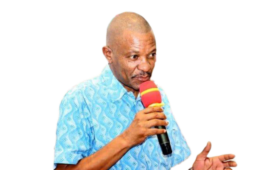
Walter Nyamori Masiga, former Inter-African Bureau for Animal Resources director, hopes a vaccine will be found for the new coronavirus.

In just under two months, the Covid-19 pandemic has wrecked livelihoods and lifestyles across the world, occasioning devastation on a massive scale.
As experts seek solutions from research and lessons from past encounters with viral contagions, many Kenyans may be unaware that 26 years ago the country was a hotspot for another viral contagion.
As a matter of fact, it was as infectious as Covid-19, the only difference being that it threatened to wipe out cattle and wild bovines — not humans.
Many might also not be aware that it took the leadership of a Kenyan scientist to kick the plague out of Africa, ultimately contributing to the eradication of the disease globally.
In 1994, word from the Kenya Veterinary Department and Kenya Wildlife Service reached Dr Walter Nyamori Masiga in Nairobi that buffaloes and kudu antelopes were dying like flies at the Tsavo West National Park in the Coast region.
Dr Masiga, who was then director of the Inter-African Bureau for Animal Resources (Ibar), an agency of the Organisation of African Unity (now the African Union) specialising in animal resources, had to act fast.
County Sets Aside Sh 101 Million Covid-19 Allocation
SAMBOJA SOLUTION FOR FOOD DISTRIBUTION THROUGH KENYA RED CROSS SOCIETY WILL BE A FLOP
Fears Of Total Lockdown Looms Major Towns With Highest COVID-19 Cases In Kenya
App aids giving relief food to 50,000 families
In a convoy of Land Rovers, Dr Masiga led a team of scientists and other experts to the national reserve in Taita-Taveta.
On examining buffaloes and their carcasses, the team concluded they were dealing with an outbreak of Rinderpest.
GLOBAL LIMELIGHT
The disease, which had hitherto been deemed to have been eradicated, kills nearly 100 per cent of unvaccinated animals.
In the Tsavo outbreak, it had killed 70 to 80 per cent of buffaloes and 80 to 90 per cent of kudu in a matter of days. The news spread fast across the world. The response was equally swift.
“We received Sh300 million from the European Union, which we used to vaccinate all cattle from Kilgoris, through Narok, Kajiado, Taita-Taveta, Tana River, Mandera, Wajir, Marsabit right up to West Pokot,” Masiga told the Sunday Nation in an online interview on Tuesday.
“On average, we vaccinated around five million cattle to ensure the disease didn’t jump from the wildlife to cattle. The buffalo and kudu that recovered from the disease had undergone natural vaccination by developing herd immunity,” he added.
The Tsavo incident was just the tip of the iceberg. Previously, the disease had been effectively controlled on most of the continent by the AU’s Pan African Rinderpest Control Project (Parc), which was funded by the European Union.
The campaign, which eventually kicked Rinderpest out of Africa in a span of 12 years, catapulted Masiga to the international limelight, earning him the nickname ‘The Old Lion of Africa’ among veterinary scientists in Europe.
For his sterling and starring role in the campaign, he received numerous global accolades and a treasured honorary doctorate from the prestigious Tufts University in Boston, US.
STRATEGIES
Before the Tsavo outbreak, Ibar had received funding to the tune of US$200 (Sh20 billion). It is this war-chest that Masiga and his team used in the campaign against Rinderpest.
So how did they go about it? “As director of Ibar, I assembled a team of highly qualified experts. These included epidemiologists, vaccinologists, and communication experts. We developed strategies and assembled vaccination teams in 32 countries in sub-Saharan Africa.
We also had a team in Egypt, which was the only North African country that had a Rinderpest outbreak,” recalled Masiga, 79, who graduated with a Bachelor of Veterinary Science degree from the University of East Africa in 1967.
He also holds an academic diploma from the London School of Hygiene and Tropical Medicine, at the University of London, as well as a PhD from the University of Nairobi.
Luckily for the team, there was already a vaccine. It had been developed by Dr Walter Plowright, a globally acclaimed scientist who, between 1956 and 1962, had developed a tissue culture Rinderpest vaccine at the East African Veterinary Research Organization (EAVRO) in Muguga, Kenya.
It is noteworthy that, in an interesting quirk of fate, Masiga had landed his first job at EAVRO after completing his undergraduate studies in April 1967.
It is here that the fresh graduate had met Dr Plowright, who took him under his wing.
At Muguga, the young Masiga would rise from an assistant researcher in 1967 to 1976, when he became the EAVRO director. Eight years later, in 1985, he left EAVRO to join Ibar.
IMMUNISATION STAGES
Thus, by the time the Rinderpest campaign began in the 80s, Masiga was well-versed in it.
In fact, while he was director at Muguga, he once received a call from then President Daniel arap Moi, who directed him to supply Nigeria with Rinderpest vaccine.
Kenya was the only country with the vaccine at the time. Back to the Ibar campaign, the team was to carry out vaccination in two stages.
“For the countries that were the worst hit — Nigeria, Mali, Burkina Faso, Ethiopia, and Sudan — we carried out blanket vaccination at no cost to the countries. Next, we carried out strategic vaccinations in areas that we identified to be hot spots, which included Kenya.
We then carried out sero-monitoring and sero-surveillance. This involved drawing blood from as many animals as possible to test for the antibody to the Rinderpest virus,” the scientist, who at one time was a successful chairman of the AFC Leopards football club, explained.
“At the beginning we had two laboratories — one in Senegal, and the other in Ethiopia — which were tasked with quality-controlling the vaccine that various countries in Africa, including Kenya, were producing,” he recalled.
“We only vaccinated cattle with quality controlled vaccine. Eventually, we closed the laboratory in Senegal and remained with the one in Ethiopia. Finally, we rolled out a ‘search and elimination’ programme, where we went searching for Rinderpest in the 32 participating countries in West, Central, Eastern Africa and Egypt. Where we found it we eliminated it by ring-vaccination.”
ERADICATION
Generally, by the year 2000, Rinderpest had been eradicated from Africa.
“As we were trying to eradicate the disease, the Middle East, India, and Pakistan were also doing the same,” he told the Sunday Nation.
In October 2010, the United Nations Food and Agriculture Organisation (FAO) announced that Rinderpest was by and large eradicated, and in May 2011 the World Organisation for Animal Health, formed in 1924 to respond to the Rinderpest epidemics in Europe and Africa, made a formal declaration that Rinderpest had been eradicated globally.
It is the only disease, apart from small pox, that has been eradicated globally. Is there a probability of Rinderpest recurring?
“Not at all,” the veterinary doctor affirmed, “unless animals are infected deliberately or accidentally by humans. It should be noted that all Rinderpest virus stocks are stored at the Pan African Veterinary Centre of the African Union (AU-PANVAC) in Debre Zeit, Ethiopia, and the Pirbright Institute, in the United Kingdom.
Other stocks of the Rinderpest virus were destroyed in 2019 by Pirbright. The last time animals were vaccinated was in 2006 in Somalia.”
He, however, cautions that a majority of cattle around the world are susceptible to the virus, and should it be reintroduced it would be catastrophic.
He says there is need for constant vigilance since animal plagues keep recurring, especially during wars and military campaigns.
He adds that the viral disease hit Europe particularly hard in the 18th Century, and reached Africa at the dawn of the 20th Century, a time characterised by mass colonisation.
At the policy level, he advises that there should be a full-time plan to counter disease outbreaks. He also hopes a vaccine will be found for the new coronavirus.

 THE ERA OF POLITICAL EUPHORIA IN TAITA TAVETA COUNTY IS OVER
The days when political party.
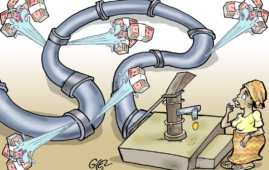 TAVEVO: THE GRAND WATER SCAM DRAINING TAITA TAVETA COUNTY DRY?
Before demanding more water from.
 USAWA NI SAWA: A PRINCIPLE THAT MUST TRANSCEND NATIONAL AND COUNTY POLITICS
Picture a grand tapestry, woven with.
 KAUNTI YA TAITA TAVETA ITAKWISHA KAMA HUU UONGOZI UTAENDELEA BAADA YA UCHAGUZI WA 2027
Taita Taveta imebarikiwa kwa utajiri wa.
 THE CROSSROADS OF TAITA-TAVETA: CHOOSING THE NEXT PATH
For decades, the conversation surrounding leadership.
 KSh600 FOR A WHOLE DAY: HOW TAITA TAVETA’S “BODA BODA CROWD” MAY HAVE TURNED RUTO’S TOUR INTO A POLITICAL PHOTO SHOOT
There is a rather amusing —.
 2027 BEGINS EARLY: THE MWANGOLO-BWIRE RIVALRY EXPOSES A GENERATIONAL DIVIDE
The political war between Principal Secretary.
 THE ODM-UDA COALITION: A MARRIAGE OF CONVENIENCE, NOT CONVICTION
When the Orange Democratic Movement and.
 LEGAL OPINION EXPOSES IRREGULAR COUNTY APPOINTMENT: QUESTIONS MOUNT FOR GOVERNOR WAKUJAA’S ADMINISTRATION
Fresh questions are emerging over governance.
 GOVERNORS NEED STRONG ASSEMBLIES, NOT CHEERLEADERS
My elder sister, Hon. Dorcas.
 BEI YA MAFUTA, UBORA WA BARABARA NA GHARAMA HALISI YA KUENDESHA UCHUMI WA TAITA TAVETA
MAONI Malalamiko ya wananchi kuhusu.
 THE ART OF POLITICAL PARASITISM
There comes a point when.
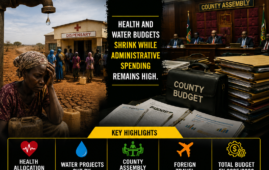 Professional Analysis of the Taita Taveta FY 2025/2026 Supplementary II Budget
Executive Summary The County Government of.
 WHY MOMBASA DESERVES MZIMA WATER OVER COSTLY DESALINATION EXPERIMENTS
As Mombasa continues to grapple with.
 UNDERSTANDING THE REALITY: WHY SALARY DELAYS ARE NOT GOVERNOR WAKUJAA’S FAILURE
There has been a lot of.
 LET’S SET THE RECORD STRAIGHT ON TAITA TAVETA SALARIES & GOVERNOR WAKUJAA
There has been a wave of.
Leave a Comment