
There are many complex and even long rituals and ceremonies associated with death, however, circumstances surrounding the death of a person, age, sex and social status of the dead were the most important factors that dictated these death rituals and ceremonies in the past.
The tradition is that from the time when death is announced, old people gather at the homestead for wake keeping. During this time all the members of the village present a certain amount of money which vary from one village to the other. These contributions were mandatory, since records of all the contributors were kept and it was for everyone on the wake keeping exercise to cater for their needs. It was also noted that the homestead, and especially where the wake-keepers were gathered, fire was lit to prevent darkness from instilling fear into the people performing the wake keeping. Food stuffs, water and firewood were brought by the villages, in turns from the day; death occurred until the day the burial took place. The wake-keepers were succeeded by day-watchers who stay in the homestead to help the family members mourn the dead. The villagers make visits to console the family of the deceased. Even the corpse is still in the mortuary, the day watchers and the wake-keepers continue to observe vigilance until the day of the burial of the dead.
Mourning among the Taita is mostly by the relatives of the deceased and friends. Any death of an individual leaves two parties, the person who dies and the survivors who mourn, the desolation that follows the loss of the loved one is bereavement and accordingly it the most severe psychological trauma most people will encounter in the course of their lives. The mourners would also wear black garments to signify that dark moment of their lives of losing a loved one.
Furthermore, death throws the entire village into a mourning state and if a member of the family or village does not show openly that he or she is mourning he or she may be accused of having caused the death through witchcraft. Weeping among the family members was common as they mourned the dead. However, among the Taita weeping is more common to women than men. Weeping reaches at its peak as the body is lowered to the grave, this is the most critical point of mourning as “people realize for sure, that the dead person is gone for good, previously they were in a state of denial and refuse to accept that death has actually occurred”. The mourning becomes intense, if the dead played an important role in the family.
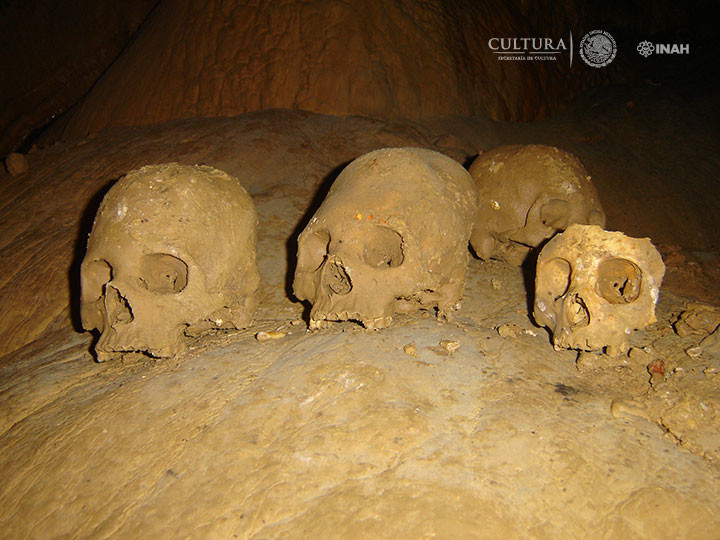
The body was washed and hair shaved by old women past child bearing age in the village. Formerly, the corpse was always placed in the grave (kina) in an upright position. The head was covered about one foot to the earth, stones marked its position so as to enable the descendants to exhume the skulls after about a year and take it to the local shrine.
This style of burial is hardly practiced and skulls are seldom exhumed. When medicine men died, wailing was not allowed, until after a sheep had been sacrificed. If death was caused by a certain epidemic, the mourners were first cleansed by medicine men before mourning.
Members of the community regarded as important and famous were accorded special burial ceremonies. The body would be buried in a hut or in a special burial place (Vinenyi) usually in the grooves near the settlement. After the burial, close relatives of the deceased were ceremonially washed at the doorway of the hut. The men then harvested a lot of sugarcane to make a brew known as Lambo for the following day. On the first day after burial, a goat was slaughtered and the contents of the stomach put aside for sacrificial purposes. Later, it was roasted in the doorway using grass from above the door and beams from the left side of the house to make fire. The meat was eaten with porridge. The first seven mouthfuls were spewed on the ground. Chief mourners were shaved and wailing continued for four days, after which friends would return to their homes. Close relatives would continue for a further three days. On the seventh day, women would go to fetch firewood, and men went to the plains to hunt and shoot game meat as a break and then come back to mourn until a complete lunar month had passed.
Closing the period of mourning was known as kuchumbua maridia. This event was marked by scattering the contents of the sacrificial goat over crops. On the very last day, friends returned to take part in the last night of wailing, shaving themselves again. The women oiling, themselves on the doorway of the hut. The whole atmosphere would be gloomy and people clearly shaken by the death. The village elders would say that death is eminent to everybody and in Taita language they would say Isanga ni Mwasighwa (Meaning the land will always remain but people would pass on).
Those who had helped dig the grave were old and married people, the young ones were not allowed near the graveyard, the diggers were also paid by slaughtering a cow for them on that occasion.
If the deceased had been widowed (lost a husband or wife) to death before, the hut where they were previously living would be sold for a goat or sheep and then dismantled and the poles and the thatching used elsewhere by the purchaser. Otherwise, the husband or wife would continue to occupy it.
After one year the graves were exhumed, and the most heads that were “harvested” were for those deemed clean hearten, the wise and the medicine men…they will later join those in the shrine to complete the HOLINESS that is we (the living) The Living dead (ancestors) and our GOD (Mulungu).
Taita spirituality was expressed in shrines (mwanjenyi) and sacred places (ngomenyi) where sacrifices can be offered. A shrine is a place marked off for religious objects and where sacrifices could be offered. As per previous observations , it is noted that some shrines belong to a family clan, such as those connected with departed family members or their graves. Others belong to the community, and these are often in groves, rocks, caves, hills, mountains, and under certain trees. There were no family shrines….because there were no family doctors (waganga) no family prophets (walodi) were all community properties…..if a disaster befalls it befell on the land, even if it was an omen it will be cured by community doctors. The only difference is that they had jurisdictions, for instance, a doctor cannot travel all the way from Mwanda to go appease at mbololo UNLESS is a joint work or invited as a more abled doctor
People respect such places and in some societies no bird, animals or human being may be killed if it or he or she is hiding in such places. At the shrines and sacred places, people make or bring sacrifices and offerings, such as animals, food, utensils, tools and fowls. They regard such places as holy and sacred where people meet with God. These places are protected from desecration or misuse by unauthorized individuals. Religious articles and objects are found in many religious places. They are of different shapes, kinds, sizes and colors. Some are kept in the houses while others are kept in the forests. The graves of ancestors usually serve as shrines. These objects are material expressions of religious ideas, beliefs and practices like praying, making offerings and sacrifices and major ceremonies and rituals
Story Contributed by Fred Mmbololo

more recommended stories
 TAITA TAVETA: KSh 9.86 MILLION IN SALARIES, TWO ALLEGED FORGED DEGREES — WHO VERIFIED THE QUALIFICATIONS?
KNN INVESTIGATIVE EDITORIAL | PUBLIC.
 GODOMA FINALLY GETS ITS TITLE DEEDS — A RIGHT LONG OVERDUE
The issuance of title deeds.
 CHURU CHURU PROJECTS VS REAL DEVELOPMENT
Why Taita Taveta Must Stop.
 CORRUPTION: THE SILENT TAX CRUSHING ORDINARY KENYANS
A Nation Paying Twice for.
 SUMMARY OF THE TAITA TAVETA COUNTY FY 2026 / 2027 BUDGET ESTIMATES
The County Government of Taita Taveta.
 WHOEVER FEEDS YOU CONTROLS YOU: SANKARA’S WARNING AFRICA REFUSES TO HEAR
“He who feeds you, controls you.”.
 Universality and the Rise of a New African Political Consciousness: How Kenyan Gen Z is Reshaping African Politics
Across Africa, the concept of universality.
 PARIS ON OUR PAIN: TAITA TAVETA MCAs STILL FEEDING WHILE THE COUNTY BLEEDS
They say the more things.
 DRAIN THE SWAMP OR GO HOME: TAITA TAVETA DEMANDS ACCOUNTABILITY
When Governor Andrew Mwadime—popularly known as.
 Beyond Personalities: What Taita-Taveta Must Demand in 2027
By Pastor Cassian Ngotho Mwachanya Taita-Taveta.
 Mzima Phase II: A Promise Delayed, A Region Thirsty
For more than six decades, millions.
 THE ACCOUNTABLE AND THE ACCUSED: MWAMBURI, MAGANGA, AND THE RECKONING AT TAITA TAVETA COUNTY ASSEMBLY
By Pastor Cassian Ngotho Mwachanya The.
 HON. DORCAS MLUGHU: THE VOICE THAT REFUSED TO BOW
The court’s decision declaring the impeachment.
 THE CLERK AT THE HEART OF COUNTY ASSEMBLY BUSINES: WHY ADMINISTRATIVE RESPONSIBILITY CANNOT BE ESCAPED
The recent court decision in.
 WHY KENYA WILL NOT BECOME THE “SINGAPORE OF AFRICA” ANYTIME SOON
For more than a decade,.
 CORRUPTION — THE ENEMY IN THE ROOM: HOW IT IS STRANGLING DEVELOPMENT IN TAITA-TAVETA COUNTY (2025)
Taita-Taveta is a county of.
Leave a Comment