The law gives a penalty of between 20 years and life imprisonment or fines of not less than Sh20 million.

By Malemba Mkongo
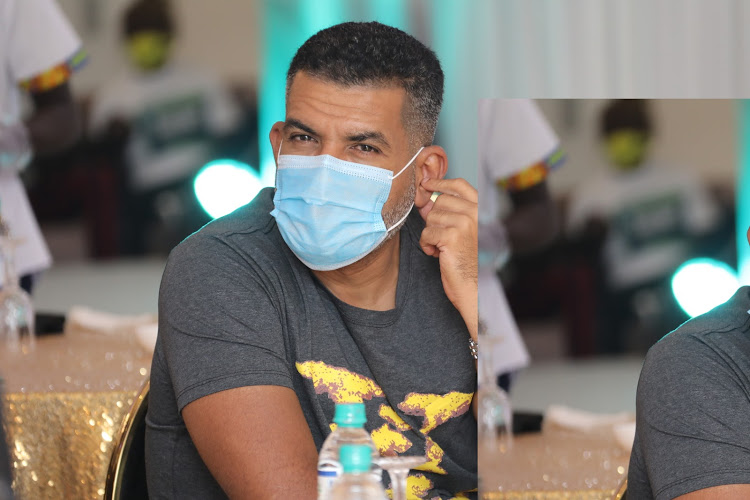
On April 2015, Said Ahmed was among five people who were arrested and later charged with trafficking nine kilos of heroin.
Ahmed, alongside the other accused, faced two counts of trafficking drugs from Kenya to Madagascar through the ocean using a luxurious boat. The heroin was valued at Sh29 million.
In 2018, Ahmed and a Seychelles national who was supposed to sail the yacht were found guilty and sentenced to close to 15 years in prison.
In this particular case, the owner of the luxurious boat “baby Iris” Bilal Kimala had employed him as a boat caretaker.
He alongside the people he was charged with were contracted by Kimala to sail the boat from Kilifi to Madagascar, not knowing drugs had been concealed in it.
Since he was just a labourer, Ahmed said he did not bother to question anything concerning the trip.
However, he was shocked when they were arrested and drugs found in a suitcase inside the car they were driving in and also inside an underwater tank inside the boat they were to sail in.
Ahmed said he was a sacrificial lamb for a crime he did not commit, and neither was he aware of the drugs.
In 2018, the yacht owner Bilal, who had been deported from Madagascar, was charged with drug trafficking.
He was, however, later acquitted by a Mombasa court after the prosecution failed to link him to the consignment.
Was Ahmed’s case an example of how small fish are used as scapegoats in the fight against drugs, while the big fishes go free?
NOTHING NEW
Cases of “small fishes” languishing in jail are not new in Kenya. The question that remains is why no drug baron has ever been convicted.
However, the fight against drugs is about to take a U-turn if a bill by Nacada is passed by Parliament and assented to law.
Stakeholders say the current laws have loopholes, which have given drug barons an easy way out whenever prosecuted for drug charges.
For example, the law gives more attention to people found with or using narcotics, a person found in a room where people are using drugs, or being the owner of the house where narcotics are being produced or consumed.
The law gives a penalty of between 20 years and life imprisonment or fines of not less than Sh20 million.
Even though the law criminalises drug trafficking, the punishment is said to be lenient since these are people at the top of the food chain.
Also, the law is not clear on the use of precursor chemicals as it has not imposed control over it.
The law also does not have a specific provision on how law enforcements officers, such as police officers committing drug trafficking-related crimes, should be punished.
The current law also has loopholes on how persons accused of conspiring either in Kenya or outside should be punished.
It also does not give the concerned police unit powers to secure crucial evidence through interception of communications.
AKASHA BROTHERS’ JOURNEY
It is such loopholes that gave the popular Akasha brothers a leeway to escape punishment, despite being listed by the US as Africa’s drugs kingpins.
Baktash Akasha and his younger brother Ibrahim Akasha were accused of conspiring to traffic large quantities of heroin and methamphetamine into the US.
The Akashas supplied confidential sources working at the direction of the DEA with 99kg of heroin and 2kg of methamphetamine.
At the time of their arrest, the brothers are said to have had another 500kg of heroin en route from the Afghanistan-Pakistan region towards Kenya for intended distribution in the US.
According to Manhattan US Attorney Geoffrey Berman, Baktash and Ibrahim Akasha were the leader and deputy of a sophisticated international drug trafficking network, responsible for tons of narcotics shipments throughout the world.
“Not only did they manufacture and distribute narcotics for over two decades, they kidnapped, beat and murdered others who posed a threat to their enterprise,” Berman said.
He added that when the brothers encountered legal interference, they bribed Kenyan officials — including judges, prosecutors and law enforcement officers — to avoid facing the charges against them in the US.
Their arrest had been as a result of years of investigations, use of undercover detectives who posed as buyers as well as tapping of their communication.
However, all this evidence could not be produced before a Kenyan court as the accused contested the means used in gathering the evidence, considering some were unconstitutional.
This is bound to change if the bill by Nacada pushes through and is assented to law.
~ The Star

 THE GOVERNOR DISCOVERS FISCAL DISCIPLINE — FOUR YEARS TOO LATE?
Perhaps one of the most.
 SHAKAHOLA: 200 YEARS FOR MACKENZIE, BUT WHO WILL ANSWER FOR THE STATE’S FAILURE?
Kwaela News Network | Editorial.
 WHO IS THIS GOVERNOR TAITA-TAVETA COUNTY IS LOOKING FOR BEYOND 2027?
As the 2027 General Election.
 COURT HALTS COAST WATER DISCONNECTIONS AS EJF CHALLENGES SH6 BILLION DEBT CLAIM
Kwale, 29 August 2026 —.
 THE LEGENDARY 70-YEAR-OLD MZIMA PIPELINE LIVES TO BURST ANOTHER DAY
Government Celebrates Repairing What It Failed.
 TRAGIC LOSS OF JOHN KALAGHE JOSHUA LEAVES FAMILY AND COMMUNITY IN MOURNING
It is with profound sorrow and.
 THE NAIROBI–MOMBASA EXPRESSWAY: A DECADE OF PROMISES, YET NO HIGHWAY IN SIGHT
The Highway That Exists Only.
 FROM FUEL TO DRINKING WATER: HOW A BILLION-SHILLING PIPELINE DREAM RAN AGROUND
A Lesson in Why Politics Should.
 LIKONI BRIDGE: WHAT HAPPENED TO RUTO’S KSH 100 BILLION PROMISE?
For years, residents of Mombasa and.
 MZIMA PHASE TWO: SIX DECADES OF PROMISES, DELAYS AND GOVERNMENT FAILURE
Coast Residents Continue to Suffer as.
 ABSENT LEADERSHIP OR CALCULATED DISRESPECT? QUESTIONS MOUNT OVER KINGI’S NO-SHOW AT MGANGE NYIKA FUNDRAISER.
Serious questions are emerging following the.
 ATHANAS MBELE’S “BIG 7 AGENDA” VISION POSITIONS WUNDANYI FOR TRANSFORMATIONAL GROWTH
Wundanyi is emerging at the center.
 POLITICS ON OVERDRIVE
Kenya is not a permanent.
 WHY TAITA TAVETA NEEDS ITS OWN POLITICAL VEHICLE
By Geoffrey Kimonge (GK) The Case.
 HAS GREED CONSUMED THE TAITA TAVETA COUNTY ASSEMBLY?
By Geoffrey Kimonge (GK) Has the.
 THE COLLAPSE OF PAA: AMASON KINGI’S POLITICAL HOLLOWING EXPOSED IN MAGARINI AND TAITA TAVETA
By any political measure, Pamoja.
Leave a Comment