
Senator Johnes Mwaruma

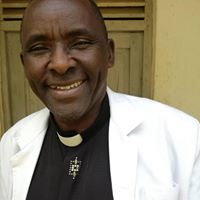
By Pastor Cassian Ngotho Mwachanya
Senator Johness Mwaruma of Taita-Taveta has been publicly named by the Council of Governors in connection with allegations of extortion involving county governments. He now seeks the governorship. These allegations are matters of public record, but they are not a court verdict. In a democracy governed by law, accusation is not the same as guilt.
Yet public leadership rests not only on legal innocence, but on public trust.
This moment, therefore, is not merely about one man. It is about the moral weight carried by the name of a people. The Taita community has long been associated with integrity, quiet strength, and dignity. When a leader from among us is publicly accused of wrongdoing, the question before us is not rumor, nor politics, but truth.
If the allegations are false, then justice demands vindication. If they hold substance, then accountability must follow. Either way, silence cannot serve the public good.
There is also a broader ethical question. Allegations of corruption, wherever they arise, rarely concern one individual alone. Systems fail when truth is hidden, when fear replaces honesty, and when institutions are weakened by silence. The search for accountability must therefore be fair, consistent, and guided by due process, not by public pressure or selective judgment.
As a pastor, I speak not as a judge, but as a shepherd of conscience. Scripture reminds us that truth is not given to destroy, but to redeem. When the prophet Nathan confronted King David, it was not to end his life, but to restore his soul through truth. Justice, in its highest form, is not vengeance — it is the restoration of what is right.
This is why vindication matters.
If Senator Mwaruma seeks the governorship, he must first seek clarity. Not through intermediaries. Not through political rhetoric. But through open engagement with lawful institutions. Transparency is not weakness; it is the foundation of trust. Records, explanations, and cooperation with due process are not burdens — they are the path by which the innocent are cleared and the public reassured.
If he is innocent, let the truth defend him.
If he has been wronged, let evidence reveal it.
If he is under strain, let honesty speak plainly.
A community does not condemn a man for being human. But it cannot entrust its future to uncertainty.
Leadership is ultimately a moral covenant between the people and those who seek to serve them. Without trust, authority weakens. Without truth, trust cannot stand. Vindication, therefore, is not punishment — it is the minimum requirement for public confidence.
We do not seek anyone’s downfall. We seek clarity, integrity, and peace of conscience — for the leader, for the county, and for the name we all carry.
There is still time for truth to speak louder than accusation. Justice is patient. Mercy is real. And vindication remains possible.
May truth guide us.
May justice be fair.
May mercy walk with us all.
Shalom.
 TAITA TAVETA: CAN THE DCI CRACK THE NUT? DORCAS MLGHU’S PUBLIC OUTBURST PUTS COUNTY EXECUTIVE UNDER FRESH PRESSURE
The growing controversy surrounding the.
 NDARA B LAND DISPUTE: 63 RESIDENTS SERVED WITH THREE-MONTH EVICTION NOTICE FOLLOWING COURT RULING
Affected families in Mlambenyi, Golani and.
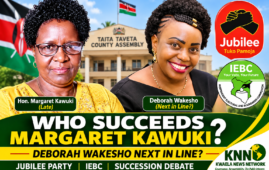 TAITA TAVETA: WILL DEBORAH WAKESHO SUCCEED THE LATE MARGARET KAWUKI, OR WILL POLITICAL CARTELS INTERFERE?
Questions emerge over Jubilee Party’s.
 CHRISTOPHER MWAMBINGU: EACC INVESTIGATES ALLEGED FORGED DEGREE USED TO SECURE DIRECTOR OF ADMINISTRATION POSITION
A third case raises further.
 MWATATE MP RACE: RICHARD LUKINDO’S AMBITIONS AND THE UNANSWERED DEGREE QUESTION
The political stakes surrounding former.
 TAITA TAVETA: PRISONS OFFICER, NINE OTHERS ARRESTED IN MOTORCYCLE THEFT SYNDICATE PROBE
Serious questions emerge over alleged security.
 ALLEGATIONS OF HARASSMENT RETURN ALONG VOI-CALTEX ROAD CORRIDOR
Residents, motorists, and public transport operators.
 CHURU CHURU PROJECTS HAZIJENGI TAIFA
Kuna tofauti kubwa kati ya.
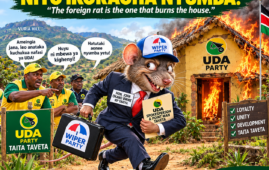 BWIRE: ACCESS TO POWER IS NOT A POLITICAL MANDATE
Hon. John Bwire’s declaration that.
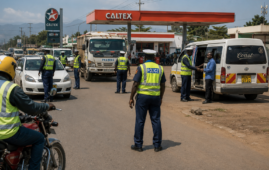 RESIDENTS RAISE CONCERNS OVER ALLEGED MOTORIST HARASSMENT ALONG VOI-MOMBASA ROAD
Residents and motorists in Voi.
 THE TAITA TAVETA COUNTY ASSEMBLY’S VETTING PROCESS MUST UPHOLD THE CONSTITUTION AND PUBLIC TRUST
We, the concerned citizens of Taita.
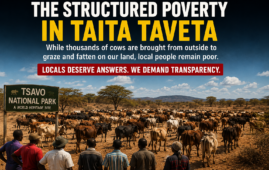 THE STRUCTURED POVERTY IN TAITA TAVETA
Residents demand answers after thousands.
 Taita Taveta Workers Demand Immediate Payment of Salaries and Allowances
Frustration is mounting among employees in.
 Nepotism Concerns Intensify as Family Links Dominate Senior Appointments in Taita Taveta County
Calls for transparency and fairness in.
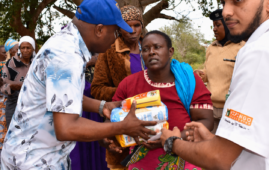 UNGA, POLITICS AND 2027: PS MWAMODO’S JORA VISIT SPARKS DEBATE
A food distribution exercise led by.
 Taita Taveta Residents Increasingly Question Leaders’ Priorities Amid Unresolved Challenges
What was billed as a development.
Leave a Comment