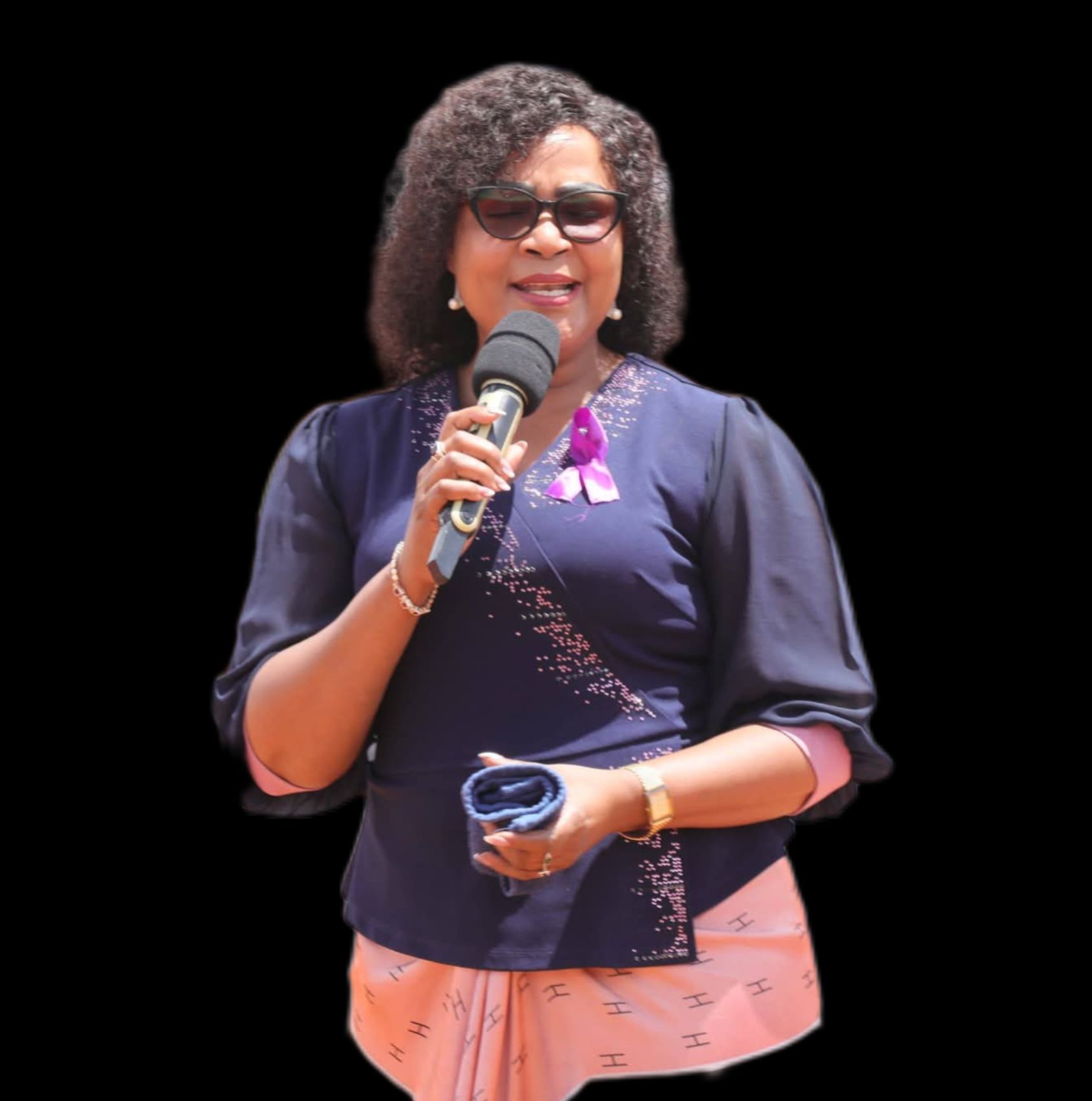
Joyce Lay first Woman Rep - Taita Taveta County

Kenya’s political landscape is increasingly characterised by expensive campaigns, cash handouts and the mobilisation of voters through financial incentives. But behind the money distributed at political rallies lies a much bigger question that Kenyans rarely ask: Where does the money come from, and what do politicians expect in return for investing it?
The debate has been reignited by remarks attributed to former Taita Taveta Woman Representative, Honourable Joyce Lay, who is campaigning to reclaim the seat.
In a circulating social media clip, she is heard saying:
“Sisi wanasiasa tukiita watu kwa mkutano lazima tujue vile watarudi nyumbani. Kama wewe ni mwanasiasa na huna pesa usiite mkutano!”
Her argument is that politicians organising public meetings should ensure attendees have money to return home.
While the cost of transport and the economic hardships facing ordinary citizens are genuine concerns, her remarks raise a fundamental question about the relationship between poverty, political mobilisation and the dignity of voters.
But there is an even bigger issue: Who finances the handouts, and how do politicians recover the money they spend pursuing public office?
Political campaigns in Kenya require substantial financial resources. Candidates spend money on transport, campaign teams, publicity, rallies, accommodation, mobilisation and direct financial assistance to supporters.
A 2026 report by the National Council of Churches of Kenya, reported by the Kenya News Agency, estimated that a competitive MCA campaign could cost approximately KSh5 million, an MP or Senate campaign KSh50 million, and a gubernatorial campaign KSh100 million. These are estimates, not audited expenditure figures for every candidate.
Campaign funds may legitimately originate from personal savings, business income, lawful donations, fundraising, loans and political party support.
However, the public deserves to know whether substantial campaign expenditure can be explained by candidates’ declared sources of income and lawful contributions.
When a candidate spends tens or hundreds of millions of shillings, transparency about the source of that money should be non-negotiable.
Consider a hypothetical candidate who spends KSh100 million pursuing a gubernatorial position.
Can the official salary and allowances reasonably explain or repay such an investment?
What about candidates who spend KSh200 million or KSh300 million?
Do they regard campaign expenditure as a personal sacrifice, an investment in political influence or an opportunity to access the economic advantages associated with public office?
There is nothing inherently wrong with wealthy individuals using legitimately acquired personal resources to finance their political ambitions. Nor does expensive campaigning automatically establish corrupt intentions.
However, public office must never become a mechanism for recovering private campaign expenditure.
When the cost of acquiring political power becomes extraordinarily high, the public has a legitimate right to question the financial expectations behind that investment.
In business, investors expect returns on their investments. Some expect profits, dividends or long-term commercial advantages.
But public office is not a private business.
An elected leader receives a publicly funded salary and allowances in exchange for fulfilling constitutional responsibilities. Public procurement, government appointments, budgeting and allocation of resources must serve the public interest.
Yet expensive campaigns create legitimate concerns about possible conflicts of interest.
For example, what happens when campaign financiers are businessmen who later compete for government tenders? What happens when a politician owes substantial sums to individuals or companies that expect favours after an election?
Could campaign expenditure create pressure to manipulate procurement, inflate contracts, reward political financiers or misuse public resources?
These are risks that deserve investigation, not assumptions of guilt against individual politicians.
If someone invests hundreds of millions to acquire public office, Kenyans deserve to know whether that investment comes with expectations that could compromise public service.
Political handouts can create a cycle in which candidates spend enormous sums seeking power, then face financial pressures and expectations from those who financed their campaigns.
Research published in Current Anthropology in November 2024 examined cash handouts and political patronage during Kenya’s 2017 elections. It demonstrated how financial exchanges have become part of the complicated relationship between politicians and voters.
The concern extends beyond the money distributed to voters.
If political financiers expect preferential treatment, and elected leaders use public office to repay private financial obligations, the ultimate cost is transferred to taxpayers.
The consequences can include inflated procurement costs, stalled development projects, inadequate healthcare and the diversion of resources meant for public services.
This is why campaign financing must be treated as an important part of Kenya’s anti-corruption agenda.
In December 2024, President William Ruto attracted international attention after receiving more than 40,000 public nominations for the Organised Crime and Corruption Reporting Project’s (OCCRP) Person of the Year award.
He received the highest number of public nominations, reflecting widespread public frustration over corruption allegations, the Finance Bill controversy and governance concerns.
However, OCCRP’s independent judging panel selected former Syrian President Bashar al-Assad as its 2024 Person of the Year.
It is therefore important to correct the widely circulated claim that Ruto was officially ranked the world’s second-most-corrupt president. No such runner-up award was issued.
Nevertheless, the extraordinary public response demonstrated the strength of anti-corruption sentiment among Kenyans.
Kenya is not without a legal framework for regulating campaign expenditure.
Article 88(4)(i) of the Constitution gives the Independent Electoral and Boundaries Commission (IEBC) responsibility for regulating the amount of money spent by or on behalf of candidates and political parties.
The Election Campaign Financing Act, 2013, and the Election Campaign Financing Regulations, 2026, provide for campaign contributions, expenditure limits, financial records, disclosure and accountability ahead of the 2027 General Election.
The challenge is effective enforcement.
The IEBC must ensure that candidates disclose their sources of campaign funding and comply with expenditure requirements. The EACC and other investigative agencies should examine credible evidence of unexplained wealth, illicit financing and corruption.
Kenyans should not have to wait until money disappears from public coffers before questions are asked about the financial interests behind political campaigns.
Joyce Lay has every democratic right to seek the Woman Representative seat again. Her political ambitions are not the issue.
The issue is the political culture in which distributing money at public meetings risks becoming an expectation rather than an act of voluntary assistance.
Voters deserve leaders who can explain their policies, demonstrate their achievements and account for their campaign financing.
Poor citizens need economic opportunities, employment and sustainable development. They should not have to depend on political handouts to participate in democracy.
If politicians believe that every public meeting must involve distributing money, they should also be prepared to answer questions about where that money comes from.
PUBLIC OFFICE IS NOT AN INVESTMENT VEHICLE
Kenya must confront the economics of its electoral politics.
Where does campaign money originate? Who finances political candidates? What do financiers expect in return? Can declared personal income reasonably explain campaign expenditure? Are there financial relationships that later influence government contracts and public appointments?
These questions should become central to Kenya’s political accountability debate.
Not every wealthy candidate is corrupt. Not every campaign donation is suspicious. Not every politician who gives money to voters expects an improper return.
But neither should the public accept unexplained political wealth and enormous campaign expenditure without scrutiny.
The purpose of seeking elective office should be public service, not private enrichment.
A politician should not enter public office expecting to recover personal campaign investments from public resources.
The Kenyan taxpayer must never become the financier of a politician’s private investment returns.
And the voter should never become a customer whose democratic participation is purchased with handouts.
ARE POLITICIANS INVESTING IN PUBLIC SERVICE, OR INVESTING IN THE OPPORTUNITY TO ACCESS PUBLIC MONEY?
Truth. Accountability. Community Empowerment.

 THE 1992 TRAP: WILL KENYA’S OPPOSITION HAND RUTO ANOTHER TERM THROUGH DIVISION?
WAMEAMUA WARUHUSU RIGATHI GACHAGUA AGOMBEE ILI.
 COUNTY GOVERNORS DESERVE THE SAME SCRUTINY AS THE PRESIDENCY
The 2024/25 Finance Bill protests.
COUNTY GOVERNORS DESERVE THE SAME SCRUTINY.
 THE POWER OF KSH 50: WHY SIFUNA MUST KEEP ASKING KENYANS TO INVEST IN THEIR POLITICAL FUTURE
The Benjamin Franklin Effect, grassroots financing.
SIFUNA, LINDA MWANANCHI AND THE SEARCH FOR A NEW POLITICAL CHAPTER: IS KENYA WITNESSING THE EMERGENCE OF A DIFFERENT KIND OF LEADERSHIP?KENYA POLITICS | 30 OCTOBER 2026.
 Where the Rain Started Beating President Ruto
By Nathaniel Noti, former Taita.
 THE QUESTIONS UHURU KENYATTA CANNOT ESCAPE
Former President Uhuru Kenyatta’s declaration.
 THE POLITICS OF DECEPTION, CONTRADICTION AND POLITICAL REINVENTION OF HON MWASHAKO
A couple of days ago,.
 WHEN ELECTIONS NEAR, THE SAINTS RETURN: HOW KENYA’S CHURCHES BECAME CAMPAIGN ARENAS
Every election cycle in Kenya.
 THE VERMIN OF TRIBALISM & POLITICS OF ENTITLEMENT
The word Murima has forced.
 UDA MUST RETHINK, REPLAN AND RE-EXECUTE ITS STRATEGY IN TAITA TAVETA
Over the past several months, the.
 WHEN GOOD POLICIES DON’T DELIVER: WHY IMPLEMENTATION MATTERS MORE THAN WE THINK
Strong policies create direction, but implementation.
 THE 186 MPs WHO ABSCONDED TO VOTE FOR THE FINANCE BILL 2026/27
Every five years, Kenyans troop.
 SOCIAL MEDIA: THE BATTLEGROUND THAT WILL DEFINE THE 2027 ELECTIONS
The digital revolution has fundamentally.
 CAMPAIGN FINANCING AND THE MYTH OF THE WEALTHY SAVIOUR: WHAT KIND OF LEADERSHIP DOES DEMOCRACY NEED?
As political campaigns gather momentum,.
 Ulimwengu wa Universalism na Kuibuka kwa Ufahamu Mpya wa Kisiasa Afrika: Jinsi Gen Z wa Kenya Wanavyobadilisha Mwelekeo wa Siasa za Afrika
Barani Afrika, dhana ya universality au.
Leave a Comment