

When President William Ruto announced plans for five new high-end luxury hotels inside the Tsavo West Rhino Sanctuary, he presented it as a visionary Project that would fuel conservation, transform tourism, and uplift local communities. Yet beneath the polished speeches and photo opportunities lies a familiar and troubling pattern: big proclamations with no clear documentation, no disclosed beneficiaries, and no concrete safeguards for the people who live around the park.
It is a pattern that Taita Taveta residents have seen before — and one they are increasingly unwilling to tolerate.
Where Are the Developers, Terms, or Beneficiary Details?
Despite the scale of the project — multi-million-dollar lodges inside Kenya’s largest national park — the government has yet to reveal:
Who is building these hotels
Who owns or will operate them
How revenue will be shared
What guarantees exist for local benefit
This lack of transparency mirrors previous presidential pronouncements where the policy groundwork, feasibility studies, and due diligence were only done after the announcement — if at all.
If the project is legitimate, why the secrecy?
If it is meant to benefit the local community, why aren’t they being shown the details?
A Familiar Pattern: Announce Now, Think Later
This would not be the first time the president has launched a high-profile project without the necessary groundwork.
Mzima Springs Phase II
Declared “ready to launch,” “fully prepared,” and “diligence complete.”
Construction never began.
The project quietly collapsed, leaving county leaders and citizens with unanswered questions and no water infrastructure.
Tsavo Revenue Sharing (50/50)
A promise that was celebrated when first announced.
Today, it remains unimplemented — buried, deferred, or simply forgotten.
These failures are not small administrative hiccups. They are broken commitments that directly affect livelihoods, water security, employment, and trust.
So when locals ask whether this new hotel project is just another announcement-for-headlines, they are not being cynical — they are being realistic.
Communities Have Not Benefited From Similar Projects Elsewhere
Across Kenya, tourism-related concessions have often delivered:
- low-wage jobs instead of sustainable employment,
- imported labour rather than local hiring,
- poorly-enforced community benefit projects,
- restricted access to grazing or cultural sites without compensation.
Without legally binding community safeguards, what typically happens is simple: private investors profit, national agencies collect revenue, and communities are left with crumbs.
Why should Tsavo be any different unless mechanisms are transparently set in place?
Where Are the Community Safeguards?
Before a single blueprint is approved, the government must release — publicly and in detail — community protections such as:
- Local employment quotas (60–80%)
- Guaranteed local procurement
- Community-controlled revenue sharing
- Grazing, cultural, and water-access protections
- Mandatory public participation and FPIC (Free, Prior & Informed Consent)
- Community representation on management boards
- Transparent concession agreements
Anything less exposes the sanctuary and its communities to exploitation disguised as development.
Taita Taveta Leaders Already Asked for Local Hiring Quotas. What Happened?
Before this new promise, county leaders had already requested something very basic and very reasonable: A quota for Taita Taveta residents in Kenya Wildlife Service (KWS) employment.
KWS operates inside their ancestral lands.
The park occupies more than 60% of the county.
Yet local representation in KWS remains extremely low.
If the State cannot even honor existing requests for employment quotas, how can it expect the community to believe in new grand promises of hotels, revenue, and prosperity?
A simple gesture of goodwill — honoring the recruitment request — could have rebuilt trust.
But instead, the government is announcing new billion – shilling initiatives without addressing the unresolved commitments already on the table.
Silence, Broken Promises, and Rising Doubt
From Mzima II to Tsavo revenue sharing, from community hiring to unfulfilled development promises, locals have lived through enough political theatre to question the sincerity of the latest announcement.
Presidential pronouncements should not be PR exercises.
They should be commitments backed by due diligence, documentation, transparency, and fairness.
Right now, many residents are left asking:
Is this new Tsavo project another example of promising first and planning later?
Is the government truly prioritizing local communities — or simply using Tsavo as a platform for grandstanding?
And the most painful question of all:
Is the president taking the people of Taita Taveta for granted?
Until the government releases full details, proves its goodwill through action, and establishes enforceable community safeguards, those questions will remain valid — and unanswered.

more recommended stories
 PARIS TRIP CANCELLED AFTER PUBLIC OUTCRY
Following sustained public pressure and civic.
 HOW RECKLESS LEADERSHIP DESTROYED A ONCE-BEAUTIFUL MOMBASA
Mombasa did not decline by accident..
 TSAVO, PROMISES, AND POWER: IS TAITA TAVETA BEING LEFT BEHIND AGAIN?
Taita Taveta County is home.
 LEADERSHIP IN ABSENCE: THE MISSED OPPORTUNITY ON THE TSAVO PETITION
As the historic petition to.
 LEGALISE BUSH MEAT TO CAB HUMAN-WILDLIFE CONFLICTS IN TSAVO
Apparently, it is illegal to consume.
 TSAVO ELEPHANTS STILL RULE DESPITE DROUGHT
This marks the third year without.
 109 ELEPHANT DIE IN KENYAN NATIONAL PARK DUE TO DROUGHT
Over 100 elephants died as a.
 SEX WORKERS SUSPENDS SEXUAL SERVICE TO BODA BODA RIDERS
In a show of solidary with.
 MTITO: ‘RUTO HOOKERS’ STILL ON THE STREETS, SH1 MILLION LATER
Days after Deputy President William.
 A BROTHEL IS OFFERING FREE SEX TO PEOPLE WHO GET A COVID-19 VACCINE
A sauna club in Austria is.
 SHORTAGE OF CONDOMS HITS TAITA TAVETA COUNTY
By Keith Simiyu There is a.
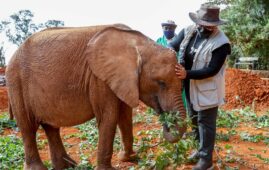
Speaking on Tuesday during a virtual.
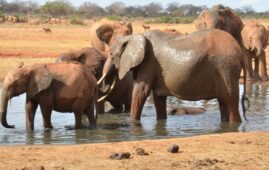 WILDLIFE CONVERSATION MANAGEMENT ACT 2013 TO BOOST TOURISM SECTOR
Taita Taveta County stands to reap.
 HOLIDAY HOMES GIVING BEACH HOTELS A RUN FOR THEIR MONEY
By Siago Cece and Winnie Atieno.
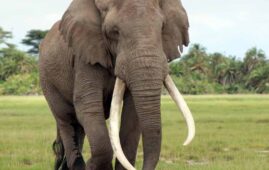 SPECTACLE OF THE WILD AS ELEPHANTS BREAK INTO TAITA TAVETA HOMES TO LICK SUGAR
By Renson Mnyamwezi From the much.
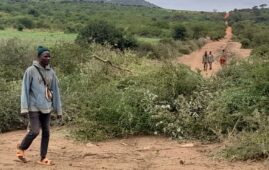 KWS SEEK TO EVICT RESIDENTS WITHIN TSAVO CONSERVANCY
By Lucy Mkanyika Kenya Wildlife Service.
Leave a Comment