
By Tirra Nyangira Amos
Mention to anyone from Kenya that you are at the Coast and quickly in their mind they will think you have gone to relax your mind, enjoy nature and explore the Coast line; basically the Coast in Kenya is synonymous with tourism!. Actually, having pleasure of your life can happen anywhere but this is not what took me to the Kenyan coast this time round. I was there for a serious business, to interact with farmers; mainly cassava farmers, learn how they farm cassava and process different cassava products for the market. This wouldn’t be complete without visiting the cassava markets, interacting with traders along the cassava value chain and consuming some of the cassava products.
Having been raised up in a small village in Western Kenya where majority of the households farm a variety of crops mainly for home consumption, I wouldn’t have been in a better position to experience cassava grow in the farm. However, things change with time and place and therefore bringing new aspects and experiences. I therefore embarked on a background check and literature review of cassava production and utilization in Kenya. Coastal Kenya was ranked second after Western Kenya, in the production and utilization of cassava. However, something that I kept thinking about was the different conditions under which cassava is produced. Though literature had indicated that cassava can do well in dryer regions, it was a great opportunity to go experience and see cassava farming in the field. Western Kenya is rain-fed while coastal Kenya is within the arid and semi-arid lands of Kenya and therefore, I wanted to seed the tolerant varieties of cassava. I was so much excited because I knew I was going to interact with farmers and traders in their native working environment.
The day came and I had a mission to fulfill; to visit cassava farmers from Kilifi and Taita-Taveta counties and cassava traders in main cassava markets at the coast. When I arrived in Kilifi county, the temperatures were so high and region had just experienced a long dry spell. This was the right timing to get to the farms and actually see if cassava plants had survived the drought. It was time to prove or disapprove what is written in literature. The county extension officer also expressed his fears about the drought and later took me to meet cassava farmers. To my surprise, some farmers were still having cassava plantations and were expecting to harvest. What surprised me more was the local knowledge and skills that farmers used to preserve both the harvested cassava tubers and cassava planting materials awaiting market and rainfall respectively. I learnt that cassava farming is capable of managing the problem of food insecurity during drought spells but most importantly offer alternative and sustainable income opportunities. However, most farmers still insist on farming maize which is easily affected by changes in weather patterns. The main problem that cassava farmers are facing at the coast is the problem of pests and disease attack.
READ ALSO: CASSAVA, A CROP WITH UNEXPLOITED OPPORTUNITIES IN COASTAL PART OF KENYA
Most farmers did not have adequate knowledge on cassava pests and diseases to the extend that they thought this was part of the cassava traits. However, this has changed due to the training provided by the University of Nairobi through the Cassava Community Action Research Programme Plus (CARP+) team and the support of RUFORUM.

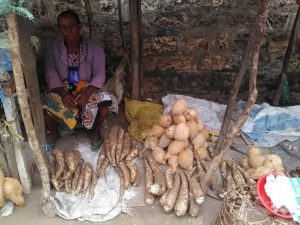
Most of the cassava farmers at the Kenyan coast, farm for both subsistence and commercial purposes. They use different methods to take their produce to the market but mainly make farm gate sales to bulkers who act as middlemen between farmers and wholesalers or retailers. I met different bulkers going from one homestead to another in search of cassava tubers. To my surprise, the bulkers new the villages where farmers had a ready plant in the farm. Farmers complained of the low prices offered but the bulkers but the bulkers complained on the low volumes produced by individual farmers and therefore they had to spend a lot in bulking.
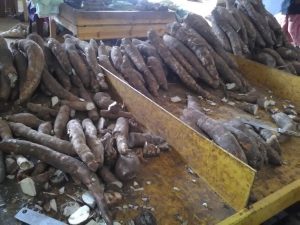
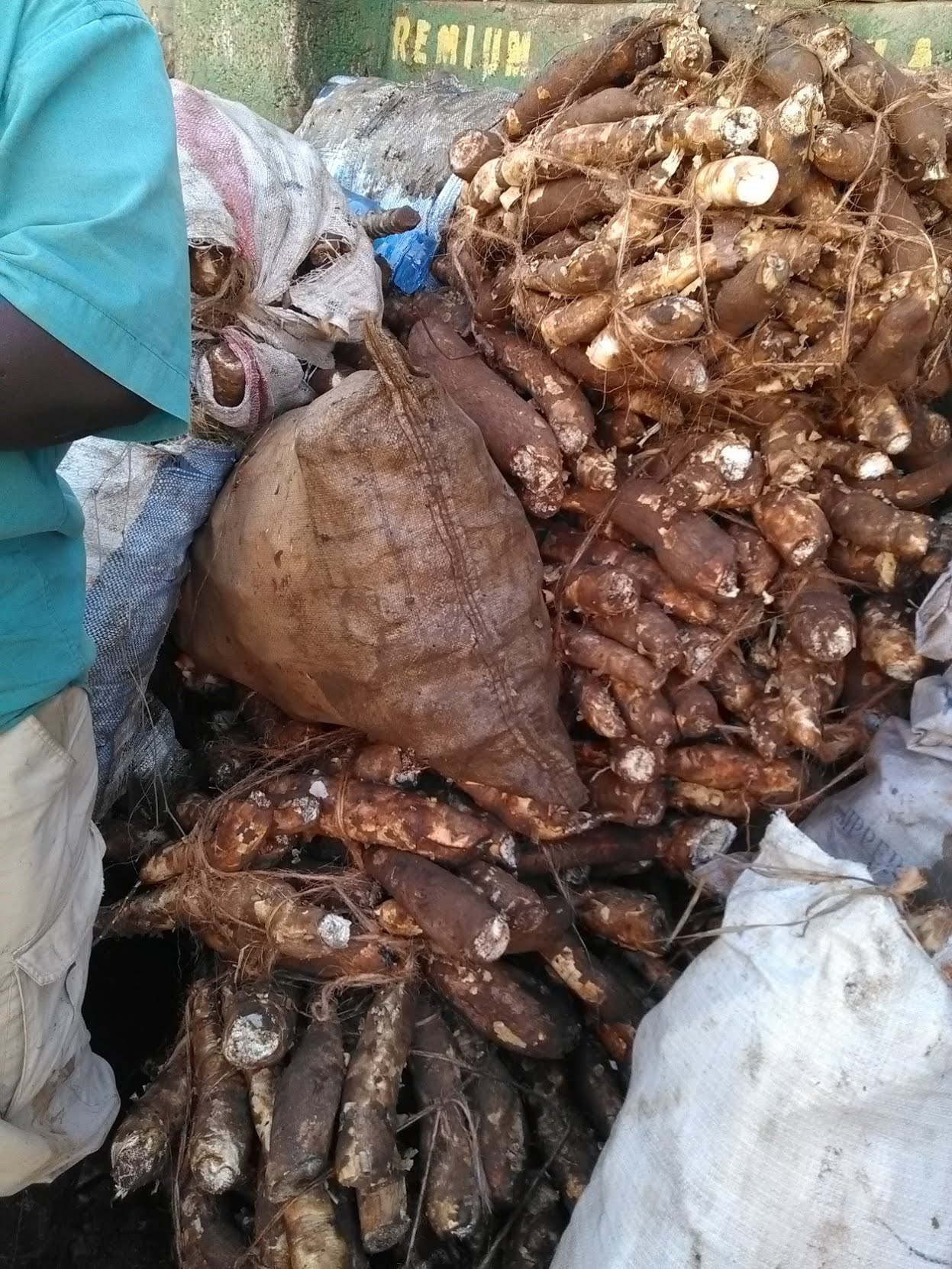
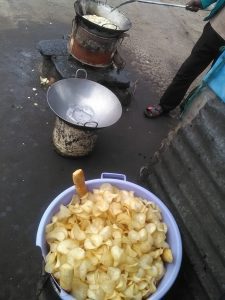
Another day came and I was asked to wake up at 3:00 A.M so that 4:00 A.M finds me at Kongewea market to experience cassava selling. I tried my best and got there 30 minutes late only to find that the business had already started and money changing hands. One of the traders told me that cassava is usually harvested late evening, transported at night and therefore, wholesaling of cassava usually ends around 6:30 in the morning. I visited different market centers at the Kenya coast but Kongowea market stood out to be the largest seller of cassava mainly as fresh cassava tubers, dried cassava chips and cassava flour respectively. Here cassava is sold both on wholesale and retail terms depending on the quantity demanded. I also visited Mama Ngina Drive market and here is where I experienced real sales men. This market is mainly for cassava fried crisps and since many sellers are located in one place, one has to use different advertising and convincing strategies in order to win customers. If you want to experience how customers should be treated and welcome then you should find time to visit Mama Ngina Drive market. The beauty of visiting this market is that you are given an opportunity to taste the crisps before buying. My trip ended by having a nice experience of eating one of the products from cassava called Kimanga.
I acknowledge my supervisors Prof. Willis Oluoch-Kosura, Dr. Hillary Nyanganga, Prof. Agnes W. Mwang’ombe and Dr. Dora Kilalo. I would also like to acknowledge the Regional Universities Forum for Capacity Building in Agriculture (RUFORUM) for sponsoring my trip and research at the Kenyan coast. Special appreciation to the county of Kilifi and Taita Taveta, extension officers, farmers and traders who allowed me to have experience of their environment.

more recommended stories
 THE GOVERNOR DISCOVERS FISCAL DISCIPLINE — FOUR YEARS TOO LATE?
Perhaps one of the most.
 SHAKAHOLA: 200 YEARS FOR MACKENZIE, BUT WHO WILL ANSWER FOR THE STATE’S FAILURE?
Kwaela News Network | Editorial.
 WHO IS THIS GOVERNOR TAITA-TAVETA COUNTY IS LOOKING FOR BEYOND 2027?
As the 2027 General Election.
 COURT HALTS COAST WATER DISCONNECTIONS AS EJF CHALLENGES SH6 BILLION DEBT CLAIM
Kwale, 29 August 2026 —.
 THE LEGENDARY 70-YEAR-OLD MZIMA PIPELINE LIVES TO BURST ANOTHER DAY
Government Celebrates Repairing What It Failed.
 TRAGIC LOSS OF JOHN KALAGHE JOSHUA LEAVES FAMILY AND COMMUNITY IN MOURNING
It is with profound sorrow and.
 THE NAIROBI–MOMBASA EXPRESSWAY: A DECADE OF PROMISES, YET NO HIGHWAY IN SIGHT
The Highway That Exists Only.
 FROM FUEL TO DRINKING WATER: HOW A BILLION-SHILLING PIPELINE DREAM RAN AGROUND
A Lesson in Why Politics Should.
 LIKONI BRIDGE: WHAT HAPPENED TO RUTO’S KSH 100 BILLION PROMISE?
For years, residents of Mombasa and.
 MZIMA PHASE TWO: SIX DECADES OF PROMISES, DELAYS AND GOVERNMENT FAILURE
Coast Residents Continue to Suffer as.
 ABSENT LEADERSHIP OR CALCULATED DISRESPECT? QUESTIONS MOUNT OVER KINGI’S NO-SHOW AT MGANGE NYIKA FUNDRAISER.
Serious questions are emerging following the.
 ATHANAS MBELE’S “BIG 7 AGENDA” VISION POSITIONS WUNDANYI FOR TRANSFORMATIONAL GROWTH
Wundanyi is emerging at the center.
 POLITICS ON OVERDRIVE
Kenya is not a permanent.
 WHY TAITA TAVETA NEEDS ITS OWN POLITICAL VEHICLE
By Geoffrey Kimonge (GK) The Case.
 HAS GREED CONSUMED THE TAITA TAVETA COUNTY ASSEMBLY?
By Geoffrey Kimonge (GK) Has the.
 THE COLLAPSE OF PAA: AMASON KINGI’S POLITICAL HOLLOWING EXPOSED IN MAGARINI AND TAITA TAVETA
By any political measure, Pamoja.
Leave a Comment