
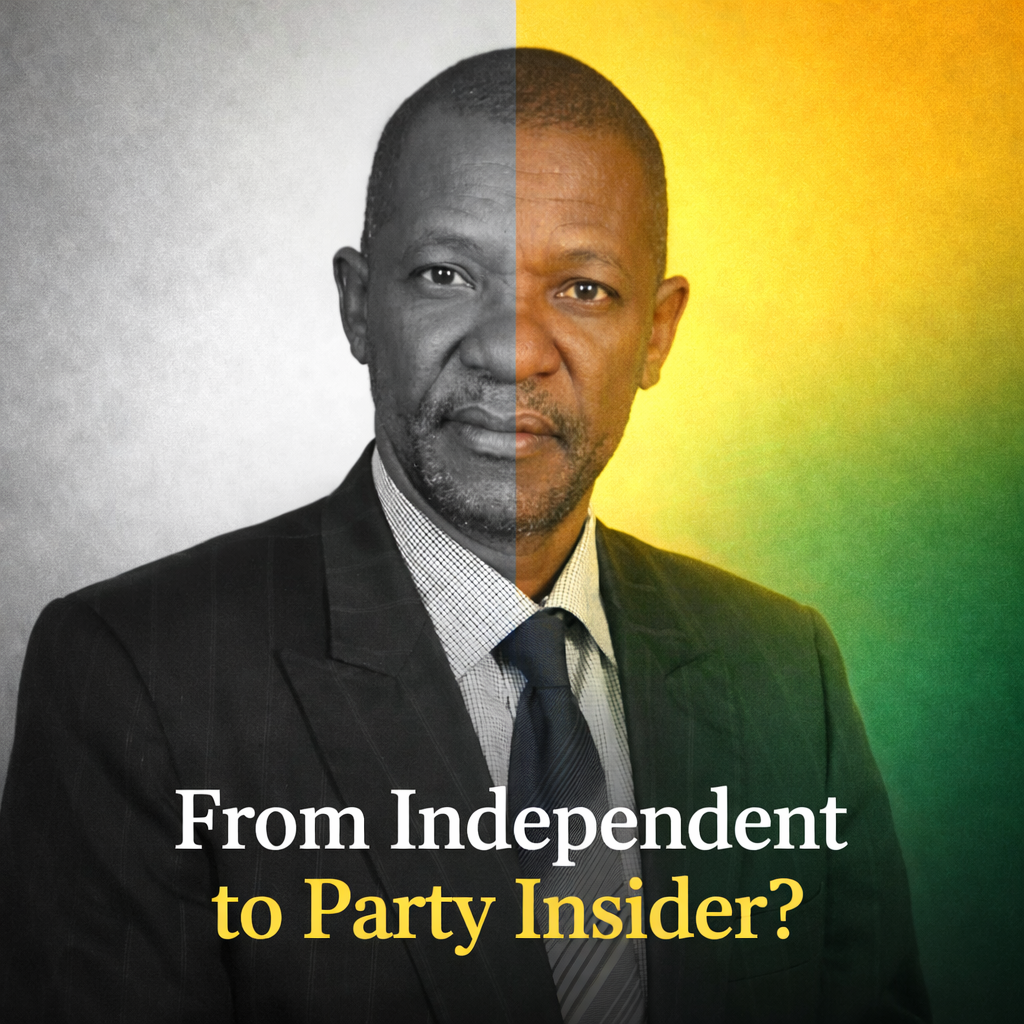
Andrew Mwadime — Wakujaa — did not just win an election in 2022. He made history.
At a time when political parties dominated every square inch of Kenya’s electoral map, he broke through as an independent candidate and defeated party machines. That victory was not accidental. It was symbolic. It was rebellious. It was deeply intentional.
And that is precisely why his decision to join a political party now feels like betrayal.
This is not about colors. It is not about yellow versus orange. It is about trust.
In 2022, voters did not rally behind Wakujaa because of a party manifesto. They rallied behind the idea of independence. After being tossed around by party politics — denied tickets, watching parties auction loyalty to the highest bidder — he presented himself as the man who stood outside the circus.
That was his strength.
Voters were tired of leaders who answered to party bosses in Nairobi before answering to citizens at home. They were weary of governors who had to check with “party mandarins” before acting. Independence was not a technicality. It was the brand. It was the promise.
We believed we were electing a governor accountable to us alone.
There is something powerful about voting for an independent candidate. It creates a sense of ownership. A direct line of responsibility. No party hierarchy. No ideological straightjacket. Just the voter and the leader.
That psychological contract is what has now been shattered.
Let us not pretend this was inevitable. Months before the 2022 elections, Mwadime was scrambling for party survival. He sought party tickets. He was rejected. He briefly joined another vehicle that appeared unstable. It was political turbulence that pushed him into independence — not ideology.
But something remarkable happened.
He won.
And he did not win because of party backing. He won because voters made a deliberate choice to reject party dominance in favor of local accountability. His independence was not a fallback option in the eyes of voters — it became his defining virtue.
That virtue is what he has now discarded.
Of course, defenders will argue that joining a party is strategic. That it provides access to national networks. That it ensures smoother coordination with central government. That it strengthens reelection machinery.
Perhaps.
But strategy does not erase symbolism.
When an independent governor joins a major political party midstream, the message to voters is clear: independence was convenient, not foundational. It was a ladder — not a conviction.
That realization stings.
There is also a practical dimension to this shift. Political parties offer shelter — especially to leaders facing uncertain futures. If a governor’s performance record is thin, party affiliation can serve as a shield. Party supporters may vote out of loyalty to the banner rather than a sober evaluation of delivery.
That may be the gamble here.
But Kenya’s political climate has evolved. Voters are no longer hypnotized by party euphoria alone. County politics, in particular, has grown more performance-driven. Roads built. Hospitals upgraded. Water projects completed. Youth programs launched. Markets modernized.
In 2027, no party color will substitute for a report card.
If the tenure has been transformative, voters may overlook the party switch. If it has been underwhelming, no amount of yellow branding will prevent accountability.
The deeper question this episode raises is whether independence can survive long-term in Kenya’s party-dominated ecosystem. The system incentivizes alignment. Power gravitates toward organized blocs. Leaders outside that structure often face institutional friction.
But voters did not elect an independent candidate because it was easy.
They elected him precisely because it was difficult.
They elected him because it symbolized resistance to political dependency. Because it suggested courage. Because it implied he would never again subject his political survival to party negotiations.
That was the story.
Today, that story has changed.
The tragedy here is not merely a change of affiliation. Politicians switch parties all the time. The tragedy is the erosion of political imagination — the inability to see that independence itself was the mandate.
Independence was not a temporary shelter from party storms. It was the storm.
If there is any lesson in this moment, it is this: voters are not naïve. They understand political maneuvering. They understand survival tactics. But they also remember the promises that animated their support.
In 2022, voters rejected party dominance and embraced autonomy. In 2027, they will evaluate delivery.
Two realities now confront Wakujaa.
First, he must rebuild trust among those who feel their independent choice has been diluted.
Second, he must defend his performance without hiding behind party machinery.
Party membership does not erase history. It does not rewrite the reasons he was elected. And it certainly does not guarantee reelection.
If independence was the foundation of his rise, performance will determine his survival.
Betrayal may be a strong word. But in politics, perception is power. And perception, once fractured, is not easily restored.
The yellow shirt may change the optics.
It does not change the memory of why he won.

more recommended stories
 TAITA TAVETA: CAN THE DCI CRACK THE NUT? DORCAS MLGHU’S PUBLIC OUTBURST PUTS COUNTY EXECUTIVE UNDER FRESH PRESSURE
The growing controversy surrounding the.
 NDARA B LAND DISPUTE: 63 RESIDENTS SERVED WITH THREE-MONTH EVICTION NOTICE FOLLOWING COURT RULING
Affected families in Mlambenyi, Golani and.
 TAITA TAVETA: WILL DEBORAH WAKESHO SUCCEED THE LATE MARGARET KAWUKI, OR WILL POLITICAL CARTELS INTERFERE?
Questions emerge over Jubilee Party’s.
 CHRISTOPHER MWAMBINGU: EACC INVESTIGATES ALLEGED FORGED DEGREE USED TO SECURE DIRECTOR OF ADMINISTRATION POSITION
A third case raises further.
 MWATATE MP RACE: RICHARD LUKINDO’S AMBITIONS AND THE UNANSWERED DEGREE QUESTION
The political stakes surrounding former.
 TAITA TAVETA: PRISONS OFFICER, NINE OTHERS ARRESTED IN MOTORCYCLE THEFT SYNDICATE PROBE
Serious questions emerge over alleged security.
 ALLEGATIONS OF HARASSMENT RETURN ALONG VOI-CALTEX ROAD CORRIDOR
Residents, motorists, and public transport operators.
 CHURU CHURU PROJECTS HAZIJENGI TAIFA
Kuna tofauti kubwa kati ya.
 BWIRE: ACCESS TO POWER IS NOT A POLITICAL MANDATE
Hon. John Bwire’s declaration that.
 RESIDENTS RAISE CONCERNS OVER ALLEGED MOTORIST HARASSMENT ALONG VOI-MOMBASA ROAD
Residents and motorists in Voi.
 THE TAITA TAVETA COUNTY ASSEMBLY’S VETTING PROCESS MUST UPHOLD THE CONSTITUTION AND PUBLIC TRUST
We, the concerned citizens of Taita.
 THE STRUCTURED POVERTY IN TAITA TAVETA
Residents demand answers after thousands.
 Taita Taveta Workers Demand Immediate Payment of Salaries and Allowances
Frustration is mounting among employees in.
 Nepotism Concerns Intensify as Family Links Dominate Senior Appointments in Taita Taveta County
Calls for transparency and fairness in.
 UNGA, POLITICS AND 2027: PS MWAMODO’S JORA VISIT SPARKS DEBATE
A food distribution exercise led by.
 Taita Taveta Residents Increasingly Question Leaders’ Priorities Amid Unresolved Challenges
What was billed as a development.
Leave a Comment