
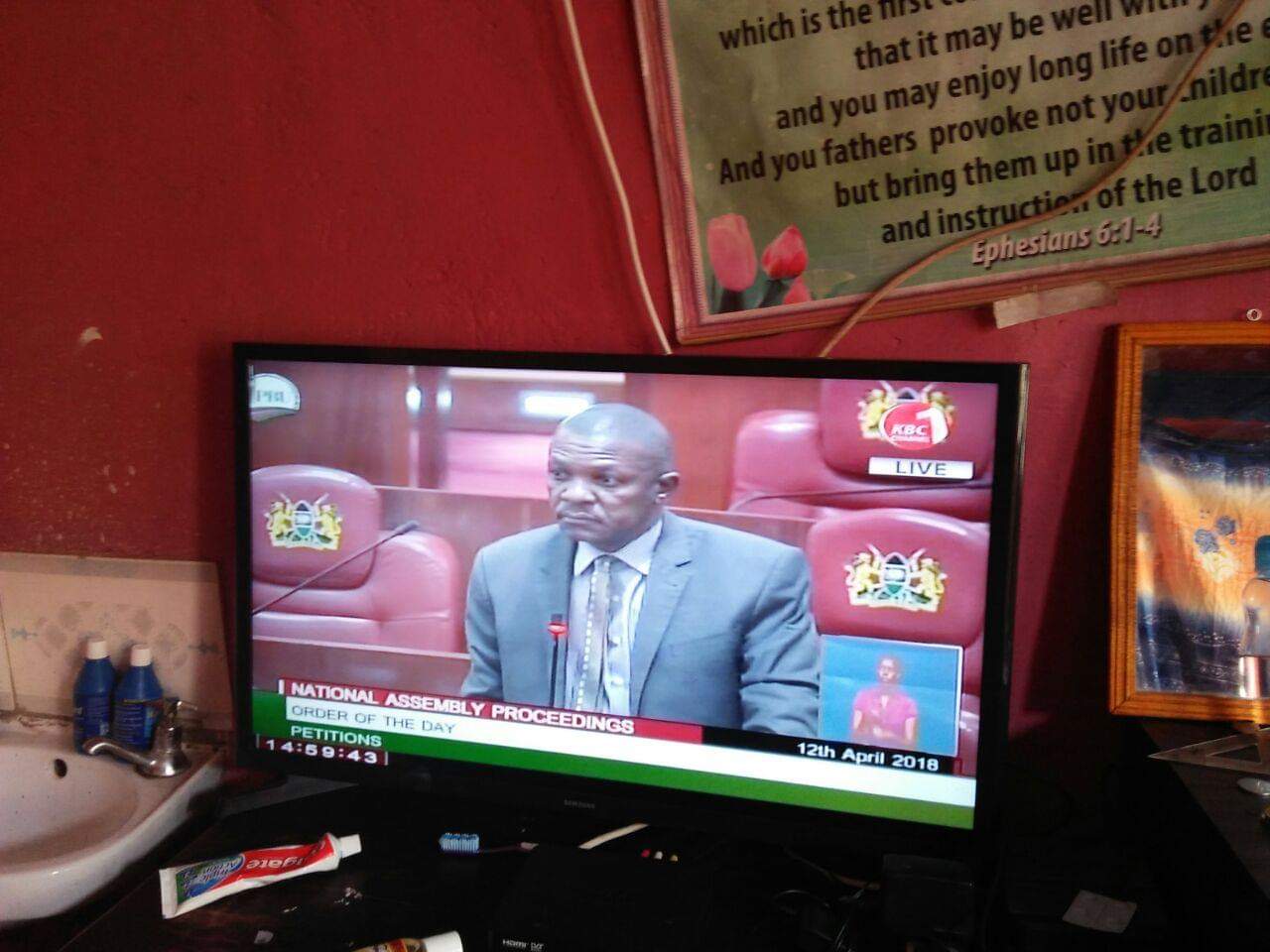
Days of government officials hiring their tribesmen and village mates into public institutions at the expense of more qualified candidates could be numbered.
That is if a proposed law in parliament requiring national and county government organs to provide a list detailing the county of birth and residence of employees sails through the house.
The list to root out tribal and regional imbalances will also contain the age and gender of the employees, further slamming brakes on tendencies that discriminate against marginalised groups.
“The purpose of this bill is to amend the Public Service (Services and Principles) Act to require all State organs in the national and county governments and state corporations to submit annual reports on details of the human resource in constitutional Commissions, independent offices and County Public Service Boards and County Assembly Service Board,” states the Public Service (Values and Principles (Amendment) bill, 2019.
“The reports should contain details outlining the total number of employees and highlighting their gender, age, county of birth and county of residence,” states the proposal sponsored by Mwatate MP, Andrew Mwadime.
Although the current law compels the tabling of a report ‘on the status of the promotion of the values and principles of public service,’ it is silent on the finer contents of such a document, making it an empty exercise that allows offending institutions get away with discrimination.
A 2016 report on ethnic comparison on constitutional commissions revealed that most jobs were held by people from one ethic community.
The report by the National Cohesion and Integration Commission (NCIC) also made reference to ‘forgotten’ ethnic communities, which it identified as Dasenach, Galla, Konso, What, Galjeel, Isaak, Leysan and Gosha. These communities were not represented in the commissions.
Another report on the composition of county public service concluded that employment in the service is not only inequitable but skewed towards the dominant groups in the county.
It determined that ‘if equitable distribution of public employment is enhanced, feelings of exclusion, marginalization and tension could be averted leading to a less tense society.”
Section 16 of the Act which the MP seeks to amend requires state organs to detail progress made in achieving values and principles of public service.
It also requires institutions to identify challenges and make recommendations necessary in the realization of these principles.
The lawmaker however wants this changed to include specific details that will help parliament identify state organs breaking the law and take necessary action.
“By receiving annual reports, legislatures can discharge the oversight role bestowed upon them as they will be able to analyze and query non-compliant state organs,” the bill states.
“This will facilitate the public service values and principles that require the public service to reflect Kenya’s diverse communities and afford adequate and equal opportunities for appointment of women and men, members of all ethnic groups and persons with disabilities pursuant to Article 232 of the Constitution,” it adds.

more recommended stories
 THE POWER OF KSH 50: WHY SIFUNA MUST KEEP ASKING KENYANS TO INVEST IN THEIR POLITICAL FUTURE
The Benjamin Franklin Effect, grassroots financing.
-
SIFUNA, LINDA MWANANCHI AND THE SEARCH FOR A NEW POLITICAL CHAPTER: IS KENYA WITNESSING THE EMERGENCE OF A DIFFERENT KIND OF LEADERSHIP?
KENYA POLITICS | 30 OCTOBER 2026.
 Where the Rain Started Beating President Ruto
By Nathaniel Noti, former Taita.
 THE QUESTIONS UHURU KENYATTA CANNOT ESCAPE
Former President Uhuru Kenyatta’s declaration.
 THE POLITICS OF DECEPTION, CONTRADICTION AND POLITICAL REINVENTION OF HON MWASHAKO
A couple of days ago,.
 WHEN ELECTIONS NEAR, THE SAINTS RETURN: HOW KENYA’S CHURCHES BECAME CAMPAIGN ARENAS
Every election cycle in Kenya.
 THE VERMIN OF TRIBALISM & POLITICS OF ENTITLEMENT
The word Murima has forced.
 UDA MUST RETHINK, REPLAN AND RE-EXECUTE ITS STRATEGY IN TAITA TAVETA
Over the past several months, the.
 WHEN GOOD POLICIES DON’T DELIVER: WHY IMPLEMENTATION MATTERS MORE THAN WE THINK
Strong policies create direction, but implementation.
 THE 186 MPs WHO ABSCONDED TO VOTE FOR THE FINANCE BILL 2026/27
Every five years, Kenyans troop.
 SOCIAL MEDIA: THE BATTLEGROUND THAT WILL DEFINE THE 2027 ELECTIONS
The digital revolution has fundamentally.
 CAMPAIGN FINANCING AND THE MYTH OF THE WEALTHY SAVIOUR: WHAT KIND OF LEADERSHIP DOES DEMOCRACY NEED?
As political campaigns gather momentum,.
 Ulimwengu wa Universalism na Kuibuka kwa Ufahamu Mpya wa Kisiasa Afrika: Jinsi Gen Z wa Kenya Wanavyobadilisha Mwelekeo wa Siasa za Afrika
Barani Afrika, dhana ya universality au.
 WHEN LEADERSHIP BECOMES AN INVESTMENT: WHY KENYA MUST RETHINK CAMPAIGN SPENDING
In an ideal democracy, leadership.
 THE SENATE NEEDS EXPERIENCE, NOT EXPERIMENTS: WHY ENG. JOHN MTUTA MRUTTU IS THE RIGHT CHOICE
In moments when a county stands.
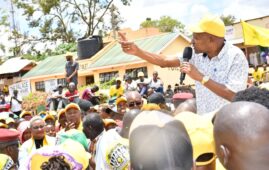 Mwadime Joins UDA: Strategic Realignment or Political Gamble in Taita Taveta?
The political landscape of Taita Taveta.
Leave a Comment