
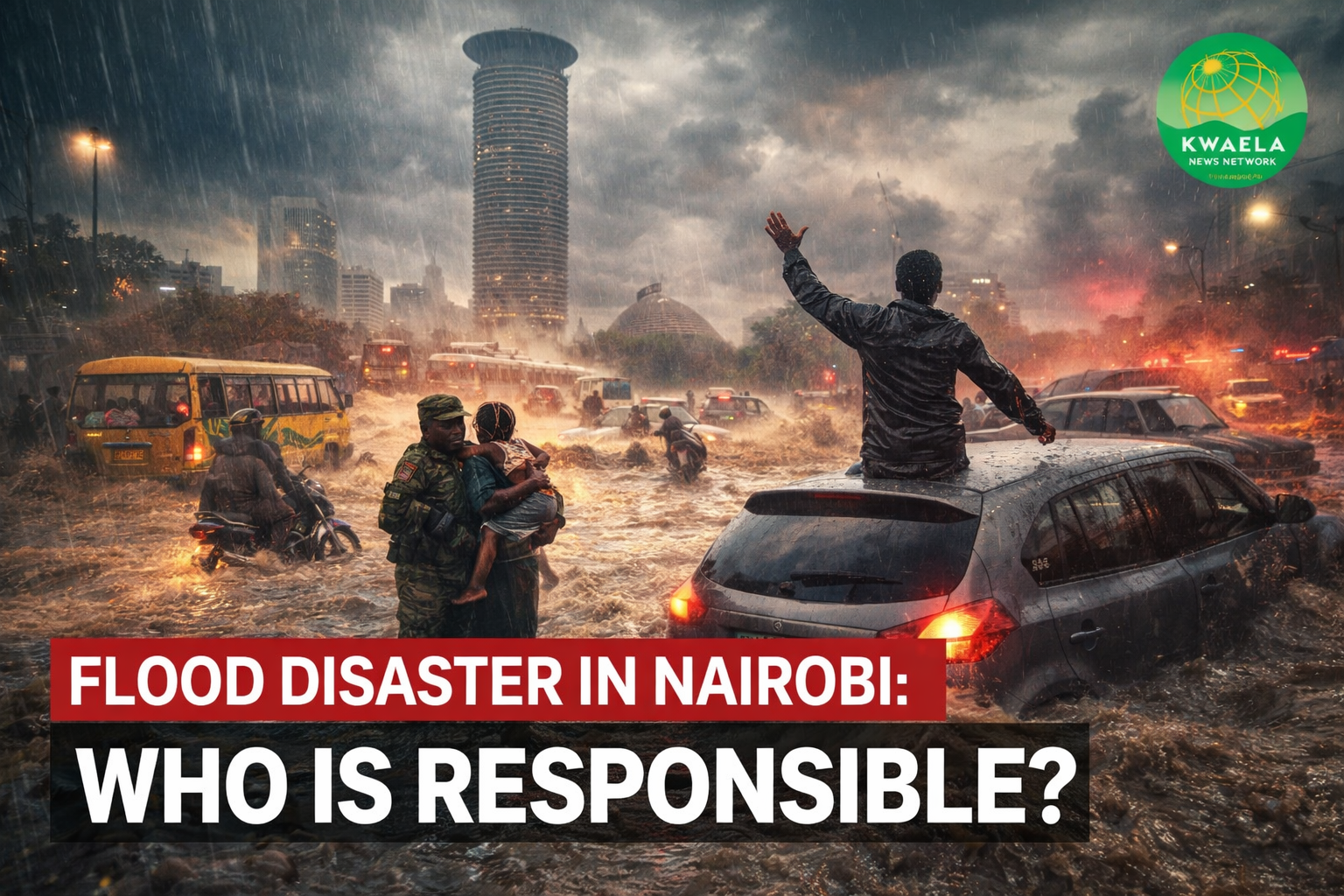
The devastating floods that struck Nairobi beginning Friday, March 6, 2026, have once again exposed the fragile state of the Kenyan capital’s infrastructure and the persistent failure of urban leadership to address long-standing structural problems. With at least 23 people confirmed dead, dozens of vehicles destroyed, and key transport arteries brought to a standstill, the tragedy has become a painful reminder that Nairobi remains dangerously unprepared for predictable seasonal rains.
Major roads including Uhuru Highway, Mombasa Road, and Thika Superhighway were rendered impassable as floodwaters overwhelmed the city’s drainage systems. Air operations at Jomo Kenyatta International Airport were also disrupted, with several flights reportedly diverted to Mombasa due to access challenges and severe weather.
Across the city, entire neighbourhoods were submerged. Residential areas such as South C, South B, Mukuru, and Mathare suffered extensive damage. In Mathare, lives were lost after a landslide triggered by saturated soils collapsed homes built along fragile riverbanks. Over 71 vehicles were either swept away, submerged, or left stranded as floodwaters turned streets into raging rivers.
President William Ruto has since ordered the deployment of the Kenya Defence Forces to assist rescue operations alongside the Kenya Red Cross Society and city emergency teams. While these interventions are necessary in the face of immediate danger, they also highlight a troubling pattern: the national government repeatedly stepping in to respond to disasters that local urban planning and governance should have prevented or mitigated.
A Disaster Years in the Making
Experts and residents alike point to one glaring cause behind the catastrophe: Nairobi’s failing drainage and sewage infrastructure. Large sections of the city rely on outdated drainage systems that were never designed to serve a metropolis of more than four million people.
Even where drainage channels exist, many are blocked with plastic waste, construction debris, and illegally dumped garbage, preventing rainwater from flowing into the sewer system. Instead, the water collects on roads and residential areas, transforming ordinary rainfall into life-threatening floods.
But the drainage issue is only part of a broader governance problem.
Uncontrolled Urbanization and Riparian Encroachment
Over the years, Nairobi has experienced explosive and poorly regulated urban growth. Concrete surfaces, highways, and commercial developments now dominate the cityscape, drastically reducing the amount of land where rainwater can naturally soak into the soil.
Equally troubling is the illegal development along riverbanks and wetlands, particularly along the Nairobi River and its tributaries. Structures erected in riparian zones block natural water channels, forcing rivers to overflow during heavy rainfall.
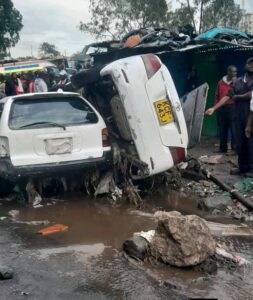
The result is predictable: when intense rains arrive, the city floods.
These are not new warnings. Urban planners, environmental experts, and civil society groups have raised alarms for years, urging authorities to restore riparian land, modernize drainage systems, and enforce development regulations.
Yet meaningful action has often been slow, inconsistent, or entirely absent.
Climate Change Is Intensifying the Risk
The Kenya Meteorological Department has warned that heavy rainfall may continue in the coming days, and scientists say such extreme weather events are becoming more frequent due to climate change.
However, while climate change may intensify rainfall, it does not excuse governance failure. Cities across the world face similar climate pressures, yet effective planning and resilient infrastructure can significantly reduce the human cost of such events.
Leadership Must Move Beyond Promises
The unfolding tragedy now places renewed scrutiny on the leadership of Johnson Sakaja, the Governor of Nairobi City County.

Nairobi residents deserve more than emergency responses after disaster strikes. They deserve long-term solutions that prevent these tragedies from repeating every rainy season.
Governor Sakaja must urgently:
- Launch a comprehensive overhaul of the city’s drainage and sewer systems.
- Enforce strict action against illegal dumping that clogs drainage channels.
- Remove structures illegally built on riparian land.
- Invest in modern stormwater management systems capable of handling extreme rainfall.
- Strengthen urban planning enforcement to prevent future encroachment on wetlands and waterways.
Without decisive action, Nairobi risks remaining trapped in a cycle where predictable rains repeatedly turn into national disasters.
A Wake-Up Call for the Capital
The deaths of 23 Kenyans and the widespread destruction witnessed this week must serve as a turning point for Nairobi’s governance.
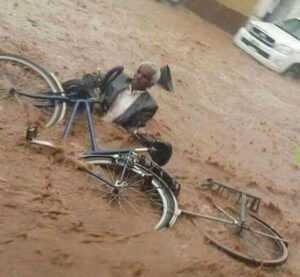
Floods of this scale should not continue to claim lives in the country’s capital city in the 21st century. The crisis has exposed systemic weaknesses in planning, infrastructure, and enforcement that can no longer be ignored.
The people of Nairobi are watching closely.
And the message is clear: Governor Sakaja must get down to work and ensure that such preventable tragedies do not happen again.

more recommended stories
 KEEP SNAKES OUT: PROVEN TIPS TO PROTECT YOUR HOME IN TROPICAL AREAS
Living in tropical regions comes with.
 EJF Condemns Coast Water Works Over Violations of Taita Taveta Residents’ Water Rights
The Economic Justice Forum (EJF) strongly.
 TSAVO NATIONAL PARK CRISIS: THE JUDICIAL FAILURE PUTTING OUR LAND AT RISK
1. Overview Tsavo National Park—one.
 TAITA TAVETA’S HUMAN-WILDLIFE CRISIS: A LONG-IGNORED TRAGEDY
For generations, residents of Taita Taveta.
 GARBAGE COLLECTION IN VOI SUB COUNTY; A REFLECTION OF ADMINISTRATIVE FAILURE
Truth be told, Voi, the.
 UZEMBE WA GAVANA MWADIME NA BODI ZAKE ZA MANISPAA
Licha za manispaa ya Taveta.
 ICONIC STONE BROUGHT DOWN
By Innocent Kirigha It’s saddening to.
 TAITA HILLS ARE ON FIRE; LETS STOP THIS DISASTER!
The hills of Taita are on.
 IN NGANGAO FOREST, KENYA, ENVIRONMENTAL PROTECTION ON A RIDGE LINE
Failing to obtain the support of.
 TWO KEY TAITA TAVETA DAMS DRY UP, THREATENING WELLBEING OF HUMANS, WILDLIFE
By Lucy Mkanyika Asworld leaders gather.
 WATER SOURCES DRY UP AS DROUGHT RAVAGES TAITA TAVETA
By Solomon Muingi The prolonged drought.
 LIVESTOCK DEATHS RAISE IN DROUGHT HIT TAITA TAVETA
By Arnold Linga Masila In fair.
 MINERS SUFFER AS KSH 50 M GEMOLOGY CENTRE LIES IDLE
In the gemstone-mining fields of Taita.
 CONCERN OVER ALGAE INFESTATION IN KISHENYI DAM
Kishenyi Dam in Wundanyi has been.
 IT’S NOW MAN VS BEAST AS THOUSFACE STARVATIONANDS
It’s mid-morning at Nkaroni village in.
 PAIN AND TEARS AS ELEPHANTS WREAK HAVOC IN TAITA TAVETA county
Amanda Ndau has been engaging in.
Leave a Comment