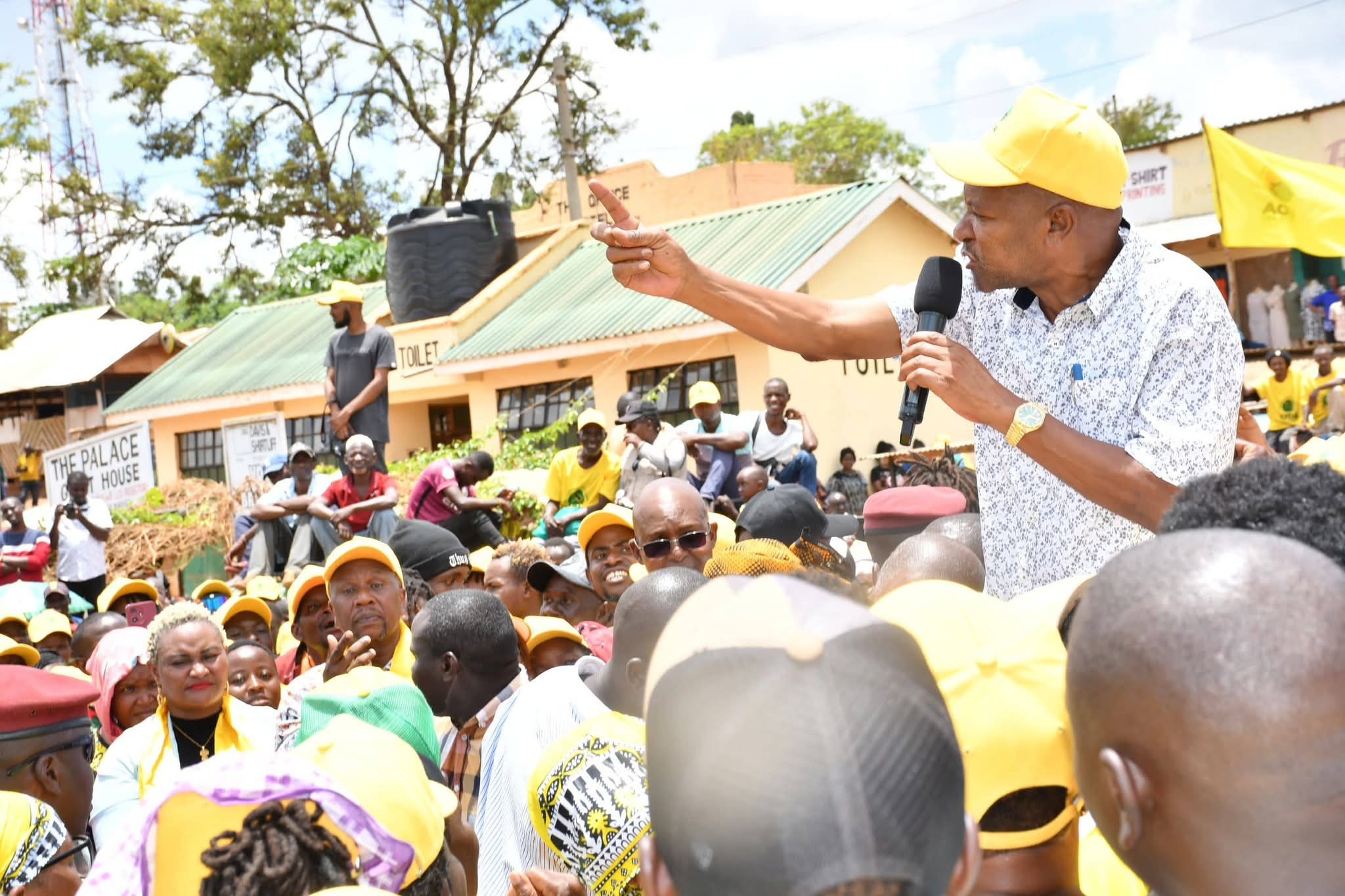
Wakujaa joins UDA PARTY uninvited!

The political landscape of Taita Taveta County shifted dramatically this week when Governor Andrew Mwadime publicly aligned himself with President William Ruto and the ruling United Democratic Alliance (UDA).
Elected in 2022 as an independent candidate on a platform of local autonomy and distance from dominant party politics, Mwadime’s decision to don UDA symbols at a public rally signals more than symbolic cooperation. It marks a full political recalibration.
The move raises urgent questions — not just about his personal trajectory, but about the direction of party politics in the county ahead of the 2027 elections.
One of the immediate uncertainties is whether Mwadime has carried his political base with him or acted independently.
While sections of his supporters appear willing to follow his lead in the name of “development cooperation,” others had previously been outspoken critics of the national administration. For them, the shift creates ideological tension.
If a large segment of his base pivots overnight without clear policy justification, it suggests personality-driven politics remains dominant.
If, however, supporters demand clarity on water projects, stalled infrastructure and budget transparency before embracing UDA, then civic independence remains intact.
At present, the alignment appears leader-led, with grassroots sentiment still fluid and divided.
Reports indicate that Governor Mwadime is seeking a direct UDA gubernatorial ticket for 2027 as part of his political alignment.
That demand, if formally tabled, places UDA in a delicate position.
The party already has:
Established grassroots mobilizers in the county
Aspirants preparing for 2027 under the UDA banner
Internal structures that traditionally rely on party primaries
Granting Mwadime a direct ticket could:
Trigger resentment among long-standing UDA loyalists
Undermine internal democracy
Spark defections from sidelined aspirants
Denying him, however, could strain the newly formed alliance and weaken the governor’s commitment to the party.
UDA must now balance short-term political consolidation with long-term party credibility.
If the party bypasses competitive primaries to accommodate Mwadime, potential gubernatorial aspirants within UDA face three options:
Accept and step aside
Challenge internally
Defect to rival formations
Each scenario risks fracturing party unity in the county.
Internal democracy will be closely scrutinized. A perception that tickets are negotiated through elite bargaining rather than grassroots competition could erode trust — particularly in a county where voters have previously shown willingness to elect independent candidates.
UDA’s strategy in Taita Taveta may be viewed in two ways.
Supporters argue the party is building inclusive coalitions to strengthen national–county coordination. Bringing an incumbent governor into the fold could streamline project implementation and reduce political friction.
Critics, however, see a different pattern:
Intensified development tours
Revival of previously stalled projects
Public political symbolism during official functions
High-profile realignments ahead of 2027
To them, the optics resemble calculated consolidation rather than organic growth.
The question many residents are asking is whether the party is clarifying leadership direction — or complicating it by merging independent mandates with partisan ambitions.
For Governor Mwadime, the alignment offers proximity to power and potential electoral security — if the promised ticket materializes.
For UDA, it expands influence but risks alienating loyal aspirants.
For voters, it presents a civic test: will future support be anchored in policy performance or political choreography?
Ultimately, the durability of this alliance will depend on delivery — particularly on long-standing priorities such as water security, road completion, and transparent use of public funds.
Political symbolism may energize rallies.
But in Taita Taveta, voters have previously demonstrated independence of thought.
Whether this latest realignment strengthens governance or merely reshuffles political colours will become clear not in declarations — but in outcomes.

 THE POWER OF KSH 50: WHY SIFUNA MUST KEEP ASKING KENYANS TO INVEST IN THEIR POLITICAL FUTURE
The Benjamin Franklin Effect, grassroots financing.
SIFUNA, LINDA MWANANCHI AND THE SEARCH FOR A NEW POLITICAL CHAPTER: IS KENYA WITNESSING THE EMERGENCE OF A DIFFERENT KIND OF LEADERSHIP?KENYA POLITICS | 30 OCTOBER 2026.
 Where the Rain Started Beating President Ruto
By Nathaniel Noti, former Taita.
 THE QUESTIONS UHURU KENYATTA CANNOT ESCAPE
Former President Uhuru Kenyatta’s declaration.
 THE POLITICS OF DECEPTION, CONTRADICTION AND POLITICAL REINVENTION OF HON MWASHAKO
A couple of days ago,.
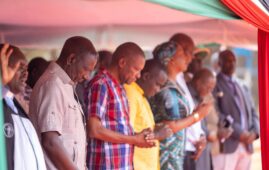 WHEN ELECTIONS NEAR, THE SAINTS RETURN: HOW KENYA’S CHURCHES BECAME CAMPAIGN ARENAS
Every election cycle in Kenya.
 THE VERMIN OF TRIBALISM & POLITICS OF ENTITLEMENT
The word Murima has forced.
 UDA MUST RETHINK, REPLAN AND RE-EXECUTE ITS STRATEGY IN TAITA TAVETA
Over the past several months, the.
 WHEN GOOD POLICIES DON’T DELIVER: WHY IMPLEMENTATION MATTERS MORE THAN WE THINK
Strong policies create direction, but implementation.
 THE 186 MPs WHO ABSCONDED TO VOTE FOR THE FINANCE BILL 2026/27
Every five years, Kenyans troop.
 SOCIAL MEDIA: THE BATTLEGROUND THAT WILL DEFINE THE 2027 ELECTIONS
The digital revolution has fundamentally.
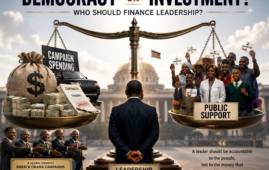 CAMPAIGN FINANCING AND THE MYTH OF THE WEALTHY SAVIOUR: WHAT KIND OF LEADERSHIP DOES DEMOCRACY NEED?
As political campaigns gather momentum,.
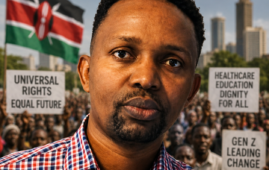 Ulimwengu wa Universalism na Kuibuka kwa Ufahamu Mpya wa Kisiasa Afrika: Jinsi Gen Z wa Kenya Wanavyobadilisha Mwelekeo wa Siasa za Afrika
Barani Afrika, dhana ya universality au.
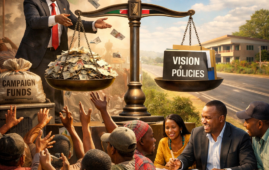 WHEN LEADERSHIP BECOMES AN INVESTMENT: WHY KENYA MUST RETHINK CAMPAIGN SPENDING
In an ideal democracy, leadership.
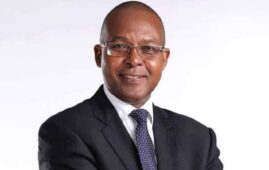 THE SENATE NEEDS EXPERIENCE, NOT EXPERIMENTS: WHY ENG. JOHN MTUTA MRUTTU IS THE RIGHT CHOICE
In moments when a county stands.
 ICHUNG’WAH’S CLAIMS DEEPEN THE CRISIS OF CREDIBILITY
Equally disturbing are remarks by Kimani.
Leave a Comment