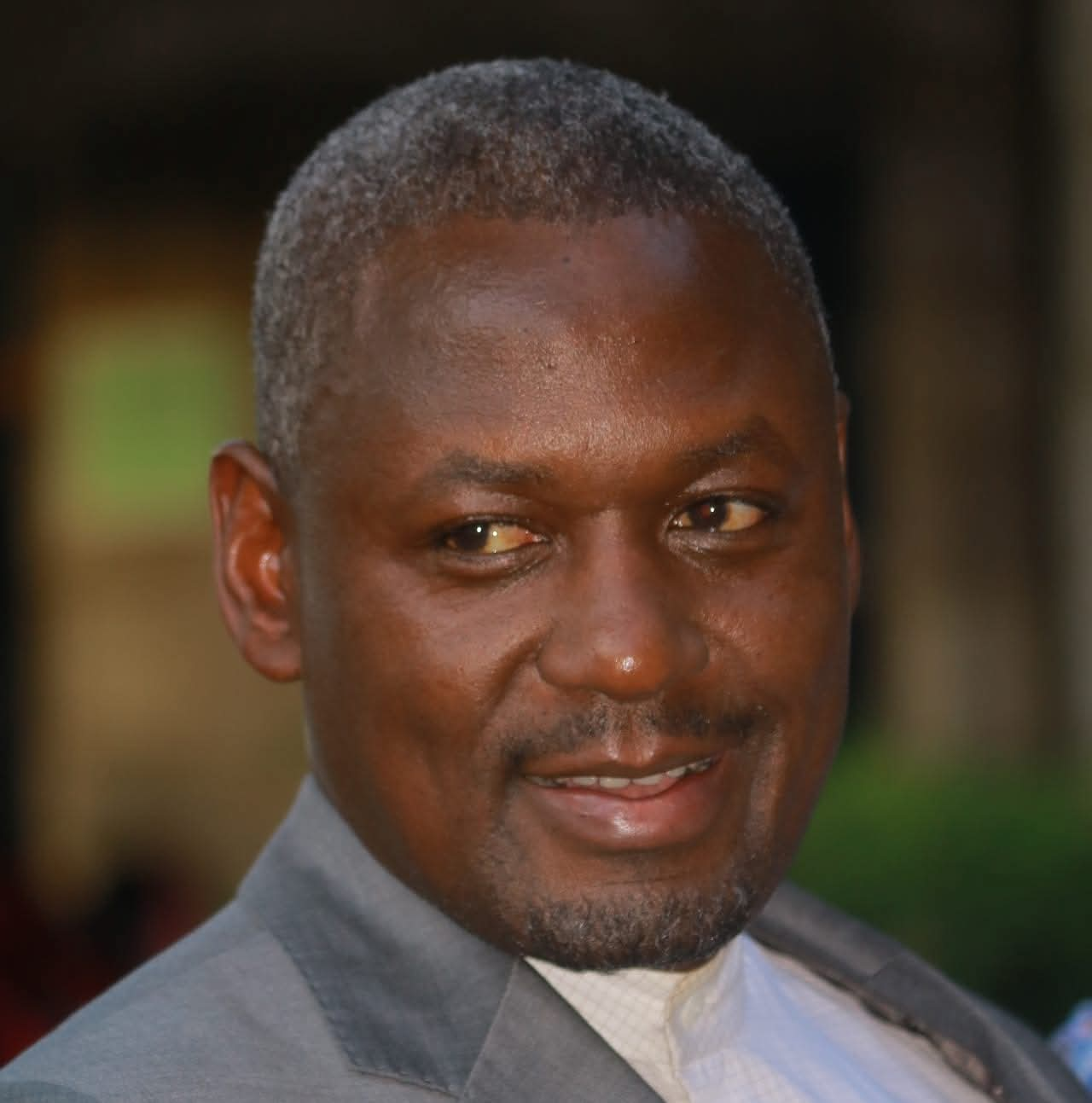
Senior Counsel Otiende Amollo

When the National Assembly logged into the virtual Court of Appeal session —armed with a battery of lawyers led by Senior Counsel Otiende Amollo — it became painfully obvious what this fight is really about. It is not about constitutional clarity. It is not about service delivery. It is not even about decentralisation.
It is about power. Money. Control.
And Parliament is fighting to its last breath to keep all three.
Why Are Lawmakers So Desperate to Remain Project Managers?
Kenya’s Constitution could not be clearer: Members of Parliament represent the people, make laws, and provide oversight. Full stop. Nowhere does it say MPs should be running construction sites, supervising contractors, or distributing development resources.
Yet Parliament insists on clinging to the NG-CDF like a life-support machine.
Why?
Because NG-CDF gives MPs a dual identity — both player and referee.
They influence projects, shape tenders, and direct funds… and then turn around to “oversight” the same issues they are entangled in.
This is not decentralisation.
This is conflict of interest crafted into policy.
The Amollo Legal Team: Brilliant Lawyers in a Bad Fight
The legal team led by Hon. Otiende Amollo is made up of some of Kenya’s sharpest legal minds. But brilliance does not sanitize a bad cause.
Their argument—packaged with constitutional jargon and heavy citations—tries to spin the Fund as a simple “decentralisation mechanism.” Yet the truth remains obvious: MPs want to keep implementing projects because it benefits them directly.
Otiende Amollo knows the doctrine of separation of powers as well as any Kenyan lawyer alive. His own academic work, past litigation, and public statements have often championed transparency and accountability.
Which is what makes this fight so disappointing.
This legal defence is not protecting the Constitution;
It is protecting Parliament’s political appetite.
The Real Question Parliament Can’t Answer
If MPs control development funds…
and MPs influence projects…
and MPs oversee their own allocations…
Who is left to oversight them?
No legal brilliance — not even from Amollo’s team—can answer that question honestly.
NG-CDF Is a Political Tool, Not a Governance Necessity
Over the years, NG-CDF has morphed into a political trophy cabinet:
The structure is designed to produce political capital, not transparent development.
This, right here, is why Parliament is united—across parties, tribes, ideologies—to defend it. NG-CDF is the one thing they all agree on because it feeds each of their political machines.
Kenya Deserves Better Than a Parliament Obsessed With Projects
Parliament should be fighting for:
Instead, they are fighting for a fund that allows them to act as mini-executives in their constituencies, unchecked and unmonitored.
The Court’s February Ruling Will Be Historic
When the Court of Appeal delivers its judgement on February 6, 2026, it will not merely be ruling on the future of NG-CDF. It will be ruling on the future of accountability in Kenya’s governance architecture.
If Parliament wins, MPs will continue enjoying a hybrid role the Constitution never intended.
If Parliament loses, Kenya moves one step closer to a clean separation of roles and true oversight.
Either way, the country must be honest with itself:
NG-CDF is not about development. It is about power.
And Parliament—supported by an unusually motivated team of high-powered lawyers—does not want to lose it.

 THE POWER OF KSH 50: WHY SIFUNA MUST KEEP ASKING KENYANS TO INVEST IN THEIR POLITICAL FUTURE
The Benjamin Franklin Effect, grassroots financing.
SIFUNA, LINDA MWANANCHI AND THE SEARCH FOR A NEW POLITICAL CHAPTER: IS KENYA WITNESSING THE EMERGENCE OF A DIFFERENT KIND OF LEADERSHIP?KENYA POLITICS | 30 OCTOBER 2026.
 Where the Rain Started Beating President Ruto
By Nathaniel Noti, former Taita.
 THE QUESTIONS UHURU KENYATTA CANNOT ESCAPE
Former President Uhuru Kenyatta’s declaration.
 THE POLITICS OF DECEPTION, CONTRADICTION AND POLITICAL REINVENTION OF HON MWASHAKO
A couple of days ago,.
 WHEN ELECTIONS NEAR, THE SAINTS RETURN: HOW KENYA’S CHURCHES BECAME CAMPAIGN ARENAS
Every election cycle in Kenya.
 THE VERMIN OF TRIBALISM & POLITICS OF ENTITLEMENT
The word Murima has forced.
 UDA MUST RETHINK, REPLAN AND RE-EXECUTE ITS STRATEGY IN TAITA TAVETA
Over the past several months, the.
 WHEN GOOD POLICIES DON’T DELIVER: WHY IMPLEMENTATION MATTERS MORE THAN WE THINK
Strong policies create direction, but implementation.
 THE 186 MPs WHO ABSCONDED TO VOTE FOR THE FINANCE BILL 2026/27
Every five years, Kenyans troop.
 SOCIAL MEDIA: THE BATTLEGROUND THAT WILL DEFINE THE 2027 ELECTIONS
The digital revolution has fundamentally.
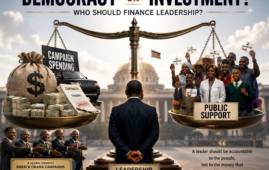 CAMPAIGN FINANCING AND THE MYTH OF THE WEALTHY SAVIOUR: WHAT KIND OF LEADERSHIP DOES DEMOCRACY NEED?
As political campaigns gather momentum,.
 Ulimwengu wa Universalism na Kuibuka kwa Ufahamu Mpya wa Kisiasa Afrika: Jinsi Gen Z wa Kenya Wanavyobadilisha Mwelekeo wa Siasa za Afrika
Barani Afrika, dhana ya universality au.
 WHEN LEADERSHIP BECOMES AN INVESTMENT: WHY KENYA MUST RETHINK CAMPAIGN SPENDING
In an ideal democracy, leadership.
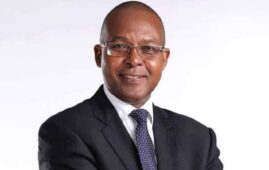 THE SENATE NEEDS EXPERIENCE, NOT EXPERIMENTS: WHY ENG. JOHN MTUTA MRUTTU IS THE RIGHT CHOICE
In moments when a county stands.
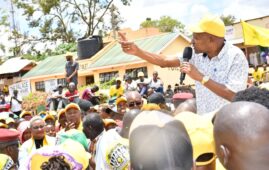 Mwadime Joins UDA: Strategic Realignment or Political Gamble in Taita Taveta?
The political landscape of Taita Taveta.
Leave a Comment