
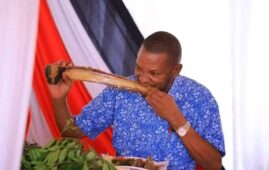
Kisheshe Ranch Secretary General - Mr Wilfred Mwalimo addressing the media.

A High-Stakes Investigation Into Taita Taveta’s Sh4 Million Ghost Payment
When officials of Kishushe Ranching & Cooperative Society casually announced that only Sh2.5 million hit their bank account—out of a supposed Sh4 million county allocation—they triggered an earthquake that the county government cannot quietly bury.
They didn’t just open a debate.
They exposed a possible theft of public funds right inside County Hall.
Because the question is no longer polite:
WHO STOLE THE SH1.5 MILLION?
And even more damning —
WHY WAS ANY PUBLIC MONEY USED IN A PRIVATE COOPERATIVE’S FACTION FIGHTS?
This is not “miscommunication.”
It is not “procedural error.”
This is the anatomy of a possible county-sanctioned shadow transaction.
1. The Sh4 Million That Appeared from Thin Air
No document — not a single one—shows that Taita Taveta County ever budgeted or approved Sh4 million for Kishushe Ranch.
Nothing in:
So where did the Sh4 million come from?
Was it:
Under the PFM Act, every shilling must trace to a lawful budget line.
This one doesn’t.
That is the first red flag of corruption.
2. Public Money Used in a Private Fight — A Clear Abuse of Office
Let’s be blunt:
A cooperative society’s internal wrangles are NOT a public function.
Not today, not ever.
Kishushe Ranching & Cooperative Society is a private entity, owned by its members, regulated by the Cooperative Societies Act.
County governments have zero authority to:
This is a misuse of public funds under:
So why did county officials dip into taxpayer money to rescue a private society?
Whose political interests were they protecting?
Whose faction were they funding?
Who stood to benefit?
3. The County Officers Who Should Be Worried Right Now
Releasing Sh4 million requires multiple high-level approvals.
Meaning this wasn’t a mistake—it was a chain of decisions made by powerful people.
The following offices must have been involved:
If any of these steps was skipped, forged, or manipulated, then this is no longer an irregularity —
It becomes criminal liability.
And the people involved could face:
4. The Sh1.5 Million That Vanished: An Untidy Fingerprint of Theft
Wilfred Mwalimo’s statement was accidental dynamite.
Because it revealed a truth the county was hoping would never surface:
The money didn’t “go missing”—it was intercepted.
The County Government allegedly released Sh4 million.
The cooperative only received Sh2.5 million.
This is not an accounting error.
This is a siphoning operation.
Meaning:
The key documents the county must now produce:
If any of these documents are missing or doctored, then officials are caught red-handed.
5. The Remaining Sh2.5 Million Is Also Illegal
Let’s not forget:
Even the Sh2.5 million that reached the cooperative was illegally spent public money.
That is an additional offence.
Meaning:
This transfer can be classified as:
Misappropriation of public funds
or
Unauthorized expenditure under PFM Act
And the implicated officers can face:
THE FINAL QUESTION THAT WILL NOT GO AWAY: WHO AUTHORIZED THIS HEIST?
This investigation comes down to one explosive demand:
Show us the signatures.
Show us the:
If these documents exist, officials must explain why they spent public money on private matters.
If they don’t exist, then someone committed a direct theft of public funds.
Either way — This scandal is not going away any soon.
CONCLUSION: Taita Taveta’s Sh4 Million Ghost Payment Is a Crime Scene
The Sh4 million mystery is not financial confusion.
It is a crime scene disguised as “support to a cooperative.”
The county owes residents answers—not speeches, not excuses, not press statements:
Where is the Sh1.5 million?
Why was any money released at all?
Who signed the documents?
Where is the law that allowed it?
Until the county produces:
…the Sh4 million remains a suspected theft of public funds, committed under the false cover of “conflict resolution.”
Taita Taveta residents must demand the truth.
Because someone stole this money—
And they are inside the county government.

 THE ERA OF POLITICAL EUPHORIA IN TAITA TAVETA COUNTY IS OVER
The days when political party.
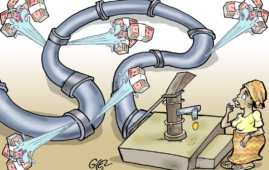 TAVEVO: THE GRAND WATER SCAM DRAINING TAITA TAVETA COUNTY DRY?
Before demanding more water from.
 USAWA NI SAWA: A PRINCIPLE THAT MUST TRANSCEND NATIONAL AND COUNTY POLITICS
Picture a grand tapestry, woven with.
 KAUNTI YA TAITA TAVETA ITAKWISHA KAMA HUU UONGOZI UTAENDELEA BAADA YA UCHAGUZI WA 2027
Taita Taveta imebarikiwa kwa utajiri wa.
 THE CROSSROADS OF TAITA-TAVETA: CHOOSING THE NEXT PATH
For decades, the conversation surrounding leadership.
 KSh600 FOR A WHOLE DAY: HOW TAITA TAVETA’S “BODA BODA CROWD” MAY HAVE TURNED RUTO’S TOUR INTO A POLITICAL PHOTO SHOOT
There is a rather amusing —.
 2027 BEGINS EARLY: THE MWANGOLO-BWIRE RIVALRY EXPOSES A GENERATIONAL DIVIDE
The political war between Principal Secretary.
 THE ODM-UDA COALITION: A MARRIAGE OF CONVENIENCE, NOT CONVICTION
When the Orange Democratic Movement and.
 LEGAL OPINION EXPOSES IRREGULAR COUNTY APPOINTMENT: QUESTIONS MOUNT FOR GOVERNOR WAKUJAA’S ADMINISTRATION
Fresh questions are emerging over governance.
 GOVERNORS NEED STRONG ASSEMBLIES, NOT CHEERLEADERS
My elder sister, Hon. Dorcas.
 BEI YA MAFUTA, UBORA WA BARABARA NA GHARAMA HALISI YA KUENDESHA UCHUMI WA TAITA TAVETA
MAONI Malalamiko ya wananchi kuhusu.
 THE ART OF POLITICAL PARASITISM
There comes a point when.
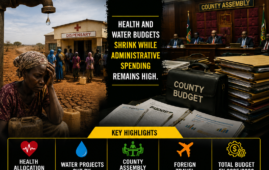 Professional Analysis of the Taita Taveta FY 2025/2026 Supplementary II Budget
Executive Summary The County Government of.
 WHY MOMBASA DESERVES MZIMA WATER OVER COSTLY DESALINATION EXPERIMENTS
As Mombasa continues to grapple with.
 UNDERSTANDING THE REALITY: WHY SALARY DELAYS ARE NOT GOVERNOR WAKUJAA’S FAILURE
There has been a lot of.
 LET’S SET THE RECORD STRAIGHT ON TAITA TAVETA SALARIES & GOVERNOR WAKUJAA
There has been a wave of.
Leave a Comment