

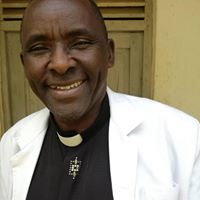
By Pastor Cassian Ngotho Mwachanya
The purpose of this article is not to attack any denomination but to seek a deeper understanding of certain doctrines that have shaped various Christian traditions. As a Pentecostal pastor today, my journey in faith began in the Roman Catholic Church, where I spent much of my childhood serving as an altar boy. My deepest desire was to become a Roman Catholic priest, believing that the seminary was the only gateway to that calling.
After excelling in both my Certificate of Primary Education (CPE) and seminary entrance exams, I was invited for an interview conducted by the seminary principal at my parish. I was asked only one question: “Cassian, why do you want to join the seminary?” My response was simple and sincere: “I want to become a priest.” However, my small body frame at the time led to the principal’s conclusion that I was too young to make such a decision. That moment closed the door to my dream, but it did not extinguish my call to ministry. Looking back, I see the hand of God in predestination, as Romans 8:30 states, “And those He predestined, He also called; those He called, He also justified; those He justified, He also glorified.” Though I now serve in the same capacity, it is within a different denomination.
This leads me to reflect on some doctrinal matters, including the concept of purgatory, praying for the dead, the authority of Scripture, salvation, confession of sins, and biblical interpretation.
The Bible was written over a span of 1,500 years by approximately 40 authors under divine inspiration (2 Timothy 3:16). The canon of Scripture refers to the officially recognized books as divinely inspired, while apocryphal books—such as the Maccabees—are not universally accepted. The doctrine of purgatory, for instance, originates from these apocryphal texts, particularly 2 Maccabees 12:44-46, which speaks of prayers for the dead. However, the Bible affirms that after death comes judgment (Hebrews 9:27), leaving no biblical basis for purification after death. If purgatory were a reality, what would be the need for hell (Luke 16:23; Revelation 20:14-15)?
Similarly, the practice of praying to the dead, including saints such as Mary and Joseph, is a subject of theological debate. Scripture affirms that God is “not the God of the dead, but of the living” (Luke 20:38), and that communication with the dead is forbidden (Deuteronomy 18:10-12). Furthermore, 1 Timothy 2:5 states, “For there is one God and one mediator between God and mankind, the man Christ Jesus.” This challenges the notion that saints or priests can serve as intermediaries in prayer.
Confession of sins is another point of discussion. Catholics believe in confessing to a priest based on John 20:22-23, where Jesus told His disciples: “Receive the Holy Spirit. If you forgive anyone’s sins, their sins are forgiven; if you do not forgive them, they are not forgiven.” This is seen as Christ granting the apostles—and their successors—the authority to forgive sins. However, the broader biblical teaching suggests that confession should be made directly to God. 1 John 1:9 states, “If we confess our sins, He is faithful and just to forgive us our sins and to cleanse us from all unrighteousness.” Furthermore, salvation is personal and comes by grace through faith in Jesus Christ (Ephesians 2:8-9), not through human mediation.
This also raises questions regarding children who die before they can confess their sins. Romans 10:8-9 states, “If you declare with your mouth, ‘Jesus is Lord,’ and believe in your heart that God raised Him from the dead, you will be saved.” Since salvation requires personal faith, how does this apply to infants? While the Bible does not explicitly state their fate, Jesus assures in Matthew 19:14 that “the kingdom of heaven belongs to such as these.” King David also expresses hope that he will reunite with his deceased infant (2 Samuel 12:23). We trust in God’s justice and mercy in such matters.
Baptism is another doctrinal area with differences in practice. The Greek word baptizo means to immerse, and examples like Jesus’ baptism (Matthew 3:16) suggest full immersion. However, infant baptism in some traditions is based on the idea of original sin. While the Bible teaches that all have sinned (Romans 3:23), it also emphasizes conscious faith for salvation.
Sabbath observance differs among denominations. Seventh-day Adventists hold that worship must be on Saturday (Exodus 20:8-11), while many Christians worship on Sunday, following the pattern of early believers (Acts 20:7; 1 Corinthians 16:2). The deeper question is whether the Sabbath remains a legal requirement or whether Christ is our ultimate rest (Colossians 2:16-17).
Biblical interpretation requires proper hermeneutics (the science of interpretation) and exegesis (drawing meaning from the text). For example, Deuteronomy 22:5 prohibits cross-dressing, but context matters. Similarly, 1 Corinthians 11:6 discusses head coverings, a practice tied to the cultural context of first-century Corinth. The principle behind it—modesty and respect—remains relevant, but its application may differ across cultures and generations.
Ultimately, sola scriptura (Scripture alone) stands as a guiding principle for many Christians. The Bible remains the final authority, though interpretations vary. This is where the distinction between polemics (challenging opposing doctrines) and apologetics (defending the faith) comes in. While discussions on doctrine are important, God is the ultimate defender of His truth.
John 8:32 states, “You shall know the truth, and the truth shall set you free.” As I seek to understand, I welcome constructive discussion based on Scripture. The Bereans in Acts 17:11 were commended for examining the Scriptures daily to verify teachings. Perhaps I am still in my time of ignorance (Acts 17:30), but I remain open to learning, just as I encourage others to do.
Choices have eternal consequences. Jesus Christ offers salvation, and rejecting Him leads to eternal separation from God (John 3:16-18). The Bible is clear in Matthew 25:46 that the righteous will have eternal life, while the wicked will face eternal punishment. We must choose wisely, for “there is no condemnation for those who are in Christ Jesus” (Romans 8:1).
Let this be a forum for discussion, not division. Shalom.
more recommended stories
 SHOULD CATHOLIC PRIESTS BE ALLOWED TO MARRY?
The Sandro Ferretto case has.
 TAITA TAVETA INA MIRADI, LAKINI HAINA MAJI
Wapo wanaoamini kuwa miradi inayoendelea Taita.
 OFFICIAL REBUTTAL AND CONDEMNATION OF THE APPROVAL OF MR. ALFRED MLOLWA AS COUNTY EXECUTIVE COMMITTEE MEMBER FOR HEALTH SERVICES
Statement by Concerned Citizens of.
 DOES TAITA TAVETA PRIORITIZE PROFESSIONAL EXPERTISE IN HEALTH LEADERSHIP?
A quick comparison of leadership in.
 I Was Fluent in Disappearing
I was a girl who spoke Swahili and Luhya,.
 GENDER-BASED VIOLENCE IN TAITA TAVETA COUNTY: A GROWING CRISIS
Gender-based violence (GBV) in Taita Taveta.
 WHERE THE CHURCH IS GETTING IT WRONG IN DEALING WITH POLITICIANS
By Pastor Cassian Ngotho Mwachanya There.
 MBELE URGED TO RELEASE MASTER PLAN FOR WUNDANYI KMTC
Athanas Mbele Challenged to Release Master.
 OUR COMMUNITY MUST TALK: GROWING SUICIDE CASES RAISE ALARM
By Christopher Mwachia, Ward Administrator.
 BURIALS IN TAITA TAVETA HAVE BEEN REDUCED TO POLITICAL SLAUGHTERHOUSES.
It is both heartbreaking and infuriating.
 MAJOR HEALTH BOOST PROPOSED FOR VOI, EVEN AS TRUST DEFICIT CHALLENGES LOOM
The Taita Taveta County Government, under.
 DRUGS, ILLICIT BREWS, AND THE DEADLY GAMES THE STATE IS PLAYING WITH KENYAN LIVES
By Kwaela News Network | Special.
 CALLS GROW FOR TRADITIONAL BURIAL RITES FOLLOWING DEATH OF CYRUS JIRONGO
Sections of the Luhya community have.
 SUMMARY EXPOSÉ: EMERGING CONCERNS ON THE MANAGEMENT OF TAITA TAVETA COUNTY HEALTH DEPARTMENT
A recent internal communication originating from.
 TAARIFA KWA UMMA KUHUSU UTEPETEVU, UFISADI NA KUTOAJIBIKA KATIKA SEKTA YA AFYA KAUNTI YA TAITA TAVETA – HOSPITALI YA RUFAA YA MOI, VOI
Wananchi wa Kaunti ya Taita.
 SAFETY CONCERNS IN ONGOING RURAL ELECTRIFICATION IN TAVETA CONSTITUENCY
⚠️ PUBLIC AWARENESS STATEMENT ⚠️ We.
Leave a Comment