HOW SOLAR IS POWERING SMILES ON TAITA WOMEN’S FACES

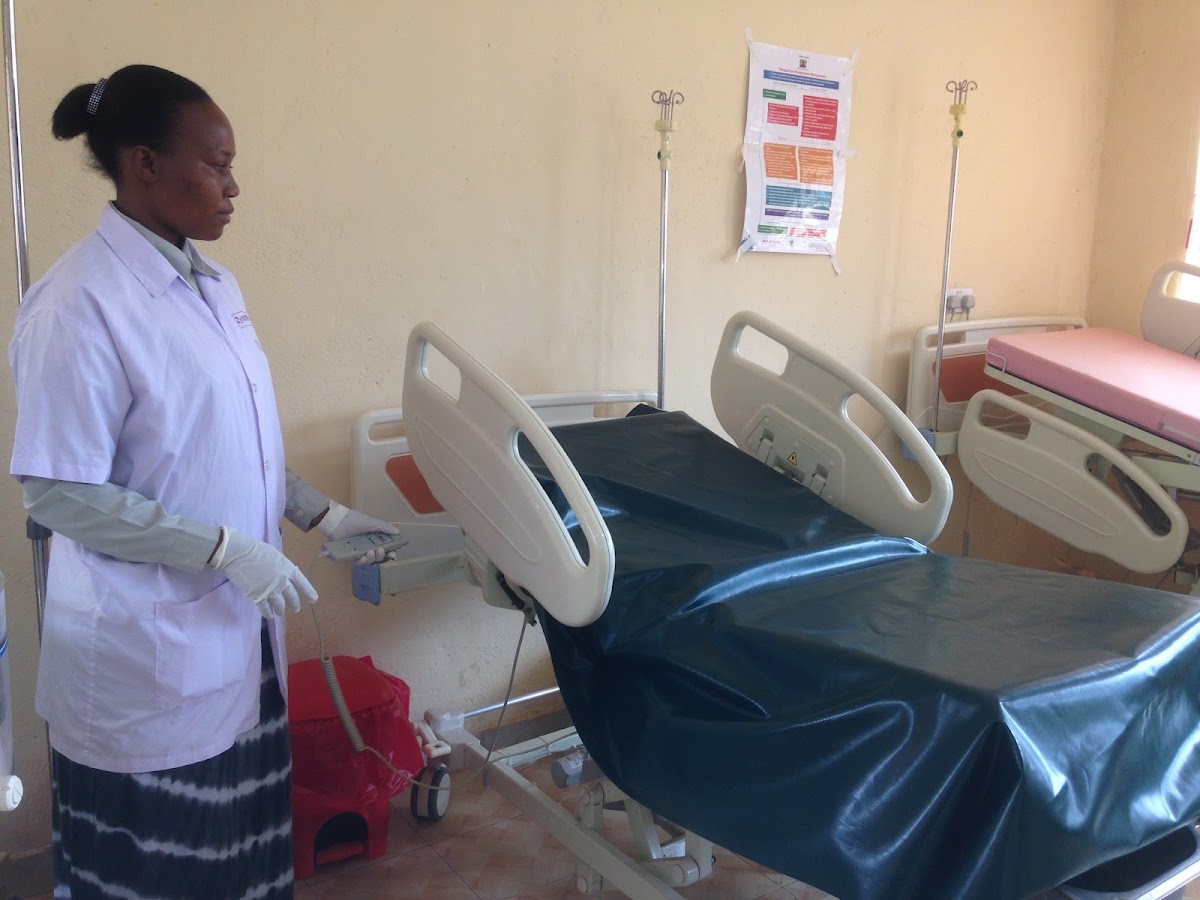
Jacinta Malemba Facility in Charge at Ndilindau Dispensary Taita Taveta explains how some of the machines at the dispensary work.


Before July this year, health workers at Ndilindau dispensary in Taita Taveta county had to sometimes use unconventional ways during child delivery because of frequent power outages.

In one such case, the nurse on duty at the maternity wing which was launched in 2016, had to use a torch as there was no power.

“We call some of the babies miracle babies because of the conditions under which they were born,” Jacinta Malemba Facility in Charge and Clinical Officer says.

“The mother was very uncomfortable.”

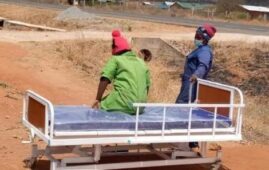
She says some of the equipment that needs power to function has been lying idle at the facility one of them being the birthing bed.

The bed’s technical design provides a wide range of solutions which makes it comfortable for women in labour as well as assisting health personnel.

Others are the suction machine—which is used to remove different types of secretions including liquid or gaseous secretions from the body cavity, an anaesthesia machine and oxygen machine.

The anaesthesia machine provides an accurate and continuous supply of medical gases like oxygen and nitrous oxide, mixed with an accurate concentration of anesthetic vapour such as isoflurane and delivers this to the patient at safe pressure and flow.

At the facility, newborns also need to be warmed and a radiant warmer that uses power is needed to maintain the body temperature.

Malemba says saving the life of a newborn and the mother is their key role.

However, insufficient power has sometimes impeded this. The clinical officer said the electricity supplied to the facility has not been enough to power some of the equipment.

She said the facility needed a three-phase power supply while Kenya Power supplied one phase.

The facility that serves up to 8,000 people in 12 villages, also did not have a power backup.

The clinical officer says the maternity wing of the facility which facilitates at least 13 mothers to give birth a month, needs a lot of power.

“Sometimes a baby is born and it is not breathing well. In such circumstances, we are forced to call for an ambulance from other hospitals which may be far. All you can do at that point is pray for the baby and the mother,” she says.

She discloses that services such as photocopy were affected every time there was a power outage and led to the loss of revenue for the facility.

“When we send mothers back due to the lack of power, most of them don’t come back. This means that the facility loses claims which are our source of revenue,” she says, adding that the facility could lose up to Sh500,000 in Linda Mama.

Malemba says the facility is supposed to claim Sh600 for ante-natal during the first visit.

She says the facility claims Sh2,500 on the same day after delivery as the claim has to be done within 24 hours however, the photocopy issue often saw them lose out.

“A copy of ID is supposed to be attached to the claim form. If it is not attached, the claim will be disqualified automatically,” she says.

Malemba says the autoclave machine was also lying idle due to a lack of power.

She says the facility has been taking some of its equipment for sterilisation at Taveta hospital which is miles away.

“We used to send equipment for sterilisation in Taveta hospital and this could take two days. This means that services would stall,” she says, adding that conducting an operation without power posed a major challenge.

Malemba says the facility used to pay Sh10,000 for power bills a month. She notes that every time there was a power outage, chemicals used in the laboratory as well as detergents risked going bad.

She is, however, happy that solar panels have been installed in the facility. The estimated solar potential in Kenya is 15,000 MW.

At the moment, the installed capacity is more than 100 MW with the largest installation being Garissa Solar with a 55MW installed capacity.

In addition, the government has approved the expression of interests of more than 35 projects under the Feed-in-Tariff with more than six projects under construction.

Diana Mvumwa, a diabetic patient at Ndilindau dispensary, says a reliable source of power at the facility has improved service delivery.

“I used to come for tests and would be turned away due to power outages and told to come back the following day,” she says.

The project was funded by BMZ- German Federal Ministry for Economic Cooperation and Development through WWF-Germany.

WWF-Kenya was the implementing partner.

World Wide Fund-Kenya Head of Science, Research and Innovation Dr Yussuf Wato says the provision of power is a key driver for development, especially in the health centres and schools.

“For health centres, this has enabled storage of vaccine and other drugs that require being stored at regulated temperatures, effective operations of most of the lab equipment while for schools/tertiary learning institutions, this has helped to diversify the courses offered such as welding,” he says.

Wato says as an organisation that is sensitive to climate change, WWF-Kenya has provided solar power to some of the institutions as a means of promoting the use of renewable energy and thus decreasing the impacts of climate change.

“This will lead to a healthy and educated community.”

Wato says the interventions or solutions are co-created with the communities in organised groups who are later trained in the management of such interventions.

“The relevant county departments and other stakeholders are also involved as a way to ensure sustainability once the project is handed over by WWF.”

The issue of power outage is not confined to Ndilindau alone as the story is the same at Rekeke model health centre.

Justin Mukare, the nursing officer in charge, says the facility, which was inaugurated in 2015, has been reeling from power outages.

Rekeke offers curative, maternity (family planning, immunisation, growth, and monitoring), and preventive services and has four nurses.

Mukare says the effectiveness of the nurse on duty was being hampered.

“Sometimes, the nurse on duty calls relatives to come and help hold the torch. The light from the torch is not enough,” he says.

Mukare, who has served for decades, says women have to undergo various tests such as blood group, level of blood, malaria tests that use various reagents that need to be preserved.

He says state-of-the-art equipment is needed, as well as personnel.

“We have been advocating for skilled birth delivery and to support this, we need modern equipment, constant supply of power and manpower,” Mukare says.

~ The Star

more recommended stories