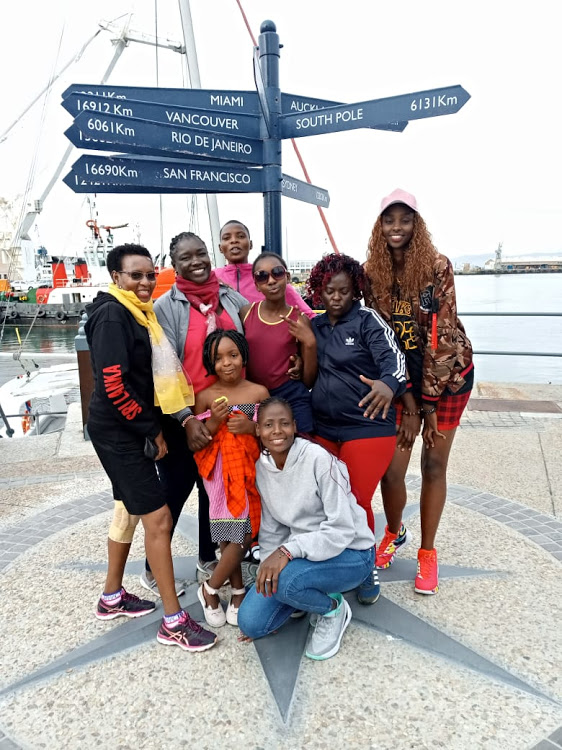
Kenya netball team during the recent tour of South Africa

Where did it all go wrong for netball?
For over 15 years, the sport was embroiled in mismanagement which affected the sport negatively. Officials have been putting their interest first at the expense of the game thus prompting lack of interest among the stakeholders. Officials have been accused of fighting for tours at the expense of deserving coaches and players.
Last year, two members of Kenya National Federation (KNF) executive sat on the technical bench of the national team in the Africa Nations Cup— a move that didn’t go down well with the stakeholders. Two years ago, members of the executive committee made up for over half of the travelling party to Zambia for an Africa showpiece.
In this duration, Kenya was also left in the cold by failing to affiliate with international bodies thus missing out on the opportunities that come with affiliation to the international body.
It took the current administration of Immaculate Kabuthia to get Kenya back to the international arena when they finally affiliated to International Netball Federation (INF) and the Confederation of Africa Netball Associations (CANA).
“For the years we were in the cold and missed out on a number of tournaments, coaching and umpiring courses. With this, our levels went down and by the time our office was taking over, we had a lot of work to do,” KNF Secretary-General Millicent Busolo said.
During that period, Uganda, Malawi South Africa, Zambia, Botswana and Namibia took that opportunity to improve their game and ranking globally as the sport in the country continued to sink.
For the last two years since Mbuthia and Busolo replaced Mildred Wanyama and co; Ulinzi, Kenya Prisons, Western Stima and KNH have been only teams challenging for the national title in a league that is dominated by abandonment and general confusion. With last year’s withdrawal of Western Stima, the league has remained with only three teams.
“We were forced to pull out because of confusion surrounding the running of the league. Our office thought it was wise to pull out after our opponents failed to turn out for a league match in Taita Taveta. They thought they were spending a lot of money on us in a disorganised league. They wondered how we can travel all the way from Kisumu to Taita Taveta and our opponents don’t show up,” said Western Stima’s manager Christabel Sigana. Sigana added that a number of clubs also select which events to take part in due to financial challenges.\
“There are teams that opt to go for events closer to them while others opt to go for the ones far away so that they can get travelling allowance. With this, teams that are consistent like Prisons, Ulinzi and ourselves lose out because we only play few matches,” she said.
Self-sponsored side St. John’s which has also been taking part in some of the events has also failed to continue in the league due to financial constraints.
The Nairobi’s Korogocho slums had been depending on the well-wishers to facilitate their activities and with the funds not forthcoming in the last stages of last year’s league, they pulled out.
“We depend mostly on the church and well-wishers to run our activities and if we don’t get enough of it, we are left with no option but to quit and that is what we ended up doing,” coach Prisca Achieng said.
Mixing up league and tournaments has also forced a number of teams to pull out of the league. On many occasions, KNF have failed to follow their calendar thus affecting the teams’ preparation and participation.
At times, teams end up being forced to play in ‘valueless’ tournaments at the expense of the league.
“On a number of occasions, we have found ourselves playing in some valueless tournaments despite preparing adequately for the league. With this, teams opt not to honour some tournaments unless they are assured that the calendar will be followed,” a source who sought anonymity said.
As Kenya stay in the cold, all the parastatals that used to sponsor the teams have withdrawn their sponsorships. “We used to depend on sponsorships from parastatals and corporates but when a number of them pulled out their sponsorships due to restructuring or cutting down on budgets which mainly affected sports, we were heavily affected,” said Nairobi Netball Federation secretary, Lillian Anupi.
Ulinzi coach Rebecca Sarange said the small number of teams in the league has not helped her side despite winning the league four years in a row.
“Winning sometimes is not that important. What is important is the competition you get on the way. This is definitely missing in the league. The level is completely down and we don’t get exposed as much as we would want,” Sarange said.
She challenged KNF to engage the corporates and parastatals to get back into netball sponsorship just like any other sport to ensure talent does not go to waste.
“We have good players at the junior levels. In schools, you see a lot of talent but my concern is what happens to them if there are no clubs to take them? It’s a high time KNF tried to engage other stakeholders in a bid to save the sport,” Sarange added.
Neighbours Uganda, who are Africa’s second-ranked country after South Africa have over 10 teams playing in their top league and a number of them playing in the lower division. In fact, netball is one of Uganda’s top three sports.
Last year, they took part in the Netball World Cup in Liverpool England. “Uganda was our whipping dogs in the ’80s and ’90s but they took advantage of our misfortunes and improved their game. Look, they are now Africa’s second-best team,” Babala, who donned the national team colours for over 10 years, said.
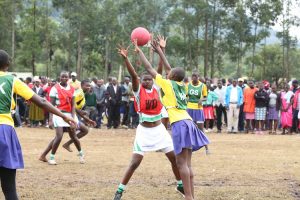
Kenya National Sports Council (KNSC) chairman Nderitu Gikaria concurred with Babala adding that netball has been a letdown for Kenya in the region but said they are working hand in hand with the federation to revive it.
“The new office is trying to ensure that things get back to normal after years of a downward spiral. While all the other women teams have been dominant in the region, netball has been the whipping dogs and we are trying hard to assist them to get back on track,” Gakaria said.
Level of coaching and umpiring has also contributed to the drop in standards of the sport. A number of coaches and stakeholders contacted said poor standards of coaching and umpiring has negatively impacted the growth of the game.
“The game has changed globally with umpiring and coaching but for us, we are still trying to come to terms with the growth. Some of the coaches are using old methods of coaching and this has seen us struggle to keep pace with the changes,” Babala said.
However, Busolo said the federation is in process of improving that by conducting more courses. Last year, an international course was held at Kasarani where reality on Kenyan level of coaching hit them as only one coach qualified.
“We have to up our game by getting the coaches to improve on their know-how of the game. We held two courses last year and this year, we have already conducted one,” she said.
INF has in the last decade tried as much as they can to popularise the sport by introducing a number of events. Four major competitions take place internationally thus— the quadrennial World Netball Championships, Commonwealth Games, the yearly Quad Series and Fast5 Series.
Apart from the senior events, INF has also introduced the Netball World Youth Cup. They are also waiting for their first Olympic appearance after they unsuccessfully applied to take part in the Tokyo 2020 Olympic Games. Fast5, the latest on INF competition, is a variation on the rules of netball designed to make games faster and more television-friendly. The World Netball Series promotes it to raise the sport’s profile and attract more spectators and greater sponsorship.
With these developments, a number of countries have gone out of their way to improve the level of the sport in a bid to ensure they at least take part in any of the events.
Gakaria said KNSC will support KNF in ensuring that they achieve their goals of ensuring the game improves. “We want to walk with them so that they can take little time to get to where we want to be in netball. We will support them fully in making their goals see the light of the day,” the chair said.
~ The Star

 LET US HONOUR OUR HISTORY: NAME THE VOI STADIUM AFTER MWANGEKA WA MALOWHA!
As Taita Taveta prepares to receive.
 VINDO SPORTS STADIUM NA SWALI LA MAJI TAITA TAVETA
Wakazi wa Kaunti ya Taita Taveta.
 THE GREAT EAST AFRICAN MP SPORTS SAFARI — WHERE ATHLETICS MEETS PUBLIC FUND SQUANDERING
East African MPs have once.
 KERICHO SHOWS THE WAY: INSIDE THE KKK SUPER CUP CHANGING YOUTH LIVES
When Aaron Cheruiyot launched the.
 PRESIDENT RUTO’S TEARS STIR CONTROVERSY AMID GEN Z PAIN
While receiving Kenyan athletes from the.
 YOUTH EMPOWERMENT IN TAITA-TAVETA COUNTY: A CALL TO ACTION
The challenges facing young people.
 KAYA TIWI RUN RIOT TO WIN GIRLS’ BASKETBALL CROWN AS DR. AGGREY RETAIN BASKETBALL BOYS’ TROPHY
By Cedric Masindo It was a.
 IT IS A BATTLE OF THE TITANS AS COAST REGIONAL GAMES ENTER DAY 2 IN MALINDI
Taita Taveta’s Dr. Aggrey and.
 SHOWDOWN LOOMS AHEAD OF COAST REGIONAL GAMES IN MALINDI
All eyes are set on.
By Cedric Masindo Former basket national.
 TERM ONE GAMES IN TAITA AT THE DAWSON MWANYUMBA STADIUM – WUNDANYI.
A great display of talent was.
 TAITA TAVETA YOUTH DESERVE BETTER
I find myself perplexed as.
 THE SHAME OF A SEXIST COUNTY!
By Tito Almasi On Sunday, Governor.
 MWATATE UNITED YANG’ARA NYUMBANI BAADA YA KUINYUKA VIHIGA BULLETS MABAO 5 BILA
Mwatate united yang’ara nyumbani baada ya.
 ON SUNDAY, I ATTENDED TTC CROSS COUNTRY CHAMPIONSHIPS AT DAWSON MWANYUMBA IN WUNDANYI.
It was a terrible mistake. That.
 TIMU YA TAVEVO FC INAYOSAMBAZA MAJI TAITA TAVETA YAPEPETWA 3-0 NA TIMU YA MAUNGU ALL STARS UWANJANI SGR
Hio Jana Wachezaji wa Timu.
Leave a Comment