
WAMEAMUA WARUHUSU RIGATHI GACHAGUA AGOMBEE ILI WAVURUGE MAHESABU. BUT WILL THEY REPEAT MOI’S 1992 POLITICAL SCRIPT?
PRESIDENT WILLIAM SAMOEI RUTO MUST FACE EDWIN W. SIFUNA ONE ON ONE! OMUNDU KWA MUNDU!
Kenya’s political history carries an important lesson that the opposition must not afford to forget as the country approaches the 2027 General Election.
In December 1992, President Daniel arap Moi faced his first competitive multiparty presidential election. The opposition had an opportunity to end his long political dominance. However, its leading figures could not agree on a common presidential candidate.
Kenneth Matiba contested on a FORD-Asili ticket. Jaramogi Oginga Odinga ran on a FORD-Kenya ticket, while Mwai Kibaki represented the Democratic Party.
The result?
Moi retained the presidency with approximately 36.3% of the presidential vote. Matiba obtained 26%, Kibaki 19.45%, and Oginga Odinga approximately 17.5%.
The opposition’s fragmentation was a significant factor in Moi’s victory. Historical election assessments also identified internal divisions, intimidation and an uneven political playing field as important features of that election.
Thirty-four years later, Kenya faces another critical political moment.
The question is whether the opposition has learnt anything from that history.
There are growing political calculations involving different personalities, emerging alliances and competing presidential ambitions. The possible participation of former Deputy President Rigathi Gachagua has added another dimension to the political equation.
But whose interests would be served by an opposition divided into multiple presidential camps?
Could the multiplication of presidential candidates weaken the collective opposition challenge and create an advantage for the incumbent?
These are questions that opposition leaders must confront honestly.
There is absolutely nothing wrong with Rigathi Gachagua, Edwin Sifuna or any other qualified Kenyan seeking the presidency. Political competition is healthy. However, personal ambition must not become more important than the broader question of how the country will be governed.
The 2010 Constitution changed the presidential electoral framework.
Under Article 138(4), a presidential candidate must obtain more than 50% of the votes cast and at least 25% of the votes in more than half of the counties to win in the first round.
If nobody meets these requirements, a fresh election follows between the top two candidates.
This constitutional safeguard makes broad national support essential.
The opposition therefore needs more than political rallies, social media excitement and declarations of presidential ambition. It needs a credible strategy, a common agenda and a transparent mechanism for identifying a candidate capable of commanding national support.
The opposition must not allow the politics of 1992 to determine the outcome of 2027.
And to those already calculating how to divide political constituencies, manufacture rivalries or encourage competing presidential ambitions, Kenyans deserve to know whose interests those calculations serve.
The country needs a serious national conversation about leadership, accountability, economic recovery, corruption, unemployment and the future of its young people.
The 2027 election should be about competing visions for Kenya, not merely competing personalities.
To President William Ruto, the message is equally clear: the 2027 presidential contest must be decided by the will of Kenyan voters, not by political manoeuvres that weaken meaningful competition.
PRESIDENT WILLIAM SAMOEI RUTO MUST FACE EDWIN W. SIFUNA ONE ON ONE! OMUNDU KWA MUNDU!
SEMA #WANTAM!

more recommended stories
 COUNTY GOVERNORS DESERVE THE SAME SCRUTINY AS THE PRESIDENCY
The 2024/25 Finance Bill protests.
-
COUNTY GOVERNORS DESERVE THE SAME SCRUTINY AS THE PRESIDENCY
COUNTY GOVERNORS DESERVE THE SAME SCRUTINY.
 THE POWER OF KSH 50: WHY SIFUNA MUST KEEP ASKING KENYANS TO INVEST IN THEIR POLITICAL FUTURE
The Benjamin Franklin Effect, grassroots financing.
-
SIFUNA, LINDA MWANANCHI AND THE SEARCH FOR A NEW POLITICAL CHAPTER: IS KENYA WITNESSING THE EMERGENCE OF A DIFFERENT KIND OF LEADERSHIP?
KENYA POLITICS | 30 OCTOBER 2026.
 Where the Rain Started Beating President Ruto
By Nathaniel Noti, former Taita.
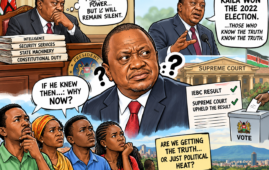 THE QUESTIONS UHURU KENYATTA CANNOT ESCAPE
Former President Uhuru Kenyatta’s declaration.
 THE POLITICS OF DECEPTION, CONTRADICTION AND POLITICAL REINVENTION OF HON MWASHAKO
A couple of days ago,.
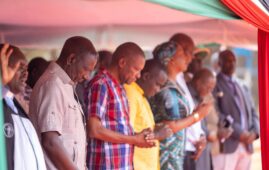 WHEN ELECTIONS NEAR, THE SAINTS RETURN: HOW KENYA’S CHURCHES BECAME CAMPAIGN ARENAS
Every election cycle in Kenya.
 THE VERMIN OF TRIBALISM & POLITICS OF ENTITLEMENT
The word Murima has forced.
 UDA MUST RETHINK, REPLAN AND RE-EXECUTE ITS STRATEGY IN TAITA TAVETA
Over the past several months, the.
 WHEN GOOD POLICIES DON’T DELIVER: WHY IMPLEMENTATION MATTERS MORE THAN WE THINK
Strong policies create direction, but implementation.
 THE 186 MPs WHO ABSCONDED TO VOTE FOR THE FINANCE BILL 2026/27
Every five years, Kenyans troop.
 SOCIAL MEDIA: THE BATTLEGROUND THAT WILL DEFINE THE 2027 ELECTIONS
The digital revolution has fundamentally.
 CAMPAIGN FINANCING AND THE MYTH OF THE WEALTHY SAVIOUR: WHAT KIND OF LEADERSHIP DOES DEMOCRACY NEED?
As political campaigns gather momentum,.
 Ulimwengu wa Universalism na Kuibuka kwa Ufahamu Mpya wa Kisiasa Afrika: Jinsi Gen Z wa Kenya Wanavyobadilisha Mwelekeo wa Siasa za Afrika
Barani Afrika, dhana ya universality au.
 WHEN LEADERSHIP BECOMES AN INVESTMENT: WHY KENYA MUST RETHINK CAMPAIGN SPENDING
In an ideal democracy, leadership.
Leave a Comment