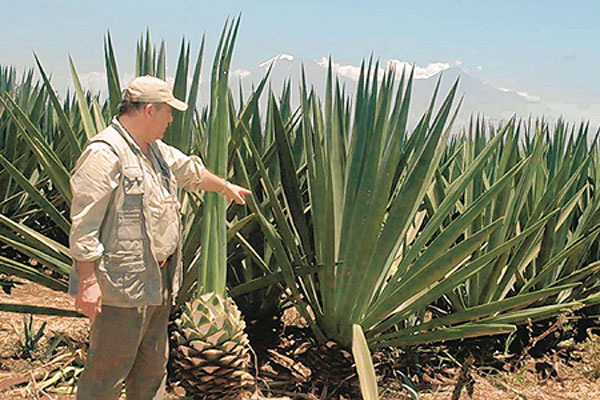
Former Taveta MP Basil Criticos. He has dismissed reports that he grabbed Salaita Hill, which he fenced off last year

The High Court’s March 3, 2026 decision awarding KSh 30 million to former Taveta MP Basil Criticos has re-ignited one of Taveta’s most sensitive and long-running debates — land, power, and political consistency.
The court found that the State failed in its constitutional duty to protect Criticos’ property after his sisal factory and approximately 4,400 hectares of plantation were burned in the late 1990s. The compensation includes KSh 20 million in general damages and KSh 10 million in aggravated damages, marking the end of a 22-year legal battle.
While the ruling is legal in nature, its political implications are profound.
The judgment inevitably revives scrutiny of Criticos’ earlier land dealings involving President William Ruto.
Several years ago, public debate erupted after reports that large tracts of land in Taveta — particularly in Mata Ward — changed hands between Criticos and Ruto. Critics framed it as a “gift,” while both parties maintained it was a legitimate market transaction.
Regardless of the legal position, the optics cemented a narrative in Taveta politics: that land, elite relationships, and power intersect in ways that ordinary residents struggle to access.
Now, with Criticos winning yet another court battle, that earlier relationship is back in public discussion — not because the court addressed it, but because politics never operates in isolation from history.
Before becoming Taveta MP, John Bwire built his reputation as a vocal activist. He organized demonstrations accusing Criticos of fencing public land — land that later became associated with the controversial transaction involving the President.
At the time, the protests resonated strongly with locals frustrated by historical land inequalities. The message was clear: defend public land against elite capture.
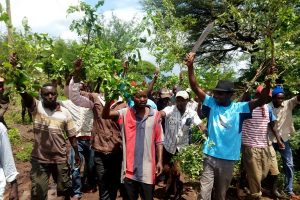
However, after being elected to Parliament, Bwire shifted political alignment and became a supporter of President Ruto. Today, he is widely perceived as one of the President’s closest political allies in Taveta.
For many constituents, the transition from confrontational activism to presidential alignment appears contradictory. Supporters argue that working closely with the Head of State brings development and resources. Critics see inconsistency — especially given the centrality of land grievances in Taveta.
One question increasingly asked in Taveta is whether the MP has been sufficiently vocal in Parliament on land injustices affecting the constituency.
As a trained lawyer, expectations were high that he would:
Push for land adjudication reforms,
Demand clarity on historical land ownership disputes,
Champion structured settlement programs for squatters.

Yet, critics argue that parliamentary interventions on Taveta’s land question have not matched the intensity of his earlier street activism. Whether this perception is fair or politically amplified by opponents, it is becoming part of the local narrative.
The High Court ruling does not resolve Taveta’s land conflicts. Instead, it reinforces one principle: the State can be held accountable for failing to protect legally recognized property rights.
This strengthens formal land ownership protections — but it does not automatically address:
Squatter resettlement,
Historical land allocation controversies,
Community claims rooted in long-standing occupation.
In fact, the ruling could deepen divisions. To some, it validates the position of large landowners. To others, it underscores the imbalance between legal title and lived land realities.
If land remains the dominant campaign issue in Taveta, the MP’s political future may hinge on three factors:
Voters who joined earlier demonstrations may question whether the shift in alliance represents political pragmatism or abandonment of principle.
If alignment with the President delivers visible projects — roads, water, agricultural support — some voters may prioritize tangible development over ideological consistency.
Political rivals could weaponize the narrative:
From “defender of public land”
To “ally of the very power structures once challenged.”
In Taveta’s emotionally charged land politics, narrative framing can be decisive.
The Criticos judgment is more than a compensation award. It is a reminder that Taveta’s land question remains unresolved at its core.
It highlights:
The power of legal persistence,
The complexity of land ownership in Kenya,
The delicate balance between activism and political alliance.
As Taveta looks toward future elections, one reality remains clear: land is not just property here — it is identity, history, and political destiny.
Kwaela News Network will continue following developments closely.

 TAITA TAVETA: CAN THE DCI CRACK THE NUT? DORCAS MLGHU’S PUBLIC OUTBURST PUTS COUNTY EXECUTIVE UNDER FRESH PRESSURE
The growing controversy surrounding the.
 NDARA B LAND DISPUTE: 63 RESIDENTS SERVED WITH THREE-MONTH EVICTION NOTICE FOLLOWING COURT RULING
Affected families in Mlambenyi, Golani and.
 TAITA TAVETA: WILL DEBORAH WAKESHO SUCCEED THE LATE MARGARET KAWUKI, OR WILL POLITICAL CARTELS INTERFERE?
Questions emerge over Jubilee Party’s.
 CHRISTOPHER MWAMBINGU: EACC INVESTIGATES ALLEGED FORGED DEGREE USED TO SECURE DIRECTOR OF ADMINISTRATION POSITION
A third case raises further.
 MWATATE MP RACE: RICHARD LUKINDO’S AMBITIONS AND THE UNANSWERED DEGREE QUESTION
The political stakes surrounding former.
 TAITA TAVETA: PRISONS OFFICER, NINE OTHERS ARRESTED IN MOTORCYCLE THEFT SYNDICATE PROBE
Serious questions emerge over alleged security.
 ALLEGATIONS OF HARASSMENT RETURN ALONG VOI-CALTEX ROAD CORRIDOR
Residents, motorists, and public transport operators.
 CHURU CHURU PROJECTS HAZIJENGI TAIFA
Kuna tofauti kubwa kati ya.
 BWIRE: ACCESS TO POWER IS NOT A POLITICAL MANDATE
Hon. John Bwire’s declaration that.
 RESIDENTS RAISE CONCERNS OVER ALLEGED MOTORIST HARASSMENT ALONG VOI-MOMBASA ROAD
Residents and motorists in Voi.
 THE TAITA TAVETA COUNTY ASSEMBLY’S VETTING PROCESS MUST UPHOLD THE CONSTITUTION AND PUBLIC TRUST
We, the concerned citizens of Taita.
 THE STRUCTURED POVERTY IN TAITA TAVETA
Residents demand answers after thousands.
 Taita Taveta Workers Demand Immediate Payment of Salaries and Allowances
Frustration is mounting among employees in.
 Nepotism Concerns Intensify as Family Links Dominate Senior Appointments in Taita Taveta County
Calls for transparency and fairness in.
 UNGA, POLITICS AND 2027: PS MWAMODO’S JORA VISIT SPARKS DEBATE
A food distribution exercise led by.
 Taita Taveta Residents Increasingly Question Leaders’ Priorities Amid Unresolved Challenges
What was billed as a development.
Leave a Comment